United States Navy (USN): "South Korea Should Not Buy Nuclear Submarines for National Prestige... Must Have a Valid Reason"
- Input
- 2026-09-10 11:20:22
- Updated
- 2026-09-10 11:20:22
This remark is drawing attention as it comes at a time when South Korea is actively pursuing cooperation in nuclear submarine construction following last year's South Korea–The United States summit and continuing follow-up consultations with The United States.
A United States Navy (USN) official, meeting with reporters from South Korea and the Asia-Pacific region at Joint Base Pearl Harbor–Hickam in Hawaii, on that day, stated, "South Korea must find a valid reason to possess nuclear submarines" in response to a question regarding South Korea's acquisition of nuclear submarines.
The official explained, "If South Korea were to purchase nuclear submarines merely for the sake of status symbolism, that would be the wrong reason," adding, "because it is an incredibly costly undertaking."
It then introduced the fact that former U.S. Chief of Naval Operations Admiral Daryl Caudle had previously remarked regarding South Korea's push to introduce nuclear submarines that "if South Korea never leaves the nearby waters, nuclear submarines will not be necessary."
He added, "We cannot determine the reason," emphasizing that "South Korea must find a valid reason on its own."
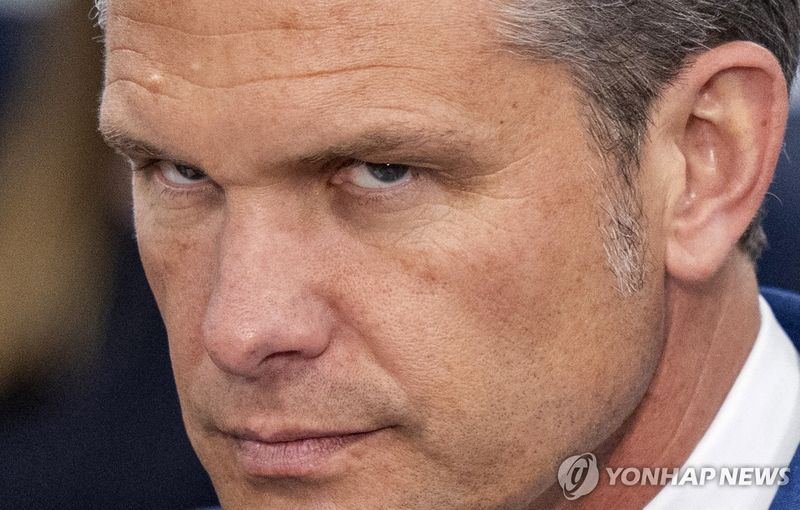
During his visit to South Korea last November, Admiral Daryl Caudle stated regarding South Korea's pursuit of nuclear submarines, "It is a natural prediction that those submarines will be used to deter China." He also added, "South Korea's nuclear submarines..." Concerns are growing that a vacuum in the U.S. military command and force modernization projects for future warfare preparations could face setbacks as U.S. Secretary of Defense Pete Hegseth focuses on a "culture war" known as the "Work" eradication. The photo shows Secretary Hegseth speaking at a signing ceremony for an executive order related to quantum computing held at the White House Oval Office on June 22 (local time), attended by President Donald Trump. AP News
He also mentioned that "it is fully possible to operate in the surrounding waters and to conduct activities alongside South Korean submarines in that environment."
These remarks by the United States Navy (USN) are interpreted to mean that for South Korea to realize its possession of nuclear submarines, discussions must follow regarding the necessity and role of participating in operations in the broader Indo-Pacific region, extending beyond deterrence missions against North Korea around the Korean Peninsula.
In addition, regarding the possibility of North Korea's submarine capabilities being strengthened by Russian Federation support, the official stated, "It is concerning that Russian Federation is helping North Korea," adding, "If they possess a large number of submarines with significant performance capabilities, it could constitute a substantial military force."
However, noting that North Korea's possession of submarines does not immediately imply actual operational capability, he assessed, "We have not yet seen any signs that would cause us serious concern."
Regarding South Korea–The United States shipbuilding cooperation, it assessed South Korean shipbuilders as "world-class" and pointed out that The United States lacks the capacity to build and maintain warships at the currently required speed.
It was also expected that South Korea's skilled workforce and systematic shipbuilding process know-how could contribute to strengthening the United States Navy (USN)'s shipbuilding and maintenance capabilities.
However, regarding the issue of repairing and maintaining United States Navy (USN) vessels at overseas shipyards outside The United States, such as in South Korea or Japan, he said, "There are legal restrictions on what we can do outside The United States," adding, "Unless the law is amended, there will always be limits."
[email protected] Lee Seok-woo, International Specialist Reporter