Ruling Party Discusses Injecting 6 Trillion Won into Youth Housing... 2 Trillion Won from Housing and Urban Fund and 4 Trillion Won from Future Response Fund
- Input
- 2026-09-10 11:05:58
- Updated
- 2026-09-10 11:05:58
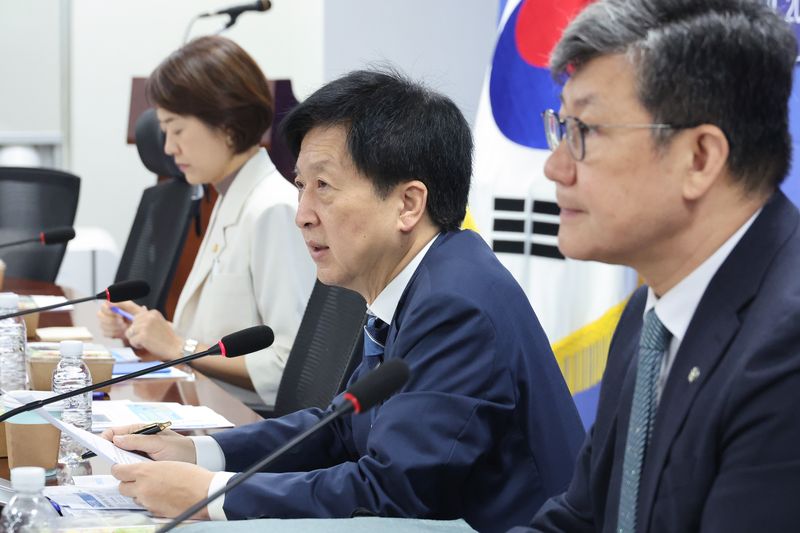
Representative Kim Nam-geun, a member of the Democratic Party of Korea's Seoul chapter Special Committee on Housing Supply Policy, met with reporters at the National Assembly of the Republic of Korea on the 10th and revealed the plan, stating, "There was talk of expanding the Housing and Urban Fund through active fiscal policies and utilizing it to supply public housing, such as youth housing, in Seoul."
The Ministry of Planning and Budget has announced a total budget of 18.5 trillion won for youth housing for next year, of which 18.1 trillion won has been allocated for the supply of public rental housing. The Special Committee plans to further expand the relevant resources of the Future Response Fund and the Housing and Urban Fund to increase the supply of public housing for young people.
First, a plan is being pursued to expand the 1.4 trillion won allocated to public rental housing within the 13.3 trillion won allocated to the Youth Account of the Future Response Fund to 4 trillion won during the National Assembly of the Republic of Korea's budget review process. In addition, the scale of financial support for the Housing and Urban Fund has been expanded to 2 trillion won. This reflects the Special Committee's request for further expansion, as the Ministry of Land, Infrastructure and Transport (MOLIT) had initially prepared a support plan of 1.1 trillion won.
Prior to this, the Seoul chapter of the Democratic Party of Korea held a meeting of the Special Committee on Housing Supply Policy at the National Assembly of the Republic of Korea today to discuss housing supply measures.
Representative Kim stated at the forum, "The topic was 'How to supply affordable housing for young people.' There are about 6 million pyeong of semi-industrial areas within Seoul, and since the industrial complex functions of these sites are declining, there was talk of supplying housing on a large scale there."
It is said that, regarding the main site in the central area of the Yongsan U.S. military base, there were suggestions to consider using Officers' Barracks Complex 5 as a residential site since it is adjacent to Seobinggo Station, along with discussion of utilizing Officers' Barracks Complex 4, which is already used for residential purposes, as youth housing.
[email protected] Song Ji-won Reporter