Police Revise Investigative Rules in Line with Amended Criminal Procedure Act, Detailing Procedures for Supplementary Investigations and Decisions Not to Refer Cases
- Input
- 2026-09-10 12:00:00
- Updated
- 2026-09-10 12:00:00
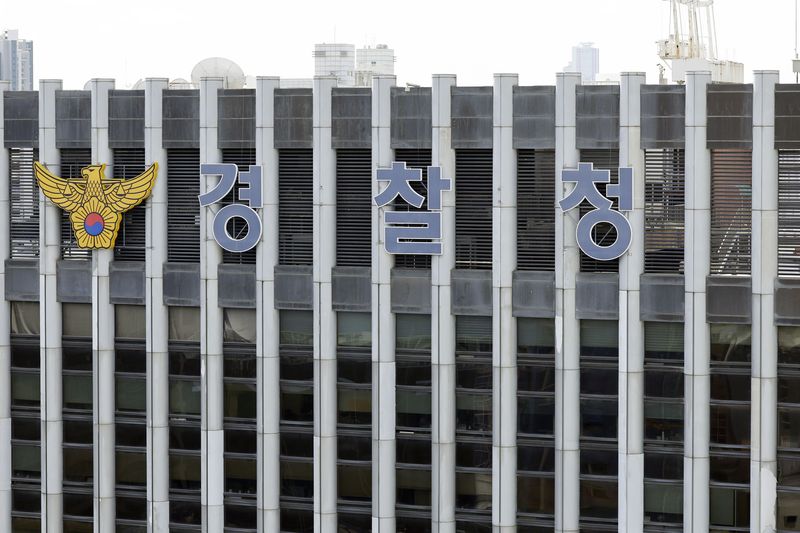
[Financial News] Ahead of the amended Criminal Procedure Act taking effect on October 2, police are revising detailed procedures to be applied in the field, including supplementary investigations and decisions not to refer cases. They will also establish procedures for police to seek prosecutors’ opinions on legal judgments and the appropriateness of evidence collection during investigations, as well as procedures and forms for notifying the Serious Crimes Investigation Agency of cases.
The Korean National Police Agency said on the 10th that it had prepared amendments to the Police Investigation Rules and Criminal Investigation Rules reflecting the amended Criminal Procedure Act and investigative guidelines. The two amendments were approved by the Korean National Police Committee on the 7th, and the Police Investigation Rules will undergo subsequent procedures, including advance notice of legislation and review by the Ministry of Government Legislation.
The amendments focus on specifying detailed procedures and forms so that systems newly introduced or changed under the amended Criminal Procedure Act can be applied in actual investigations.
First, the procedures related to requests for supplementary investigations will be specified. In line with the amended Criminal Procedure Act, which generally requires police to carry out such requests within one month, the rules set out the procedures and methods for police to apply for an extension. Before notifying prosecutors of the results of a supplementary investigation, police must send them the comprehensive investigation results and case records.
If additional time is needed for a supplementary investigation, police must specify the reason for the extension and the time required before the deadline expires, and submit materials supporting the need for an extension. This allows police to request an extension when additional investigation is necessary, taking into account the details or difficulty of the case.
The notification procedures for cases not referred for prosecution will also be revised. When notifying complainants and others of such a decision, police must provide the decision document and objection form together. Notices on the progress of an investigation will explain the objection procedure, and forms for objections, review applications, and notifications of the respective results will also be prepared.
The procedure for requesting opinions between police and prosecutors will also be specified. Under the amended Criminal Procedure Act, police may ask prosecutors for opinions on legal judgments and the appropriateness of evidence collection. Relevant documents or evidence may be sent along with the request, and the prosecutor’s opinion and whether police accept it must be recorded in the investigation file. The methods and procedures for prosecutors to ask police to provide opinions when determining whether to request an arrest warrant will also be detailed.
Procedures for notifying the Serious Crimes Investigation Agency will be established ahead of its launch. In accordance with the requirement that police notify the agency when they identify a crime subject to its investigation during an investigation, the Police Investigation Rules will include related procedures and forms.
The system under which prosecutors request reinvestigations of cases not referred for prosecution will also change. Under the amended Criminal Procedure Act, the current limit of one reinvestigation request will be abolished. If a proper reinvestigation is unlikely, prosecutors may designate a higher-level investigative office or another investigative agency to conduct it. If police fail to comply with a reinvestigation request without justifiable reason, prosecutors may request that the officer be removed from the case or disciplined.
The legal basis for issuing certificates of case or incident facts, which have been used in practice by crime victims and others, will also be specified in the Criminal Investigation Rules. Application forms and certificate forms required for issuance will be prepared as well.
Procedures for returning or provisionally returning seized items will also be specified. As the amended Criminal Procedure Act abolishes prosecutors’ direction over the return or provisional return of seized items and changes the procedure to one requiring that their opinions be heard, police must request an opinion again if they intend to dispose of the items differently from the prosecutor’s opinion. If they still do not follow the opinion presented again, they must notify the prosecutor in writing of the reason.
Procedures for disqualification and recusal will also be revised to enhance the fairness of investigations. Investigators must apply for recusal when a person involved in a case is a public official, such as a police officer belonging to the police station investigating the case or conducting a pre-indictment inquiry, or is the spouse, lineal ascendant or descendant, or sibling of a police officer who currently works or worked within the previous three years at that station. Once a recusal application is filed, measures such as transferring the case to a designated neighboring police station within the jurisdiction of the same court will be taken under the direction of the head of a higher-level police agency.
The police will continue preparations in the field for the implementation of the amended Criminal Procedure Act. Kim Jongcheol, Acting Commissioner General of the Korean National Police Agency, said, "The significance of this amendment lies in refining investigative procedures in line with the new criminal justice system and specifying detailed procedures so that systems designed to promote cooperation among agencies and ensure fairness in investigations can function effectively in the field." He added, "We will carry out the necessary preparations and follow-up measures without disruption so that the new criminal justice system can become firmly established."
[email protected] Kim Ye-ji Reporter