When Some Have 6.89 Million Won in Their Accounts, Others Have 'Zero'... Investment Polarization Among Japan's 20-Somethings
- Input
- 2026-09-10 10:41:09
- Updated
- 2026-09-10 10:41:09
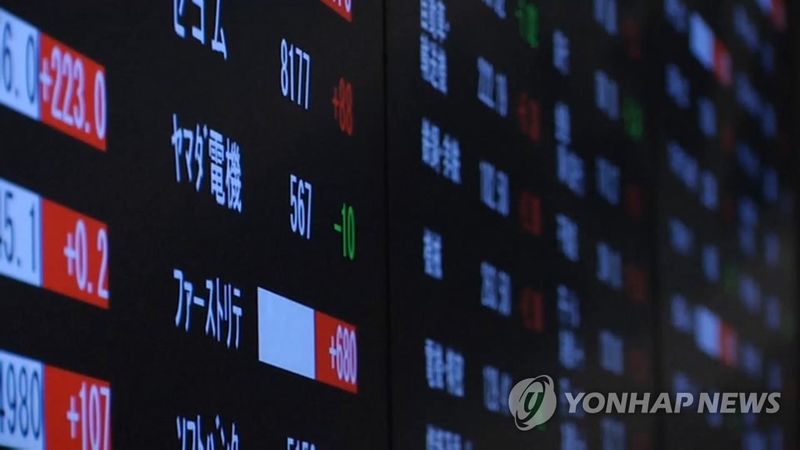
【Financial News Tokyo = Seo Hyejin, correspondent】The average value of securities held by young people under 30 in Japan increased nearly fivefold over the past decade, but the wealth gap within this age group was the widest of all age groups. Analysts say wealth polarization is deepening between young people who have benefited from rising stock prices and the expansion of tax-exempt investment programs and those who have been unable to participate in investments.
On the 10th, Nihon Keizai Shimbun analyzed data from a nationwide survey of approximately 90,000 households conducted by Japan's Ministry of Internal Affairs and Communications (MIC). It found that the average value of securities held by people under 30 rose from 160,000 yen (approximately 1.4 million won) in 2014 to 790,000 yen (approximately 6.89 million won) in 2024.
The average holdings alone make it appear that young people are building wealth rapidly. However, the Gini coefficient, which measures the degree of inequality, showed the opposite result. The closer the Gini coefficient is to 1, the more concentrated assets are among a small portion of the population.
In 2024, the financial-asset Gini coefficient for people aged 18–24 was 0.718, the highest among all age groups. The figure for those aged 25–34 was also high at 0.682. Compared with 2019, the coefficients rose by 0.017 and 0.005, respectively.
The financial-asset Gini coefficient for all age groups also rose from 0.664 in 2019 to 0.678 in 2024. By contrast, the disposable-income Gini coefficient edged down from 0.288 to 0.286 over the same period. Income disparities narrowed slightly, but the gap in financial assets widened instead.
Income disparities were also pronounced among young people. The disposable-income Gini coefficient for those aged 25–34 was 0.256, higher than the 0.252 recorded for those aged 35–44. While income inequality among the working-age population generally increases with age, a wider gap emerged among younger workers.
Differences in starting salaries based on company size are also cited as a factor widening the wealth-building gap. According to Teikoku Databank, 30% of large companies paid new university graduates who joined in April this year a starting salary of at least 250,000 yen per month (approximately 2.18 million won). The figure was only 17% among small and medium-sized companies.
Young people also had a lower participation rate in the Japanese government's Nippon Individual Savings Account (NISA), a tax-exempt small-investment scheme, than other age groups.
According to the Financial Services Agency of Japan, people in their 20s held 3.37 million of the 28.21 million NISA accounts as of the end of December last year. In other words, only about one in four people in their 20s had a NISA account. Approximately one in three people in their 30s, 40s, and 50s had opened an account.
Once a gap in financial assets emerges, it is more difficult to narrow than an income gap. This is because differences in returns generated by whether people invest accumulate over a long period. That is why concerns are growing that income and employment conditions during young adulthood could determine investment participation and further widen future wealth disparities.
Akihiro Nomura, a researcher at the NLI Research Institute, said, "While wage disparities between generations have narrowed and wealth building has advanced, financial-asset disparities have widened across all generations. Measures such as equal pay for equal work between regular and nonregular workers are needed."
Meanwhile, Japanese households' financial assets reached a record approximately 2,400 trillion yen (approximately 20,928 trillion won) at the end of fiscal 2025. Stocks and investment trusts accounted for 564 trillion yen (approximately 4,918 trillion won), or 23.6% of the total. The share exceeding 20% was similar to the level seen during the bubble economy.
[email protected] Seo Hyejin Reporter