Huawei Faces New York Court as U.S.-China Summit Nears, Renewing ‘Tech Hegemony’ Clash
- Input
- 2026-09-10 09:37:47
- Updated
- 2026-09-10 09:37:47
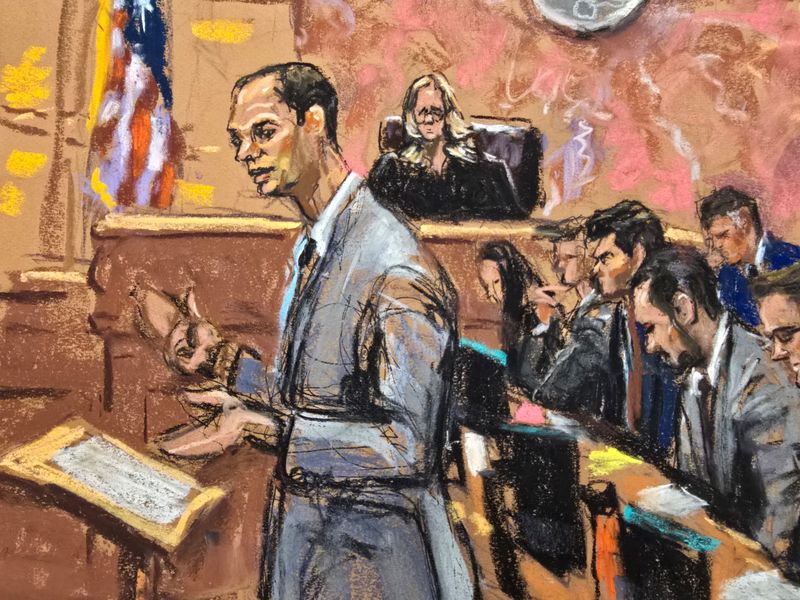
[Financial News] Ahead of a summit in Washington between U.S. President Donald Trump and Chinese President Xi Jinping, a criminal trial against Huawei, the Chinese company that became a symbol of the technology supremacy battle between the two countries, has formally begun after nearly eight years.
The Wall Street Journal (WSJ) reported that, during opening arguments in the jury trial held at a federal district court in Brooklyn, New York, prosecutors from the United States Department of Justice strongly criticized Huawei, alleging that it had systematically infringed on U.S. companies’ trade secrets and disrupted the U.S. financial system.
Prosecutors alleged that Huawei deceived global banks, including HSBC, to conceal its dealings with Iran and North Korea, and operated shell companies in violation of sanctions.
Taylor Stout, an attorney for the DOJ, told jurors that Huawei had spent 20 years “stealing, lying and concealing,” and argued that it had “sacrificed U.S. companies and the financial system to seize control of the global telecommunications market.”
DOJ prosecutors also alleged that Huawei paid bonuses to employees who stole key technologies from competitors, that employees were caught illegally photographing the interiors of competitors’ network equipment at trade fairs, and that the company recruited a university professor to pose as a researcher in order to obtain and replicate memory chips.
Huawei’s attorneys, however, countered that the DOJ had distorted the case using biased evidence and unreliable witnesses. They maintained that the company’s achievements were legitimately built by its founder, Ren Zhengfei, who invested heavily in research and development for decades.
The trial is an extension of the sanctions against Huawei initiated during the first Trump administration. Meng Wanzhou, Huawei’s chief financial officer, was arrested in Canada in 2018, triggering a diplomatic dispute among the United States, China and Canada. She returned to China in 2021 after reaching a deferred-prosecution agreement with the DOJ, but the court admitted statements she had acknowledged at the time as evidence in the current corporate trial against Huawei.
The trial is unlikely to derail the U.S.-China summit, but Jonathan Chin, a China expert at the Brookings Institution, said the decision to proceed with the trial rather than reach a settlement “shows that a strong current is running within the administration in favor of taking a tougher stance toward China.”
If Huawei is found guilty, it is expected to face not only a massive fine but also serious damage to its business with global financial institutions and overseas trading partners.
[email protected] Yoon Jae-jun Reporter