MFDS Revises Clinical Trial Guidelines for Digital Therapeutic Devices
- Input
- 2026-09-10 09:04:52
- Updated
- 2026-09-10 09:04:52
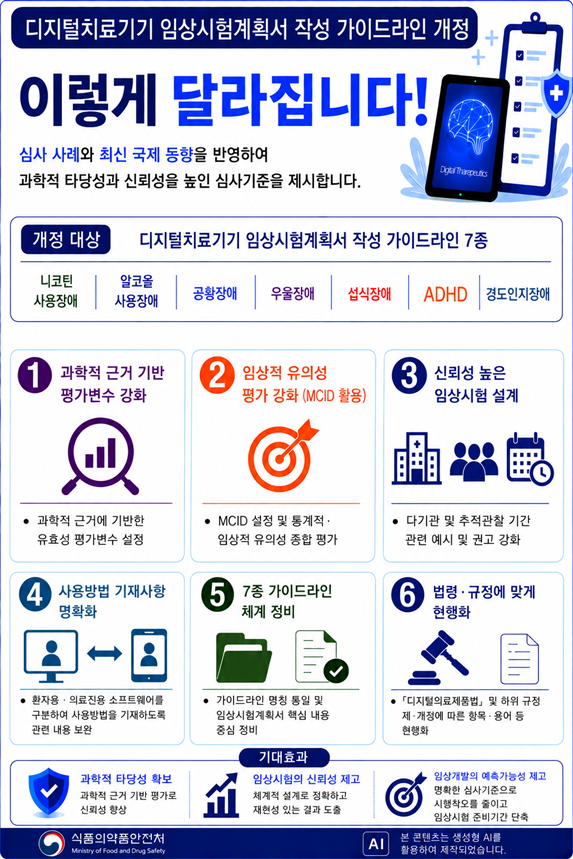
The National Institute of Food and Drug Safety Evaluation under the Ministry of Food and Drug Safety announced on the 10th that it had revised the "Guidelines for Writing Clinical Trial Protocols for Digital Therapeutic Devices" for seven indications, including nicotine dependence and Alcohol Use Disorder (AUD).
The indications are nicotine dependence, Alcohol Use Disorder (AUD), Panic disorder, depressive disorder, eating disorder, Attention Deficit Hyperactivity Disorder (ADHD), and Mild Cognitive Impairment (MCI).
The revision incorporates the latest review standards, including the establishment of efficacy endpoints based on scientific evidence and the setting of the Minimum Clinically Important Difference (MCID). MCID refers to the minimum amount of change that patients can actually perceive as a therapeutic effect, rather than merely a statistically significant change.
Standards to enhance the reliability of clinical trials have also been supplemented. Specific examples to refer to when establishing multicenter clinical trials and follow-up periods have been added, and the items and terminology in the guidelines have been updated to align with revisions to the Digital Medical Products Act and its subordinate regulations.
Through these guidelines, the MFDS presented specific criteria that developers of digital therapeutic devices can refer to when designing clinical trials.
An MFDS official stated, "We plan to continue supplementing the guidelines related to digital therapeutic devices by reflecting changing technologies and opinions from the clinical field."
[email protected] Jeong Sang-hee Reporter