LG Electronics Builds a “Home” Inside a Dutch Appliance Store—Why Sales Rose 20% [Report]
- Input
- 2026-09-10 10:00:00
- Updated
- 2026-09-10 10:00:00
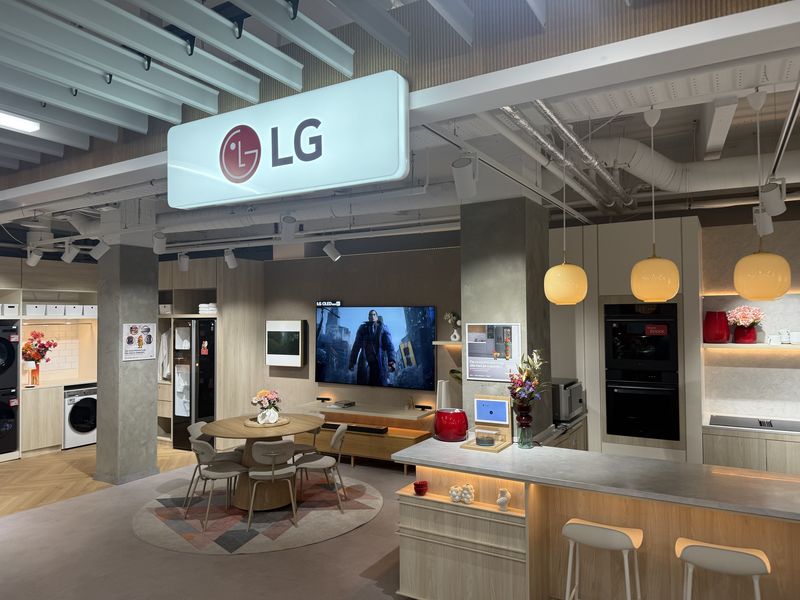
【Rotterdam, the Netherlands—Reporter Subin Lim】On July 7 local time, I visited MediaMarkt Tech Village Rotterdam in central Rotterdam, the Netherlands. Unlike ordinary stores packed with refrigerators and washing machines, the LG Electronics store contained an entire home measuring more than 20 pyeong. The kitchen featured an induction cooktop, built-in oven and dishwasher arranged like those in an actual household, while air conditioners and washing machines were naturally placed in the living room and utility room. The aim was not merely to demonstrate the performance of individual appliances, but to show firsthand how products connect within a living space to save energy and make daily life more convenient.
Operated by Europe’s largest appliance retail chain, MediaMarktSaturn, the venue is a strategic store designed to offer new customer experiences and operating models in prime commercial districts in major cities. It is also known as a “lighthouse store.” LG Electronics created a space modeled on an actual European home, allowing visitors to experience high-efficiency appliances, built-in products and AI home solutions in one place.
■Sales Rose 20% After the Store Was Transformed into a “Home”
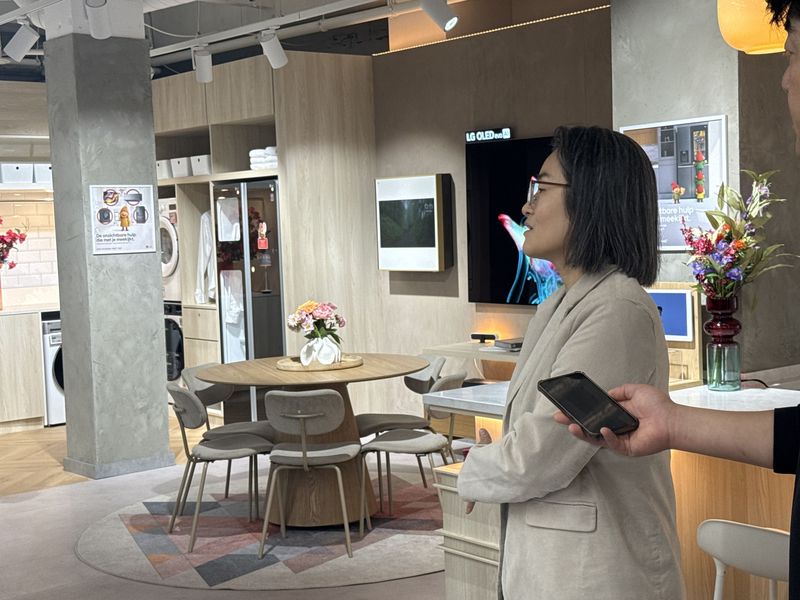
At the site, Eunyoung Lee, head of B2C marketing at LG Electronics Benelux, explained, “Products are ultimately used at home, so we designed the space like a home to show how they look in an actual usage environment. We also focused on demonstrating how AI can be used in everyday life.”
In November last year, LG Electronics nearly tripled the store’s size from approximately 28 square meters, or about 8 pyeong, to approximately 73 square meters, or about 22 pyeong. It completely revamped the product-centered display area into a living space. Among the roughly 10 brands located in Tech Village, LG Electronics is the only one to recreate actual home environments, including a kitchen, living room and utility room, inside its store.
The store makeover was followed by stronger sales. After the remodeling in November last year, LG Electronics’ sales at the store rose by more than 20% year on year in the first half of this year. The store also ranked among LG Electronics’ top-performing offline stores in the Netherlands this year. The increase in package purchases, rather than purchases of individual products, was cited as another factor behind the sales growth, as multiple products were arranged together in a home-like setting. Lee said, “Sales increased after the store was revamped. Foot traffic also rose, so we believe the changes had an effect.”
The space-centered store strategy is also helping LG Electronics target local premium demand, where consumers place importance on product performance and user experience. Among the 9-kilogram washing machines displayed at the site, LG Electronics’ model was priced at €679, approximately 48% more than Whirlpool’s €459 model. LG Electronics explained that local consumers nevertheless have a high acceptance of high-specification products. Lee stated, “The Netherlands itself is a premium consumer market. It is a market with very strong acceptance of high-specification products, and LG Electronics supplies products that meet this demand.”■“It Moves on Its Own”: AI Home Captivates Europe, Too
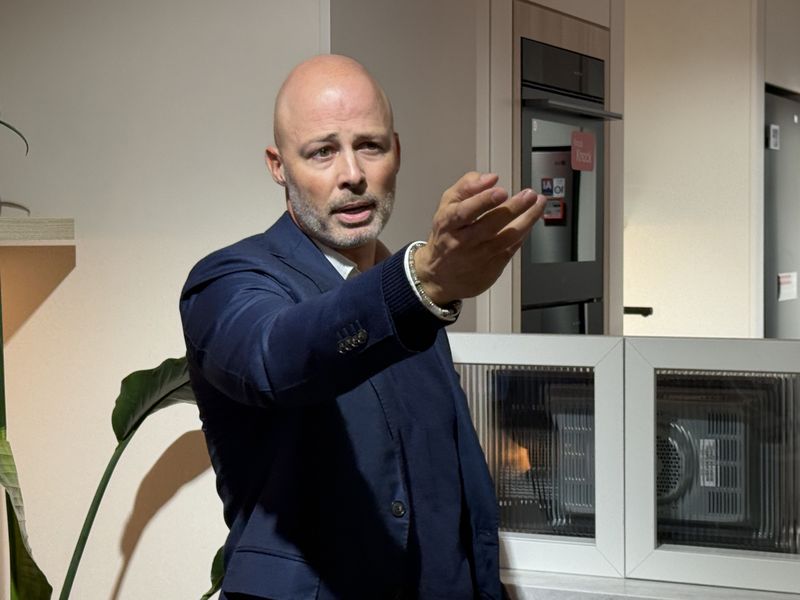
The core of LG Electronics’ AI home implemented in the store is that appliances exchange information with one another to improve convenience and energy efficiency, without requiring users to operate each appliance manually. Jay Romers, a marketing manager at LG Electronics Benelux, said, “Online, people mostly compare the functions and prices of products, but they cannot experience the products themselves. That is why we placed multiple products together in an environment resembling a living space, allowing visitors to picture firsthand how LG Electronics’ technology could be used in their own homes.”
For example, connected appliances work together to improve energy efficiency even when users are not watching. When solar-generated electricity is sufficiently stored in a household battery, or when electricity rates are low, the washing machine and dryer operate accordingly. Once the laundry is finished, the system notifies users through the living-room lighting or display. If a window is opened while the air conditioner is running, a sensor detects it and automatically turns off the air conditioner. LG ThinQ is linked with the smart-home platform Homey, allowing appliances and sensors in the home to share information about conditions and reduce unnecessary energy use.
Local demand for this type of AI home is also strong. Lee noted, “The Netherlands has one of the highest levels of ThinQ user retention in Europe.”
LG Electronics is also considering expanding this type of space-centered store, which it first tested in Rotterdam. Taking regional and commercial-area characteristics into account, the company plans to strengthen its store strategy by proposing distinctive space solutions, including high-efficiency appliances, built-in products and AI home systems, through new store openings or remodeling existing locations.
[email protected] Subin Lim Reporter