Jeju Bets on a 40MW 'Green AI Data Center'... AX Blueprint to Be Unveiled on the 11th
- Input
- 2026-09-10 07:13:23
- Updated
- 2026-09-10 07:13:23
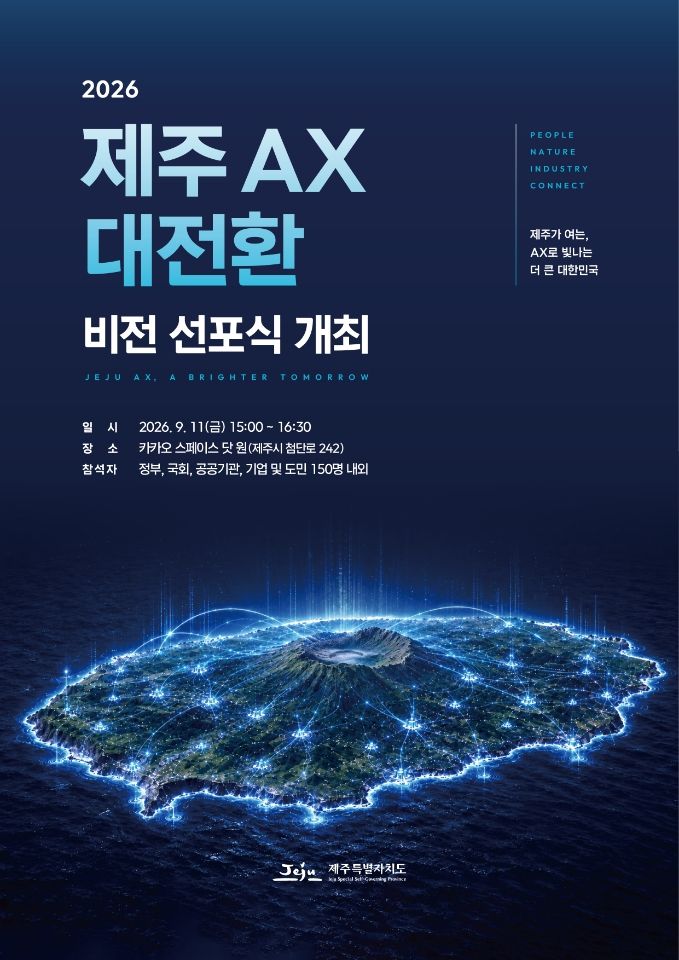
[Financial News Jeju = Reporter Jeong Yong-bok] Jeju will unveil a blueprint for 'Jeju-type AX' to transform local industry and administration, centered on a plan to build a 40MW-class artificial intelligence (AI) data center powered by renewable energy.
According to Jeju Special Self-Governing Province on the 10th, the province will hold the '2026 Jeju AX Great Transformation Vision Proclamation Ceremony' at 3 p.m. on the 11th at Kakao Space Dot One on Cheomdan-ro, Jeju City. AX stands for AI Transformation, referring to the shift toward AI-centered work methods and services in companies, industries and public administration.
About 150 people are expected to attend, including Jeju Special Self-Governing Province Governor Wi Seong-gon, local National Assembly members, officials from the Ministry of Science and ICT, Jeju Technopark, the Jeju International Free City Development Center (JDC), corporate representatives and local residents.
The most notable infrastructure in Jeju's AX strategy is the RE100 AI data center, which aims to use 100% renewable energy.
Jeju Province is currently planning the Jeju regional AX transformation project using 500 million won in state funding from the Ministry of Science and ICT. In the long term, it is considering building a 40MW-class Green AI Data Center and pursuing the project starting in 2028.
40MW refers to the power capacity of a data center needed to operate computing equipment, such as servers, for large-scale AI training and inference. Before building a large-scale center, Jeju Province is considering a phased approach using a small 0.3MW data center to verify renewable energy supply, AI computing and corporate demand.
However, the 40MW-class data center is not yet a confirmed project. Planning and consultations are underway regarding the final site, total project cost, private-sector operator and detailed power procurement structure.
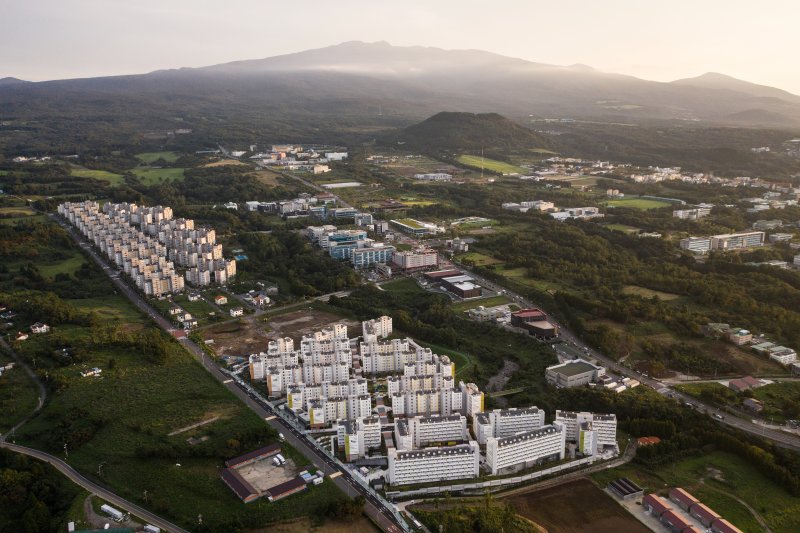
During discussions at the Jeju Provincial Council, a plan was also disclosed to consult with JDC on using the area around the second phase of Jeju Science Park as the data center site. To proceed with actual construction, infrastructure including power, cooling, water and communications networks, as well as corporate demand, must be secured.
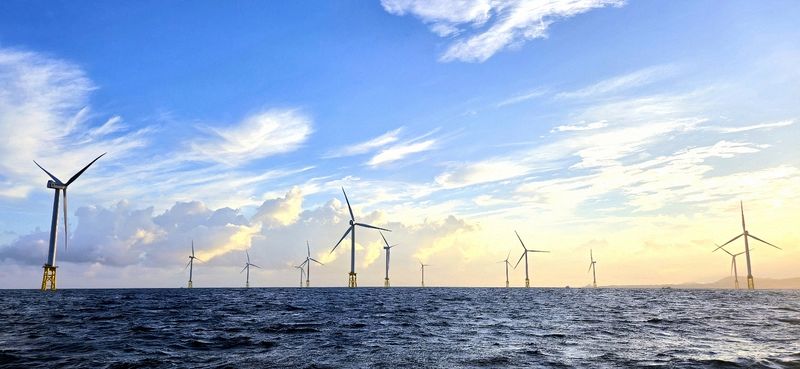
Renewable energy is the area where Jeju is seeking to differentiate itself from other regions. As wind and solar power generation have expanded, Jeju has experienced curtailment, reducing generation when output exceeds demand. Jeju Province plans to address energy issues and foster the AI industry simultaneously by connecting renewable energy with the large-scale power demand of AI data centers.
Computing resources secured through the data center will be used for the AI transformation of Jeju's industries. Potential applications include tourism demand forecasting and customized services; production and quality management in agriculture, fisheries and livestock; renewable energy generation forecasting and power optimization; biotechnology research; and satellite and space data analysis.
The structure would use the data center as shared infrastructure to improve productivity in existing tourism, agriculture, fisheries and livestock industries through AI, while supporting research and commercialization in future industries such as energy, space and biotechnology.
The Jeju initiative also coincides with a shift in national AI infrastructure policy toward regional expansion. The government has established a basis in the Basic Act on Artificial Intelligence for supporting the balanced regional development of related infrastructure, including AI data centers.
The Special Act on the Promotion of the Artificial Intelligence Data Center Industry, enacted last June, is also scheduled to take effect next March. As administrative and financial support for data center construction and operation, along with improvements to licensing procedures, becomes institutionalized, competition among regions to build AI computing infrastructure outside the capital area is expected to intensify.
The key to the Jeju model is whether the name 'RE100' can be implemented through an actual power procurement structure. Because solar and wind generation varies with weather conditions, a way must be found to supply stable power to large-scale AI computing equipment around the clock.
Cooling, water supply, high-speed communications networks and data security are also challenges to be addressed. It is also important to secure companies and research institutions that will actually use the data center and create a structure in which computing infrastructure leads to greater productivity, investment and employment for Jeju businesses.
Ha Jung-woo, Vice Chairman of the National AI Strategy Committee under the President, will also attend the proclamation ceremony on the 11th. Under the theme 'Korea's AI Strategy and Jeju's AI Transformation,' Vice Chairman Ha will explain the government's AI policy direction and ways to connect AI with Jeju's renewable energy and local conditions. He will also discuss the potential use of AI in Jeju's safety sector.
Attention is also focused on how specifically Jeju Province will define the data center's scale and construction schedule, project cost, participating companies and RE100 power procurement method at the proclamation ceremony. The practical success of Jeju's AX strategy is expected to depend on whether it goes beyond simply building a 40MW facility and creates a structure that supplies computing capacity to local companies and industries.
Jang Cheol-won, Director of the Future Industry Bureau of Jeju Province, said, "AI competitiveness depends on connecting stable, eco-friendly power with industry," adding, "By linking the government's national strategy with Jeju's renewable energy-based AI transformation model, we will create a future-industry ecosystem that residents can experience firsthand."
[email protected] Jeong Yong-bok Reporter