IAEA Board Refers Iran to Security Council for First Time in 20 Years
- Input
- 2026-09-10 06:19:21
- Updated
- 2026-09-10 06:19:21
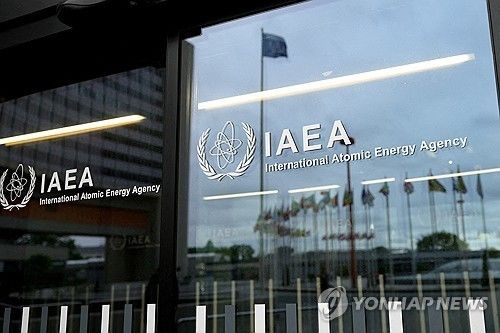
[Financial News] The International Atomic Energy Agency (IAEA) Board of Governors has adopted a resolution referring Iran to the United Nations Security Council (UNSC) for violating its nonproliferation obligations, The Associated Press (AP) reported on the 9th (local time).
This is the first time in 20 years that the IAEA Board has referred Iran to the UNSC.
The Board pointed out that Iran had failed to cooperate with a long-running investigation into traces of uranium found by inspectors at several undeclared sites in Iran.
It also requested that the director general report the resolution and previously adopted resolutions, in accordance with IAEA regulations, to all IAEA member states, the UNSC, and the United Nations (UN) General Assembly.
The resolution again demanded that Iran urgently remedy its noncompliance and take any measures the IAEA deems necessary to ensure that "nuclear material is not diverted to other uses."
Iran has not allowed IAEA inspectors access to its nuclear facilities since Israel and the United States attacked Iranian nuclear sites in June last year.
The resolution, jointly submitted by the United States, the United Kingdom, France, and Germany, received support from 23 of the IAEA’s 35 Board members, AP and Agence France-Presse (AFP) reported, citing anonymous diplomats.
China, Russia, and Niger opposed the resolution. Eight countries abstained, while the remaining country reportedly did not participate in the vote because it was behind on its contributions.
The resolution follows up on one adopted on June 12 last year. In that resolution, the IAEA determined that Iran was not complying with its nonproliferation obligations.
At the time, the IAEA estimated that Iran possessed 440.9 kilograms of uranium enriched to as much as 60%. Reuters explained that, if enriched further, this amount would be enough to produce 10 nuclear weapons.
Israel began bombing Iran’s nuclear facilities the day after the resolution was adopted last year, and the United States attacked Iranian nuclear sites soon afterward.
Iran immediately protested the resolution.
Reza Najafi, Iran’s ambassador to the IAEA, said on Iranian state television, "This resolution was adopted without any basis under political pressure from the United States and its allies," adding, "It will not produce any results."
Iran’s mission to UN organizations in Vienna also criticized the resolution in a post on X, formerly Twitter, saying it was "adopted without consensus and is political and biased."
Iran’s mission had warned on the 7th that it would retaliate if the resolution were adopted, but its post that day made no mention of retaliation.
Foreign media outlets assessed that the UNSC was unlikely to take concrete measures against Iran, such as adopting a resolution. China and Russia, which reportedly opposed the IAEA resolution, hold veto power as permanent members of the UNSC.
[email protected] Lee Seok-woo, International Affairs Specialist Reporter