"Hotter Seas Fueled the Typhoon": How Sea Temperatures and Glaciers Changed the Disaster Map [Climate Crisis Brought by Disasters 4]
- Input
- 2026-09-10 07:00:00
- Updated
- 2026-09-10 07:00:00
The ocean and glaciers are among the first places to register changes caused by the climate crisis. Rising sea-surface temperatures supply more energy to typhoons, while rising sea levels worsen coastal flooding. This report examines how shrinking glaciers and destabilized mountain slopes are changing disasters in high-altitude regions.
[Financial News] Rising sea-surface temperatures and glacier loss are changing the conditions that drive typhoons, storm surges, and mountain floods. Warmer oceans supply tropical cyclones with heat and moisture, while higher sea levels and shrinking glaciers increase the risk of coastal flooding and water-related damage downstream.
Storms Intensify Over Warmer Seas
Typhoons are more likely to maintain their strength as they approach land over warmer seas. When a typhoon moving toward the coast continues to receive heat and moisture, it is more likely to make landfall with powerful rain clouds and high waves.
The National Oceanic and Atmospheric Administration (NOAA) explains that hurricanes, typhoons, and cyclones all belong to the tropical cyclone family, and that their development requires atmospheric disturbances and warm sea-surface temperatures of at least 27 degrees Celsius. Heat released when water vapor rising from the ocean condenses strengthens the storm.
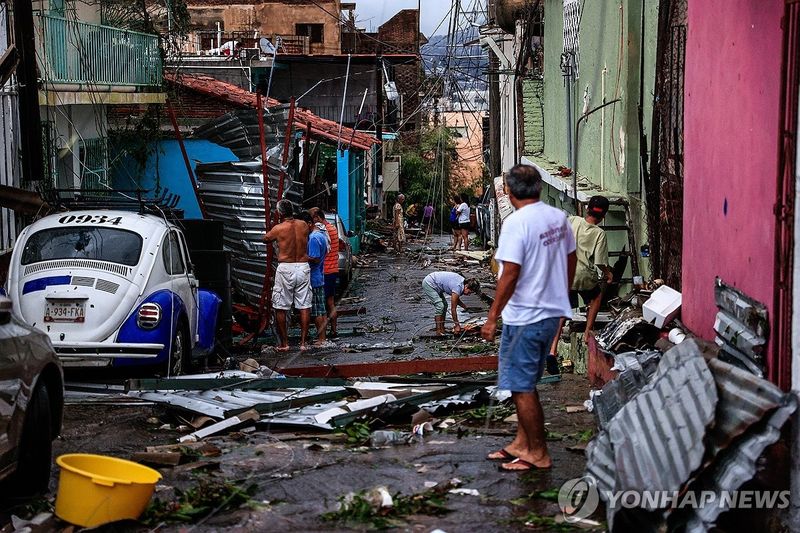
Hurricane Otis, which struck Acapulco, Mexico, in October 2023, also intensified rapidly over the ocean before making landfall. The National Hurricane Center (NHC) said sea-surface temperatures off Mexico's southern coast were around 30 degrees Celsius at the time. Strong winds and heavy rain battered hotels, residential areas, and port facilities.
July Seas Were the Hottest on Record
According to the European Union's Copernicus Climate Change Service (C3S), the global average sea-surface temperature in July 2026, excluding the Antarctic and Arctic regions, was 20.96 degrees Celsius. It was the highest figure recorded for July, surpassing the previous record of 20.89 degrees Celsius set in 2023.
The daily average sea-surface temperature also remained at record levels for the corresponding dates from June 19, 2026, through the end of July. On July 31, it reached 21.05 degrees Celsius, just 0.04 degrees below the all-time high of 21.09 degrees Celsius recorded in March 2024.
However, not every typhoon intensifies simply because the ocean is warm. Atmospheric circulation, vertical wind shear, surrounding pressure systems, forward speed, and the inflow of dry air also affect development. High sea-surface temperatures and a deep layer of warm water provide the background conditions that allow typhoons to move over the ocean without losing energy.
The seas around the Korean Peninsula are also warming rapidly. The National Institute of Fisheries Science (NIFS) said in its 2026 Climate Change Impact Briefing Book for the Marine and Fisheries Sector that surface water temperatures around South Korea rose by 1.60 degrees Celsius over the past 58 years, from 1968 to 2025. Over the same period, the global average increase was 0.76 degrees Celsius.
NIFS analyzed the long-term rate of warming as 0.0276 degrees Celsius per year, while the rate over the most recent 10 years, from 2016 to 2025, was 0.09 degrees Celsius per year. The strengthening of the East Korea Warm Current, the increase in the number of summer heatwave days, and the rising intensity and frequency of marine heatwaves were cited as contributing factors.
High Water Temperatures Change Aquaculture Operations
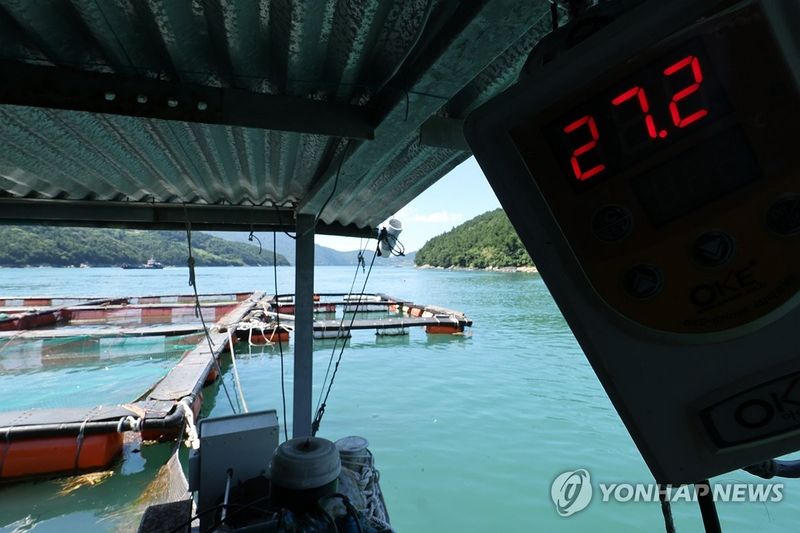
High ocean temperatures also affect fishing grounds and aquaculture farms. NIFS explained that repeated cold-water events and high water temperatures along the east coast in summer can cause stress in farmed organisms, reduce feeding, and weaken immunity. Last July, technical support was provided at a land-based olive flounder farm in North Gyeongsang Province to prepare for rapid changes in water temperature.
When a cold-water event occurs, operators must reduce water flow and feed supplies while providing sufficient oxygen. Once the cold-water event ends and water temperatures rise suddenly, the farming environment must be adjusted gradually. Changes in water temperature affect feeding, oxygen management, and even harvesting schedules.
Chemical changes are also occurring beneath the sea. NIFS said ocean acidification is under way throughout South Korean waters, while stronger stratification caused by ocean warming has led to observed declines in dissolved oxygen in the lower layers of the East Sea and reductions in nutrients near the surface. In 2025, harmful algal blooms occurred for the first time in six years, and the subtropical blue umbrella jellyfish was found as far east as the east coast after previously being observed in Jeju.
A Lower Coastal Defense Line Against Storm Surges
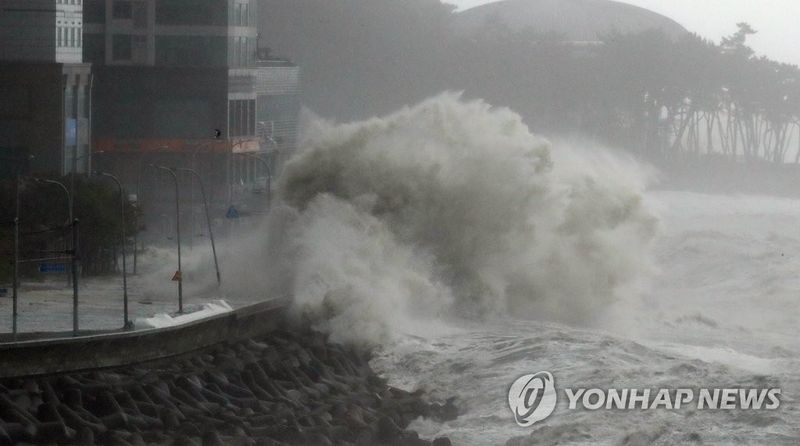
Sea-level rise is changing the conditions for coastal disasters. The National Oceanographic Research Institute under the Ministry of Oceans and Fisheries analyzed long-term observations from 21 tide gauges along the country's coast and found that South Korea's sea level rose by about 3.2 millimeters per year, or approximately 11.5 centimeters in total, from 1989 to 2024.
Over the most recent 10-year period, from 2015 to 2024, high rates of 4 to 7 millimeters per year were observed mainly along the west coast and around Jeju. As average sea levels rise, seawater can move inland more easily during typhoons. When river levels are already elevated by heavy rain, higher sea levels also lengthen the time it takes for rainwater to drain into the sea.
The Intergovernmental Panel on Climate Change (IPCC) concluded in its Sixth Assessment Report that coastal cities face a greater risk of flooding when sea-level rise overlaps with storm surges, extreme rainfall, and high river flows. It also explained that precipitation rates associated with tropical cyclones increase in a warmer climate.
Sea-level rise and marine heatwaves are not changes limited to the waters around South Korea. In the Southwest Pacific, where islands and coastal cities are widespread, changes in ocean temperatures and sea levels are causing damage to ecosystems, fisheries, and residential areas.
The Southwest Pacific, Where Cyclones, Monsoons, and Landslides Overlap
The World Meteorological Organization (WMO) said in its State of the Climate in the South-West Pacific 2025 report that 2025 was the region's second-hottest year on record and that nearly all of its waters were affected by marine heatwaves. Ocean warming, sea-level rise, and ocean acidification caused damage to ecosystems, fisheries, and coastal communities.
Cyclone Senyar also caused extensive damage in the region. WMO said Senyar was the first case of a tropical cyclone reaching that intensity in the Strait of Malacca, affected more than 10 million people in Indonesia and Malaysia, and caused more than 1,200 deaths. WMO described the damage from Senyar as the result of overlapping tropical cyclone conditions, monsoonal rainfall, flooding, landslides, and debris flows.
Changes in the ocean affect not only coasts but also waterways in mountainous regions. Melted ice adds to sea-level rise, while in high-altitude areas it simultaneously increases the risks of flooding and water shortages.
Waterways Change After Glaciers Disappear
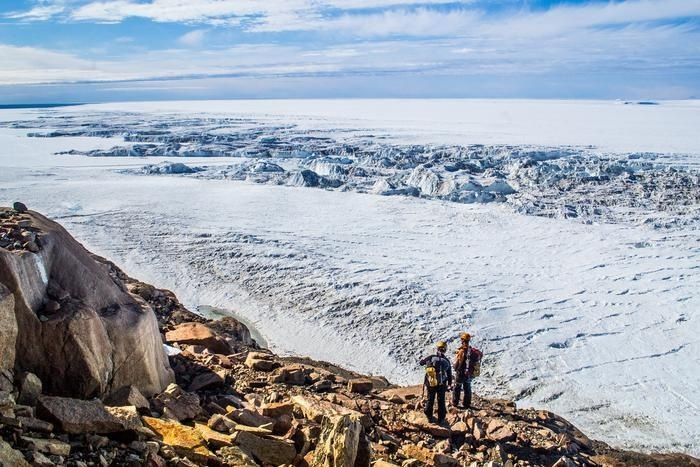
WMO's State of Global Water Resources 2024 report said widespread ice loss occurred for the third consecutive year in all glacier regions worldwide in 2024. Global glacier loss that year amounted to 450 Gt, a volume estimated to have raised the global average sea level by approximately 1.2 millimeters.
Glaciers are water reservoirs for mountain regions. Snow and ice melt seasonally, supplying downstream drinking water, agricultural water, hydropower, and ecosystems. As glaciers shrink, meltwater initially increases, raising the risk of floods. Over time, however, as the ice itself diminishes, water supplies during the dry season weaken.
Tropical glaciers in Papua, Indonesia, are also disappearing. WMO explained that the area of tropical ice remaining there in 2025 was about 2% of the area observed in 1988, and that the last tropical glacier could disappear by late 2026 or early 2027.
Disasters have also occurred when lakes formed by glacier retreat burst. The Indian Space Research Organisation (ISRO) analyzed satellite images of South Lonak Lake in Sikkim, India, from October 2023 and observed that water covering approximately 105 hectares drained from the lake between September 28 and October 4. When a glacial lake suddenly bursts, water, rocks, and sediment rush down a narrow valley. If roads, bridges, hydropower facilities, or villages lie downstream, the damage continues along the waterway.
Changes in the seas around the Korean Peninsula go beyond rising water temperatures. High water temperatures affect aquaculture management and the distribution of fish species, while ocean acidification and stronger stratification alter marine ecosystems and nutrient circulation. NIFS explained that these changes are occurring throughout the marine ecosystem.
Soonwook Kwon, director of the National Institute of Fisheries Science, said, "As warming in our seas accelerates faster than expected, clear changes are emerging throughout the ecosystem as well as in physical conditions."
[email protected] Seung-gon Han Reporter