Treasury Department to Buy Up to $6 Billion in Long-Term Treasuries; Market Reaction Negative
- Input
- 2026-09-10 01:41:44
- Updated
- 2026-09-10 01:41:44
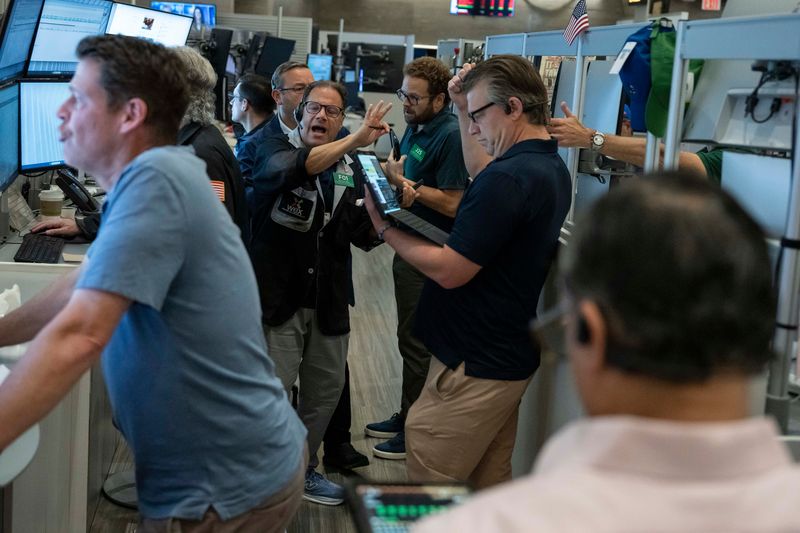
The U.S. Department of the Treasury decided on the 9th (local time) to expand its buyback of long-term Treasury securities to as much as $6 billion, approximately 8 trillion won. The amount is three times the usual level.
Treasury yields have been rising as inflationary pressure mounts amid the Iran war, with international oil prices surpassing $100 a barrel. The Treasury Department is attempting a stopgap measure to increase demand for Treasuries and lower yields, which move inversely to prices.
The market reacted coldly to the Treasury Department’s approach of treating the symptoms rather than the cause. Despite the large-scale buyback plan, Treasury yields rose further.
Three Times the Usual Amount Instead of Bessent’s Promised Twofold Increase
CNBC reported that the announcement followed up on Treasury Secretary Scott Bessent’s declaration on August 19 that the government would buy back Treasuries. However, the amount is three times the usual level in normal times, far exceeding the “twice the usual amount” Bessent had suggested.
The Treasury Department added that buybacks of at least $4 billion would continue in the future.
The measure focuses on maintaining liquidity in the long-term Treasury market, including 10- and 20-year securities. Through the move, the Treasury Department is seeking to curb the sharp rise in Treasury yields.
Treasury Yields Rise
However, the market reaction was negative.
U.S. Treasury yields continued to rise afterward.
The benchmark 10-year yield jumped 0.041 percentage points to 4.845%, its highest level since reaching 4.935% on November 1, 2023.
The 30-year yield, a benchmark for long-term interest rates, rose 0.031 percentage points to 5.295%. The two-year yield, which reflects the market’s outlook for Federal Reserve System (Fed) interest rates, climbed 0.027 percentage points to 4.427%.
A Futile Short-Term Fix
Mark Spindel, chief investment officer (CIO) at Potomac River Capital, said, "This is not Henry Paulson’s bazooka." He added, "Moreover, Congress also responded during that crisis." His comments referred to how Treasury Secretary Henry Paulson stabilized markets through massive intervention during the 2008 global financial crisis. That intervention was far larger than the current one, and Congress also provided support, suggesting that the Treasury Department would struggle to resolve the situation on its own.
Alex Pelle, an economist at Japan-based Mizuho, also assessed that "the Treasury buyback announcement fell short of expectations."
Stanley Druckenmiller, head of Duquesne Family Office and a former mentor to Bessent, also led the criticism.
In an opinion piece for The Wall Street Journal, Druckenmiller criticized the plan, saying, "The moment the market becomes convinced that the Treasury is committed to defending a particular price, it will test the authorities’ resolve every time yields rise." He added, "To survive these tests, the Treasury will have no choice but to expand the program."
He continued, "Governments that try to defend prices against fundamentals always lose," emphasizing that no matter how much money they pour into the market, they will ultimately have to yield to it.
Critics say that the Treasury Department’s attempt to stabilize the Treasury market through buybacks is reckless and could only heighten market anxiety, as the Fed faces pressure to counter the oil-price surge and inflation triggered by the Iran war with interest-rate hikes.
[email protected] Song Kyung-jae Reporter