'Modern Distribution Network' Found in 100-Year-Old Trash
- Input
- 2026-09-09 21:53:27
- Updated
- 2026-09-09 21:53:27
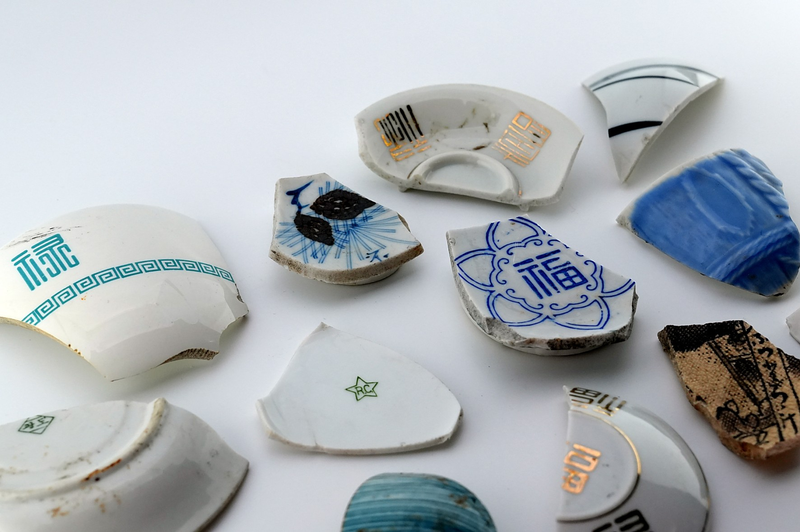
Hanyang University Museum announced on the 9th that it will hold the special exhibition 'The Movement of Objects: The Network of Modern Industrial Ceramics Seen in Haengdang-dong, Seoul and Yeongdo, Busan' at the Hanyang University Museum in Seongdong District, Seoul, starting on the 10th. This exhibition will also continue as a touring exhibition at the Swedish National Maritime Museum in Yeongdo District, Busan, starting on the 1st of next month.
The starting point of the story is the former municipal waste landfill in Haengdang-dong, Seongdong District, Seoul, in 2009. Tens of thousands of ceramics and household items discarded by the people of Keijō from the late 19th century to the 1960s poured out of this site. Using trademarks and company names stamped on the bottoms of the discarded ceramic dishes, as well as patterns on broken fragments, as clues, the research team traced where these dishes were manufactured, the paths they took to reach the dining table, and how they were eventually discarded.
What was revealed after the investigation was a modern distribution network that intricately connected the Korean Peninsula 100 years ago. Dishes mass-produced at a large-scale pottery factory established in Yeongdo, Busan, in 1917, and in kilns across the sea in Japan, flocked to Keijō by ship and railway. These dishes passed through department stores and general stores in the city before ending up on the dining tables of Koreans and Japanese, and upon reaching the end of their lifespan, they were buried on a hill in Haengdang-dong, just outside the city.
This exhibition is characterized by a modified structure tailored to the distinct character of the two cities, Seoul and Busan. The exhibition in Seoul, representing the consumer market, is organized to trace the journey in reverse, starting from the landfill in Haengdang-dong to the production factory in Yeongdo. Conversely, the exhibition in Busan, representing the production site, is structured around the journey of pottery produced at the Yeongdo factory as it spreads across the nation.
In the center of the exhibition hall, "unregistered objects" whose uses or origins have not yet been identified are placed, allowing visitors to observe and record them firsthand like researchers. The exhibition also showcases the "process of excavation and restoration," in which objects regain their names by brushing off the soil and piecing together fragments.
Ahn Shin-won, Director of the Hanyang University Museum, stated, "Tracing pottery fragments is not merely an archaeological investigation, but a task to confirm the massive economic flow of a modern city where factories, ports, railways, shops, and dining tables were intertwined," adding, "It will be a meaningful opportunity for the two cities to examine the movement paths of the same objects from different perspectives."
The Seoul exhibition runs until November 30 and is free to attend from Monday to Saturday (10:00 AM to 5:00 PM). A special exhibition featuring plates made by refugee artists in Busan during the Korean War, along with a cultural tour program visiting sites in Seoul and Busan, are also being held concurrently.
[email protected] Kim Man-gi Reporter