[Editorial] Renewed Middle East War and Pressure to Deploy Troops: We Must Wisely Overcome the Multifaceted Crisis
- Input
- 2026-09-09 18:06:02
- Updated
- 2026-09-09 18:06:02
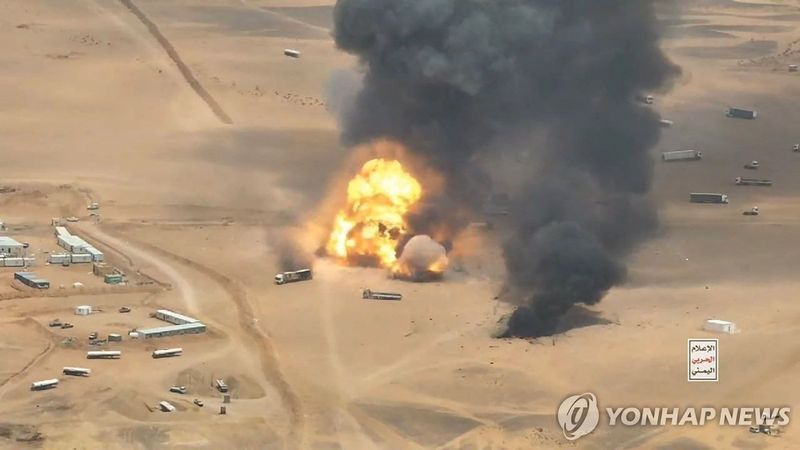
When the United States and Iran announced last June that they had agreed to end the war, the global and South Korean economies, which had been suffering from war-driven high inflation, were able to catch their breath briefly. However, the two countries never reached a final peace agreement. Instead, tensions intensified and another large-scale military clash erupted.
In addition, Saudi Arabia and the Houthis are engaged in fighting on a wartime scale over control of the Bab el-Mandeb Strait, the gateway to the Red Sea. With the Strait of Hormuz effectively blockaded by the U.S.-Iran war, the two sides have entered an uncompromising struggle over the strait, a key gateway for Saudi oil exports. More than 500 people were killed and about 20,000 were displaced in the Saudi-Houthi clashes. Instability is spreading across the Middle East, with Iran threatening to target tankers at ports in Kuwait and Bahrain, which support the United States.
The problem is that the United States is demanding a military contribution from South Korea. Washington, which has made such demands repeatedly, including through President Donald Trump, has recently increased the pressure by calling for troops and military assets to be dispatched before the November midterm elections. The Ministry of National Defense recently sent an inspection team to the region. Although officials say the move is not based on a decision to deploy troops, speculation is growing that the country has effectively entered the deployment process. Government and political sources have also mentioned maritime patrol aircraft and unmanned mine-clearing equipment as possible assets for deployment.
The prospect of the war spreading is casting a new shadow over the South Korean economy. Concerns are mounting that a crisis of high oil prices and high inflation could return. Given South Korea’s overwhelming dependence on imported crude oil, a surge in oil prices would raise production costs and send import prices soaring, directly reducing households’ real purchasing power. If major oil shipping routes such as the Strait of Hormuz remain blocked for an extended period, the consequences could go beyond a simple price increase and trigger a logistics and industrial crisis.
This is a crisis encompassing diplomacy, security and the economy. The government must activate a joint emergency response system involving the economic, diplomatic and trade ministries in preparation for a prolonged situation in the Middle East. It should ensure the safety of South Korean companies and citizens in the region, inspect strategic oil reserves in preparation for emergencies, and assess the impact on consumer prices and small self-employed businesses to minimize the economic shock.
The decision on whether to deploy military assets to the Middle East must take all factors into account. The sole standard for judgment should be the national interest. The government must comprehensively consider the South Korea-U.S. alliance, international cooperation, and the safety of South Korean citizens and troops. President Lee Jae-myung’s agreement with French President Emmanuel Macron in Paris, France, to strengthen bilateral cooperation for freedom of navigation in the Strait of Hormuz and the restoration of regional stability is part of the same effort. Although the United Kingdom and France led the formation of a “multinational mission for the Strait of Hormuz,” no actual operation took place because the U.S.-Iran clashes continued. More than ever, South Korea needs a sophisticated calculation of its national interest that safeguards diplomacy, security and the economy together.