[Editorial] Who Could Sympathize with POSCO Union’s Strike Amid Emergency Management?
- Input
- 2026-09-09 18:06:00
- Updated
- 2026-09-09 18:06:00
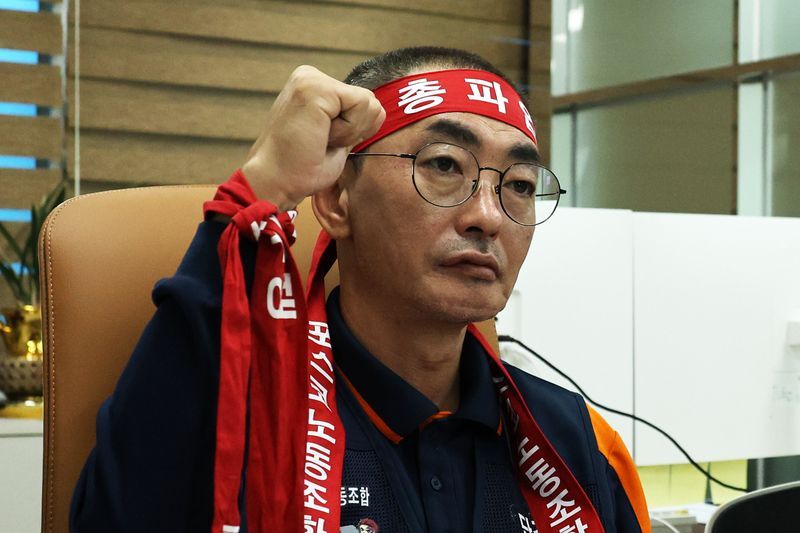
POSCO’s current business conditions are serious. Operating profit plunged from 6.7 trillion won in 2021 to 1.8 trillion won last year, and stood at only 480 billion won in the first half of this year. The company also needs massive investment to shift to future production systems, including hydrogen-based direct-reduced ironmaking, in line with the decarbonization trend. Management has entered emergency operations, returning 20% of the CEO’s salary and 15% of division heads’ salaries. The union, too, should be concerned about the company’s survival and future competitiveness.
Yet the union is demanding a 7.1% increase in base pay, incentive payments equivalent to 600% of base pay, and 50 employee shares. Management estimates that accepting all of these demands would require approximately 1.4 trillion won in additional funds. That is equivalent to the company’s projected operating profit for this year. Workers have a legitimate right to demand higher wages and better treatment. But the situation is different if they seek to increase only their own share regardless of the company’s circumstances.
This issue cannot be viewed as a problem limited to the POSCO Labor Union. Unions at leading South Korean conglomerates have recently faced criticism for fueling social polarization through excessive wage struggles. Hyundai Motor Company reached an agreement this year on a 100,000-won increase in base pay and bonuses equivalent to 400% of base pay after a 60-hour strike. Samsung Electronics also introduced a special performance bonus funded partly by business results, along with a 6.2% wage increase. If a structure becomes entrenched in which regular employees at large companies, who already receive relatively high wages, take a larger share every year, the dual structure of the labor market will inevitably worsen.
POSCO’s situation is also fundamentally different from disputes over profit sharing at companies enjoying a boom. Is it justified for a company whose operating profit has plunged in just a few years and which has entered emergency management to escalate a strike while putting forward demands nearly equal to last year’s operating profit? The opponent the POSCO Labor Union should be confronting is not the company. A massive wave is approaching in the form of China’s low-priced steel offensive, protectionist barriers erected by countries around the world, and the transition to decarbonization. The union should withdraw its demands and strike plans that ignore the company’s circumstances. Management, too, should seek a settlement with a more substantive proposal in negotiations.
Unions at large companies—not only POSCO but also those in the automotive and semiconductor industries—should humbly reflect on whether their strong bargaining power is widening disparities across the labor market. This is a point the SK hynix union, which is renegotiating, should take particularly seriously. If unions focus only on immediate vested interests and end up losing corporate competitiveness, partner companies, and future jobs, it would amount to collective ruin.