POSCO’s First Strike in 58 Years: 7.1% vs. 2.0% Wage Increase Dispute
- Input
- 2026-09-09 16:06:42
- Updated
- 2026-09-09 16:06:42
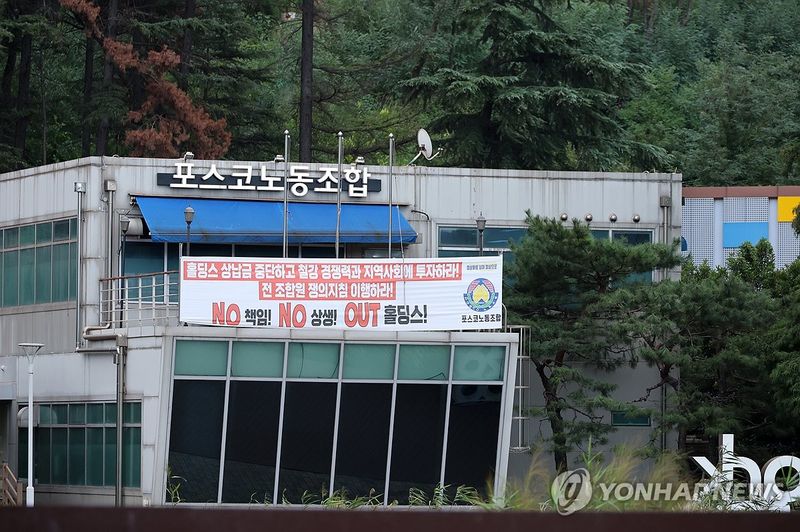
[Financial News] POSCO has faced its first strike since its founding in 1968, 58 years ago. The dispute arose after the union demanded a 7.1% increase in base pay in this year’s wage negotiations, while management offered 2.0%, leaving the two sides unable to reach an agreement. If negotiations make no progress, the union plans to launch a 120-hour second partial strike starting on the 16th.Related article on page 8According to POSCO and the Federation of Korean Trade Unions (FKTU) Federation of Korean Metalworkers' Trade Unions (FKMTU) POSCO Labor Union, the union began a 48-hour partial strike at 7 a.m. on the 9th. The strike covers the 3ZRM line at the No. 2 Electrical Steel Plant at Pohang Steelworks and all lines at the Pickling Plant at Gwangyang Steel Works. The action is limited to selected processes at some of the company’s facilities. The union said about 100 workers from Pohang and Gwangyang combined were participating. Management, however, estimated the number at only several dozen. POSCO has approximately 17,000 employees, including about 10,100 union members.
The immediate cause of the strike is the gap between labor and management in this year’s wage negotiations. At the seventh round of talks on the 3rd, the union demanded a 7.1% increase in base pay, along with an incentive payment equivalent to 600% of base pay, 50 employee stock ownership shares, and a 200% holiday bonus.
Management proposed a 2.0% increase in base pay, a 3.5 million won performance incentive, and 500,000 won in local gift certificates. The company estimates that accepting all of the union’s demands would require approximately 1.4 trillion won.
The two sides also have sharply different views of the company’s business conditions. POSCO’s operating profit has gradually declined since reaching 6.7 trillion won in 2021. It recorded 1.4 trillion won in 2024 and 1.8 trillion won in 2025, but operating profit stood at only about 480 billion won in the first half of this year. Management says it is difficult to accept the union’s demands because the steel industry is struggling amid an influx of low-priced Chinese steel products and stronger trade barriers imposed by countries around the world.
The union, meanwhile, says the strike is not solely about wage increases. It argues that staffing shortages and safety problems involving aging equipment have accumulated over a long period.
Kim Seong-ho, chairman of the POSCO Labor Union, said at a press conference that "the strike is not the objective but a means," adding that negotiations could continue if the company presents a new proposal. The union plans to stage a second 120-hour partial strike starting on the 16th if there is no progress in wage negotiations after the 48-hour strike. POSCO President Heegeun Lee said in a recent message to employees, "We continue to consider ways to come even a little closer to your expectations within the range the company can afford."
[email protected] Kim Mi-hee Reporter