Jeju Police Abolish ‘Lone Night Shift’ for Missing-Person Cases... Chief Kim Byung-chan Says, “Both Individuals and the Organizational System Were at Fault”
- Input
- 2026-09-09 15:59:15
- Updated
- 2026-09-09 15:59:15
【Financial News Jeju=Reporter Yong-bok Jeong】 The crisis involving the false closure of missing-person reports in Jeju is expanding on two fronts: a sweeping overhaul of the police’s missing-person investigation system and a prosecutorial investigation into the chain of command and approval process. Jeju police will abolish the system under which a single officer handled everything at night—from receiving a report and checking closed-circuit television (CCTV) footage to tracking the person in the field and filing reports. The number of officers assigned to missing-person investigation teams will effectively double.
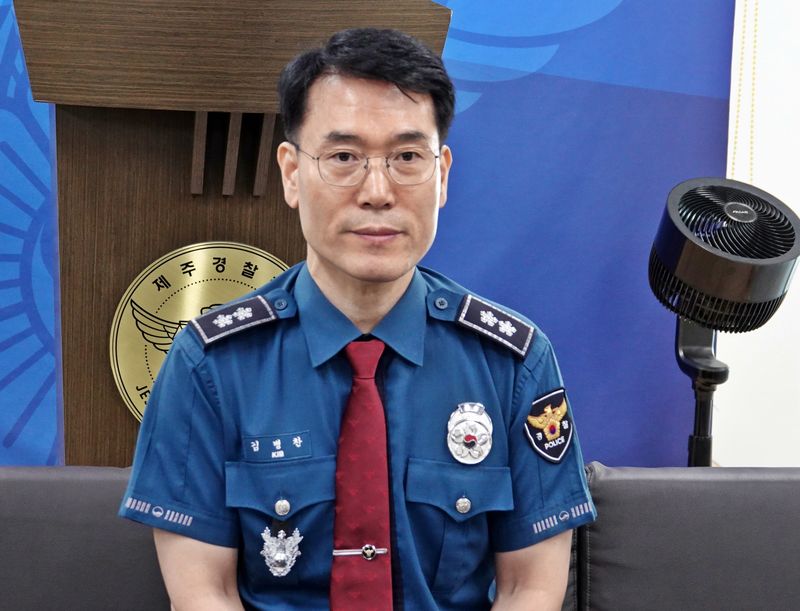
At a press briefing marking his inauguration on the 9th, Jeju Provincial Police Agency Chief Kim Byung-chan said of the false-closure case, “It is primarily an individual’s problem, but it cannot be dismissed as solely an individual matter.” He added, “There were also problems with the system for handling missing-person cases.”
This was the first public assessment by the head of Jeju police to identify not only the assigned officer’s misconduct but also problems within the organization and its work system as contributing causes.
Explaining the previous system, Chief Kim said, “A single police officer had to take a missing-person call at night, check CCTV footage, track the person in the field, and file internal reports. It was physically an unworkable structure.” The assessment is that vulnerabilities emerged as the police tried to provide 24-hour coverage with limited personnel, despite operating a separate team to specialize in missing-person investigations.
Jeju police will expand the missing-person investigation teams at each police station from their current four or five officers to nine. Each team will consist of one leader and eight members, who will work in shifts so that at least two officers are on duty at night.
The team leader will work during the day, focusing on case management and command. At night and on public holidays, a criminal investigations team leader will be designated as the person in charge. If staffing is insufficient, the criminal investigations duty team will provide support to ensure there is no gap in two-person coverage.
The first two cases in which Police Officer A, who was recently sent to prosecutors in custody, falsely closed missing-person reports were also received while the officer was working alone at night. The structure in which one person simultaneously handled report intake, tracking, requests for search support, and reporting is now being overhauled in response to the case.
The procedure for closing cases will also be strengthened. Jeju police have established as a principle that a police officer must personally meet the missing person and verify that the person is safe before closing the case. If the person is in another region or it is difficult for the assigned officer to meet them in person, police will verify the person’s actual safety with the assistance of the police station or relevant agency in that area.
The measure is intended to prevent the practice of closing cases after confirming a missing person’s safety solely by telephone, without an in-person meeting.
The police station chief will personally review missing-person reports received the previous day. The review will examine whether the search and safety-verification procedures were appropriate, and even closed cases will be rechecked to determine how they were handled and whether an in-person verification took place. Management of the missing-person profiling system will also be strengthened by requiring detailed records of the search, discovery, and process used to verify the person’s safety.
Jeju’s one-person night shifts are also linked to a structural problem at missing-person investigation sites nationwide. After the Jeju case, the Korean National Police Agency reviewed the national system and found that 111 of the 148 dedicated missing-person investigation teams, or 75.0%, had only one police officer working at night. In other words, three out of every four missing-person teams nationwide have a staffing structure similar to Jeju’s.
The Korean National Police Agency is also conducting a full review of approximately 310,000 missing-person cases closed over the past three years. It plans to first examine cases closed without an in-person verification, reopen investigations if negligent or improper handling is suspected, and complete the review by the end of November.
A managerial approval process will also be introduced. The chief of the Criminal Affairs Division will verify whether the officer met the missing person, how the person’s identity was confirmed, and whether objective evidence establishes the person’s safety before approving the case closure.
While police have begun institutional reforms, prosecutors continued their compulsory investigation for a second consecutive day.
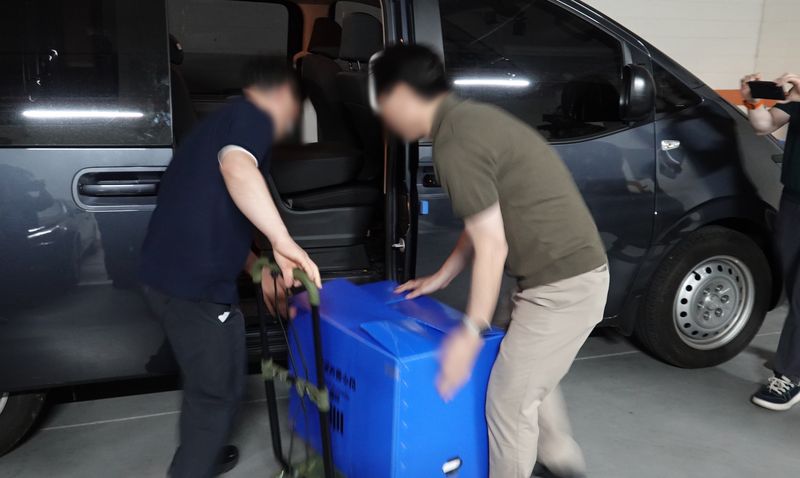
The Jeju District Prosecutors’ Office resumed search and seizure operations at the Jeju Provincial Police Agency and Jeju Western Police Station on the morning of the 9th, securing additional materials related to the handling of missing-person cases. Prosecutors explained that the operation continued because some materials had not been obtained the previous day.
At Jeju Western Police Station, the Emergency Communications Center was also included in the search and seizure from around 9:30 a.m. The previous day, prosecutors searched the station chief’s office, the Criminal Affairs Division, the missing-person investigation team, and the duty room at Jeju Western Police Station, as well as the Criminal Affairs Division of the Jeju Provincial Police Agency and the headquarters of the Korean National Police Agency.
It has not yet been confirmed how far the prosecutorial investigation will expand. However, prosecutors continue to secure materials to determine how Police Officer A’s false closure was handled during internal reporting and approval, and whether the management and supervision system functioned properly.
As Chief Kim acknowledged systemic problems and prosecutors pursued compulsory investigative measures at the same time, the focus of the case has also shifted. Responsibility is broadening from “Why did one police officer falsely close the case?” to “Why did the organization fail to detect the false handling?”
[email protected] Yong-bok Jeong Reporter