The Middle East at a Crossroads as 'Two Wars' Loom; Oil Prices Surge
- Input
- 2026-09-09 16:36:03
- Updated
- 2026-09-09 16:36:03
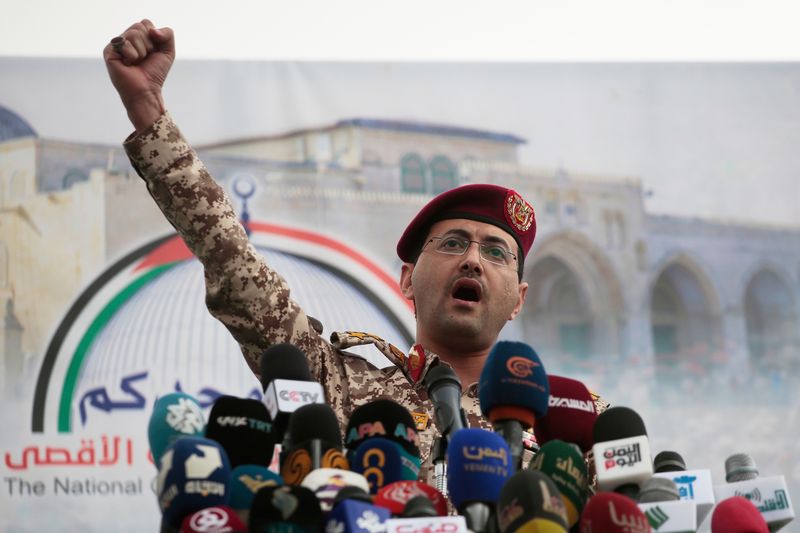
[Financial News] Iran is intensifying retaliatory military operations in response to United States strikes on Iranian tankers, expanding its targets to include Gulf states such as Jordan and tankers passing through the Strait of Hormuz.
Meanwhile, fighting between Saudi Arabia and the Iran-aligned Houthi rebels in Yemen over control of the Red Sea is escalating into an all-out war, putting the Middle East on the brink of expanding into 'two wars.'
As geopolitical instability grows amid fears of a wider Middle East conflict, international oil prices appeared poised to break above $100 per barrel on the 8th (local time), while all three major New York stock indexes plunged.
The Islamic Revolutionary Guard Corps (IRGC) said in a statement on the 9th (local time), "We attacked a United States military base in Al-Azraq, Jordan, with ballistic missiles." The Jordanian military confirmed that 20 Iranian ballistic missiles had flown into its territory.■ Iran Says It Attacked United States Base in Jordan and Naval WarshipsIran is also expanding the scope of its attacks, threatening to strike tankers off the coasts of Kuwait and Bahrain in retaliation for United States strikes on Iranian tankers. United States retaliatory attacks on Iranian tankers have escalated into Iranian counterattacks targeting United States bases, warships, Gulf states, and tankers.
Claiming control over the Strait of Hormuz, Iran is tightening its grip on the waterway by repeatedly launching indiscriminate attacks against vessels that do not comply with the conditions it has set for passage.
Iran claimed that it had retaliated against two United States Navy ships in the region in response to strikes on its vessels, including tankers. The IRGC said it had hit the United States destroyers USS Delbert D. Black and USS John Paul Jones with missiles. The ships are equipped with cruise missiles and the Aegis advanced integrated naval combat system.
The IRGC later claimed, "We struck two United States vessels and eight tankers, causing massive damage." It added, "We also struck 10 vessels that attempted to pass through the prohibited and dangerous zones in the Strait of Hormuz under the instigation and protection of the United States military."■ Saudi Arabia and Houthi Rebels Wage All-Out War for Control of the Bab-el-Mandeb StraitMeanwhile, Saudi Arabia, a pro-United States oil-producing country, and the Iran-aligned Houthi rebels in Yemen have begun an exchange of attacks on the scale of an all-out war over control of the Bab-el-Mandeb Strait, the gateway to the Red Sea.
On the 8th, the Houthi rebels used drones and missiles to strike four southern Saudi cities: Khamis Mushait, Abha, Najran, and Jizan. Saudi air bases and key refining and power facilities operated by the state-owned oil company Saudi Aramco were also among the targets.
It was the largest attack targeting Saudi territory since war broke out between the United States and Iran in late February. Saudi authorities said at least 73 people, including women and children, were injured.
The Saudi-led coalition immediately retaliated. Saudi fighter jets carried out retaliatory airstrikes on Juba in eastern Sanaa, the Yemeni capital controlled by the Houthi rebels, and the Taiz area in southwestern Yemen. Turki al-Malki, a spokesman for the Saudi-led coalition, declared, "We will respond decisively to deter the terrorist militia."
Earlier, Saudi Arabia had conducted extensive airstrikes and missile attacks on rebel positions across Yemen in an effort to stop the Houthi rebels from attempting to seize control of the Bab-el-Mandeb Strait. At dawn that day, Saudi forces carried out about 20 airstrikes on Marib in central Yemen, Al-Jawf in the north, and Taiz Province in the south. They also bombed Saada Province in the northern border area more than 10 times.■ International Oil Prices Likely to Break Above $100 per Barrel SoonThe civil war between the two sides, which had remained relatively quiet for four years, deteriorated after the Houthi rebels declared an end to the ceasefire last month and is now moving toward an all-out war.
International oil prices rose to nearly $100 per barrel amid concerns about a wider conflict in the Middle East.
On the 8th, November-delivery Brent crude oil on the Intercontinental Exchange (ICE) surged as high as $99.46 per barrel during trading, its highest level since July 24. It closed at $97.92 per barrel, up $0.92, or 0.95%, from the previous session.
On the New York Mercantile Exchange (NYMEX), October-delivery West Texas Intermediate crude oil (WTI) futures settled at $93.03 per barrel, up $1.55, or 1.69%, from the previous session.
[email protected] International Affairs Specialist Lee Seok-woo Reporter