From Alleged Pharmaceutical Company Lobbying to the Change to Deferred Prosecution: What Are the Key Issues at Kim Seung-won’s Confirmation Hearing?
- Input
- 2026-09-09 16:23:23
- Updated
- 2026-09-09 16:23:23
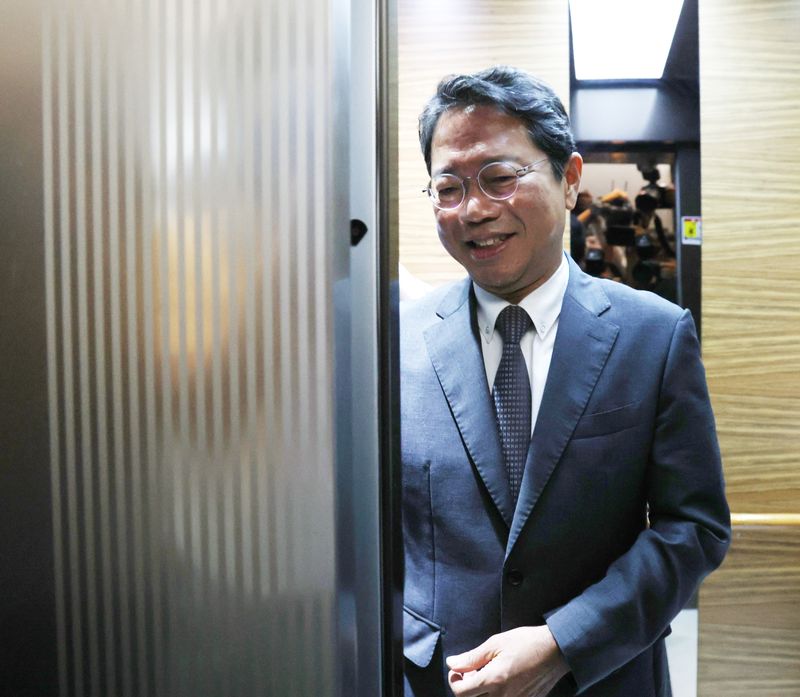
[Financial News] Controversy continues over allegations that Kim Seung-won, nominee for justice minister, lobbied on behalf of a pharmaceutical company’s clinical trial and over the circumstances surrounding prosecutors’ decision to defer his prosecution. Kim’s side maintains that no illegal request or preferential treatment was identified during the lengthy investigation or in court rulings. Legal experts, however, say the nominee requires thorough scrutiny regarding the trustworthiness and integrity expected of the justice minister, who oversees the legal order, regardless of criminal liability.
According to legal sources on the 9th, the central issue in the controversy surrounding Kim concerns a 2021 incident in which he contacted Kim Gang-lip, then commissioner of the Ministry of Food and Drug Safety, at the request of an acquaintance, identified by the surname Yang. The contact was intended to expedite GENENCELL’s clinical trial procedures as the company was developing a COVID-19 treatment. There is no dispute that Kim directly contacted the commissioner. In recordings made public, Kim said, "I’ll ask the commissioner to look into it personally" and "I’ll ask him to report back."
Opinions differ, however, on whether the contact constituted an illegal request. The trial court in the first-instance case involving GENENCELL CEO Kang judged that even if Yang had asked Kim to speed up the work, it was difficult to immediately conclude that the request sought to bypass the review process or have the matter considered ahead of other companies. In its decision not to indict, prosecutors likewise said that, given the circumstances surrounding COVID-19, it was difficult to deem the act of asking for expedited processing illegal in itself. They also found no unusual violation of regulations by the Ministry of Food and Drug Safety.
Prosecutors nevertheless determined that the alleged fact that Kim had promised to receive 5 million won in political donations from Kang and Yang’s side in return for the request was established, and they deferred prosecution. No money was actually paid.
The first-instance court in Kang’s case found that the recordings did not confirm that Kang had explicitly promised Yang compensation for arranging the request to Kim. Kim’s side also filed a constitutional complaint seeking to overturn the deferred-prosecution decision, arguing that there had been no agreement on the specific amount, timing, or conditions concerning the 5 million won.
The process by which prosecutors changed their decision is also subject to scrutiny. The investigative team reportedly considered indicting Kim without detention in 2024 and seeking an eight-month prison sentence, but ultimately decided to defer prosecution during the final processing stage. Reports say the decision took into account, among other factors, that some of the prosecution’s arguments supporting the existence of an improper request and a quid pro quo arrangement were not accepted in the first-instance trial involving Kang.
Legal experts say the allegations need to be clarified more fully because Kim is a nominee for justice minister. A lawyer who previously served as a senior prosecutor said, "Deferred prosecution ultimately means that the criminal facts are acknowledged but the case is not brought to trial. It is questionable whether someone who received such a decision from prosecutors should become the justice minister who directs prosecutors." The lawyer added, "If the premise is that criminal facts involving the abuse of a lawmaker’s position have been established, the issue of suitability is on a different level from an ordinary record of past conduct."
Han Sang-hee, emeritus professor at Konkuk University Law School, said, "A lawmaker’s act of conveying a constituent’s complaint may be regarded as part of the normal duties of office, but he should at least have contacted the relevant official after verifying the facts." Han added, "If the background involving a promise of political donations is also true, the nature of the issue changes." He emphasized, "The facts should be thoroughly examined over sufficient time at the confirmation hearing."
Cha Jin-a, a professor at Korea University School of Law, also said, "Regardless of whether the conduct constitutes a criminal offense, the justice minister must command a high level of public trust in political neutrality and fairness." She added, "The nominee’s suitability should be assessed from the perspective of whether the public can entrust the Ministry of Justice and the future Public Prosecution Office to him."
[email protected] Choi Eun-sol Reporter