Korea University Selects 37 Doctoral Research Grant Projects, Providing KRW 1.625 Billion
- Input
- 2026-09-09 14:08:29
- Updated
- 2026-09-09 14:08:29
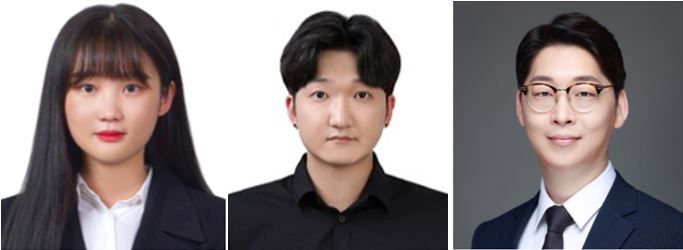
[Financial News] Thirty-seven doctoral students at Korea University (KU) will conduct research in science and engineering fields, including secondary batteries, information and communications technology (ICT), and life sciences, with research grants from the National Research Foundation of Korea (NRF).
KU announced on the 9th that a total of 37 projects had been selected for the NRF-led 2026 Doctoral Student Research Grant Program. The total funding amounts to KRW 1.625 billion.
The Doctoral Student Research Grant Program is designed to foster the next generation of scholars by providing research funding to doctoral students, including those in integrated master’s-doctoral programs and those who have completed their coursework, so they can develop as independent researchers. Based on evaluations of each project’s originality and academic value, as well as the applicant’s research capabilities and growth potential, the program provides KRW 25 million per project annually for one to two years.
By field, engineering accounted for the largest number of KU’s selected projects, with 15. This was followed by 10 projects in ICT and convergence research, six in life sciences, and three each in natural sciences and medicine and pharmacy.
Park Ji-min and Heo Young-hoon, students in Professor Yoon Young-soo’s laboratory at the KU-KIST Graduate School of Convergence Science and Technology, were selected together.
Park Ji-min will analyze the process by which lithium first forms in lithium-metal batteries and reacts at the interface between the electrode and electrolyte, with the goal of developing high-performance anode-free lithium-metal batteries. Park previously published research findings on lithium-metal batteries in international academic journals, including proposing the concept of a “supersaturated electrode” that enables electrodes to rapidly absorb large amounts of lithium.
Heo Young-hoon is researching an integrated electrode-separator design technology to improve the energy density and stability of aluminum-sulfur batteries. He previously designed a three-dimensional porous MXene electrode to suppress corrosion of metal electrodes in rechargeable aluminum batteries and investigated the causes of short circuits.
Professor Yoon Young-soo said, “The process through which both students independently developed their research topics and accumulated publication achievements led to their selection this time.” He added, “I hope they will grow into researchers who solve key challenges in next-generation secondary batteries.”
[email protected] Lee Bo-mi Reporter