Jin Young-seung and General Brunson Jointly Inspect GP and GOP Operations Along the Eastern Front
- Input
- 2026-09-09 17:52:10
- Updated
- 2026-09-09 17:52:10
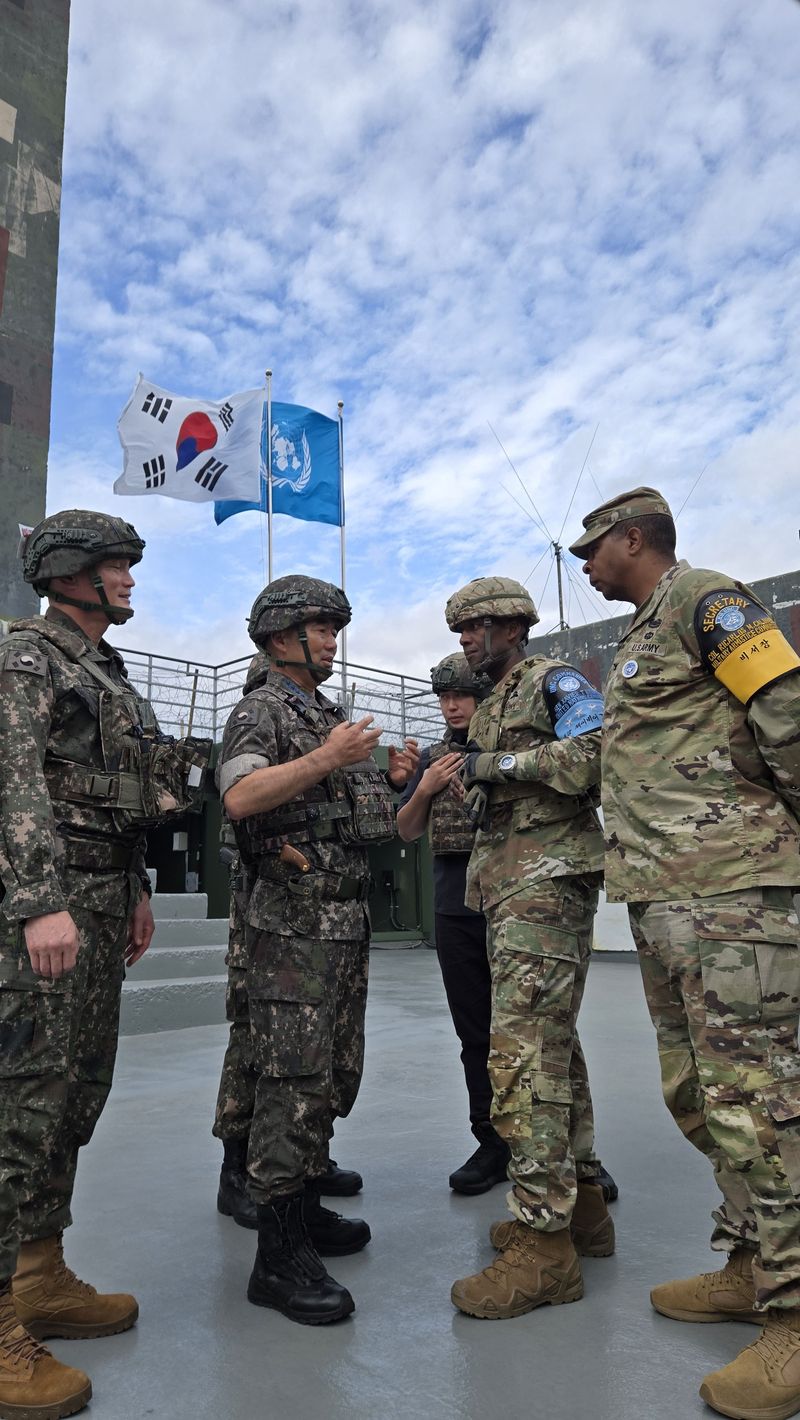
According to the Republic of Korea Joint Chiefs of Staff on the 9th, Jin Young-seung, Chairman of the Joint Chiefs of Staff, and General Xavier T. Brunson, Commander of the United Nations Command, Commander of the ROK/U.S. Combined Forces Command, and Commander of United States Forces Korea, made an unexpected joint visit to frontline GPs and GOP units along the Eastern Front to inspect operations in the DMZ. The senior commanders’ joint visit to the frontline was carried out to demonstrate the substantive response posture of South Korea and the United States as the North Korean military continues issuing high-intensity threats against the South following its reorganization under a new defense minister.
The inspection was seen as more than a routine review of readiness against North Korea. It was also viewed as a symbolic indicator of the changing strategic role of United States Forces Korea and the ROK-U.S. alliance. Whereas U.S. forces in Korea were once limited largely to the localized role of a “tripwire” deterring a North Korean invasion, the recent deployment of combined assets shows that their expanded role has become firmly established. They now serve as a key force for countering China and as a geostrategic foothold for broadly checking the authoritarian alignment of North Korea, China and Russia.
According to the Indo-Pacific military alliance assessment indicators of RAND Corporation, the highly concentrated consolidation of command and air-defense functions for combined forces previously dispersed across the Korean Peninsula inside Camp Humphreys is key evidence supporting this assessment. The ROK/U.S. Combined Forces Command is maximizing this structural flexibility and operational efficiency while closely testing its ability to control the battlespace across the entire Indo-Pacific theater, beyond Northeast Asia.
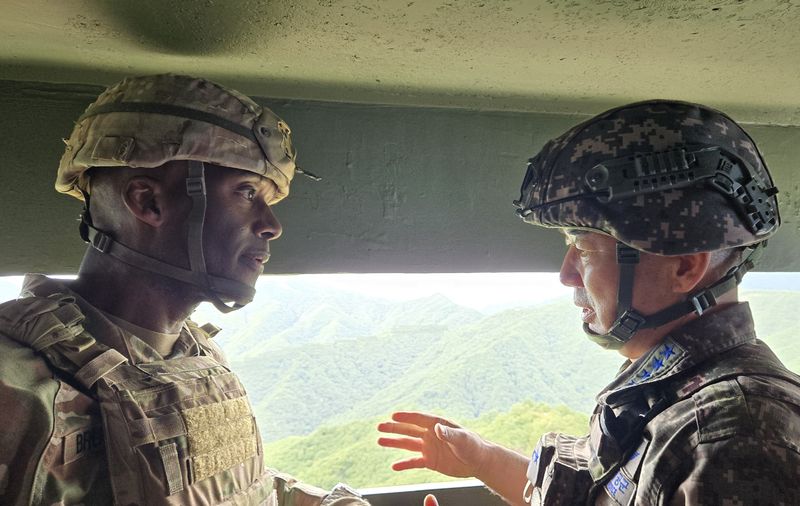
Jin and General Brunson closely reviewed the North Korean military’s ongoing work near the MDL and the frontline units’ immediate-response posture. Expressing serious concern over North Korean activity near the MDL, Jin instructed, "As this is a period when dense foliage and frequent fog may make it difficult to conduct guard operations, carefully analyze even the slightest signs to prevent surprise attacks and, if provoked, respond firmly and conclude the operation on site."
General Brunson echoed those remarks, emphasizing, "The Armistice Agreement has maintained stability on the Korean Peninsula for more than 70 years, and sustaining it requires a firm readiness posture." He added, "Today’s joint visit to the GP and GOP demonstrates the strength of the ROK-U.S. alliance and our shared resolve to defend the Republic of Korea and safeguard peace and stability on the Korean Peninsula." The two commanders agreed to continue strengthening the capabilities, readiness and interoperability needed to respond effectively to the changing security environment.
Jin then inspected the overall guard-operation system at a GOP battalion. He urged the troops to "Establish operational discipline and a command structure that reflect the threats we face, while maintaining practical operational capabilities so that all personnel can act immediately as one team," bringing his frontline operational inspection to a close.
[email protected] Lee Jong-yoon Reporter