South Korea to Skip Sado Gold Mine Memorial Ceremony for Third Consecutive Year: "Failed to Reach Agreement on Key Issues"
- Input
- 2026-09-09 13:43:54
- Updated
- 2026-09-09 13:43:54
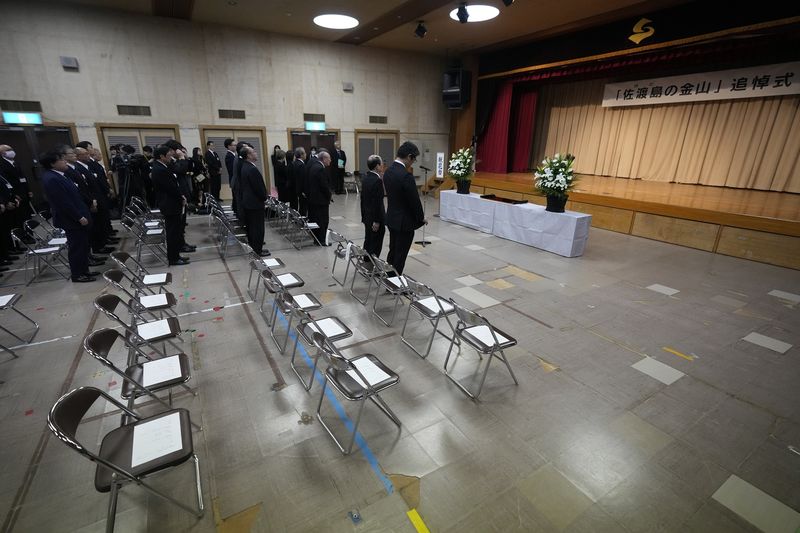
【Financial News, Tokyo = Reporter Seo Hye-jin】The South Korean government has decided not to attend the memorial ceremony for workers at the “Gold Mountain of Sado Island,” to be held on the 12th in Sado City, Niigata Prefecture, Japan. This marks the third consecutive year of nonattendance since the first ceremony in 2024.
According to Kyodo News and Japan’s Ministry of Foreign Affairs on the 9th, the South Korean government notified Japan the previous day of its decision not to attend. The South Korean Ministry of Foreign Affairs said, "We continued serious consultations with Japan to ensure that this year’s memorial ceremony could be held properly, but we decided not to attend because we failed to reach mutual agreement on key issues." (kumanichi.com)
An official from Japan’s Ministry of Foreign Affairs told Kyodo News, "We were unable to narrow the differences between Japan and South Korea over the content of the memorial address," adding, "The South Korean side appears likely to hold its own memorial ceremony again this year." The two sides reportedly failed to find common ground on how explicitly to describe the forced mobilization of Korean workers in the address.
Hideyo Hanazumi, governor of Niigata Prefecture, said at a regular press conference that "Since this is the South Korean side’s decision, there is nothing in particular for the prefecture to comment on," adding that the prefecture does not plan to make another request for South Korean participation.
The ceremony is intended to honor all workers who labored at the Sado Gold Mine, including Koreans. In July 2024, while pursuing the mine’s inscription as UNESCO World Cultural Heritage, Japan promised to hold a memorial event at the site every year in order to secure the South Korean government’s consent.
However, Japan clashed with South Korea from the first ceremony in 2024 over how to reflect the coercive nature of the mobilization of Korean workers in the event’s name and memorial address. As a result, Korean bereaved family members and South Korean government officials did not attend Japan’s ceremony on November 24 that year, making it a “half-fledged event.”
The South Korean government also skipped last year’s second ceremony because Japan’s memorial address did not clearly acknowledge the forced mobilization of Koreans. In both 2024 and last year, the South Korean government held separate memorial ceremonies in Sado City.
The Sado Gold Mine was one of Japan’s leading gold mines during the Edo period (1603–1867). After the Pacific War began in earnest, it was used to secure copper and other materials for the war effort. Many Koreans were mobilized during this process and worked in harsh conditions while facing discrimination.
The Sado Gold Mine was inscribed as UNESCO World Cultural Heritage at the 46th session of the World Heritage Committee, held in New Delhi, India, in July 2024. At the time, the South Korean government demanded that the “entire history,” including the forced mobilization of Koreans, be reflected in exhibitions and explanations, and Japan promised to accept the request.
However, the 48th session of the World Heritage Committee, held in Busan in July, assessed that Japan had made “some progress” toward reflecting the Sado Gold Mine’s entire history but that its efforts were still insufficient. The committee called on Japan to improve its interpretation and exhibition strategies and present the historical experiences of Korean workers more clearly. It also decided to review implementation again in 2028.
[email protected] Reporter Seo Hye-jin Reporter