KASA Launches Project to Establish Demonstration Infrastructure for Aircraft Structural Components
- Input
- 2026-09-09 14:00:00
- Updated
- 2026-09-09 14:00:00
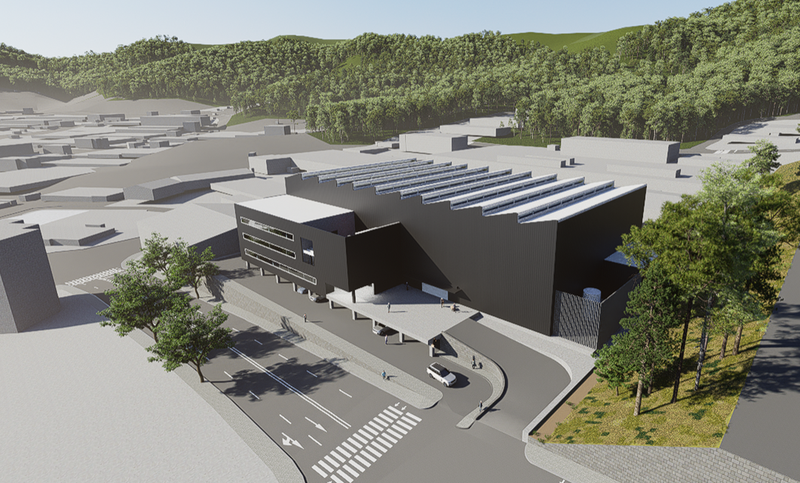
[Financial News] The Korea AeroSpace Administration (KASA) announced on the 9th that it had held a kickoff meeting for the Project to Establish Demonstration Support Infrastructure for Advanced Manufacturing of Next-Generation Aircraft Structural Components and would begin full-scale implementation. The project aims to help Korea's aircraft industry enter global supply chains and transition toward higher value-added production.
The project will be led by Busan Techno Park and will receive a total budget of 21.5 billion won over five years, from 2026 to 2030. The funding consists of 15 billion won from the national government and 6.5 billion won from local governments. Its core objective is to establish full-cycle demonstration infrastructure for large composite aircraft components at the Mieum Industrial Complex in Busan, responding to global civil aircraft manufacturers' demands for lighter and lower-carbon aircraft. Large composite aircraft components are next-generation structural parts that use advanced materials such as carbon fiber to reduce weight and enhance strength.
The project is expected to address difficulties faced by the aircraft industry and drive technological self-reliance and growth among small and medium-sized companies by providing shared access to large-scale advanced manufacturing and demonstration infrastructure that individual companies would find difficult to build on their own.
As part of the project, four types of core advanced shared equipment will be installed in stages to maximize the manufacturing efficiency of large aircraft structures.
The main piece of equipment, the "Large-Scale Automated Layup System for Aircraft Composites," will automatically lay carbon-fiber fabric at high speed and with high precision, dramatically reducing production times for complex, massive aircraft structures. The "High-Pressure, High-Speed Resin Injection System" will rapidly and uniformly inject and mold resin throughout large composite components, supporting the stable production of high-quality structural materials.
The project will also introduce an "Aircraft Composite Cutting System," which precisely processes raw materials to minimize material loss and improve process efficiency, as well as a "High-Temperature Press for High-Quality Thermoplastic Composite Molding" to verify the large-scale molding and quality of thermoplastic composites. Through these efforts, the project plans to complete full-cycle demonstration infrastructure covering everything from raw-material processing to final verification.
The Korea Institute of Materials Convergence Technology (KIMCO) and other institutions will participate as joint development organizations and provide technical support to companies. Their assistance will cover the full range of needs, including technical advice on component design, process monitoring to detect product defects in real time, and the systematic collection and analysis of data on aircraft-material properties, process conditions, and inspection results to build a big-data platform. In particular, they plan to actively support prototype production so companies can manufacture and test trial components without bearing excessive costs.
Oh Tae-seok, head of KASA, said, "This demonstration infrastructure will serve as a firm springboard for our companies that have struggled at the threshold of global markets because of the burden of securing expensive advanced equipment." He added, "We will provide everything from processing and molding to quality verification and data-based technical support, and spare no effort to help Korea's small and medium-sized aircraft companies grow into key partners of global aircraft manufacturers."
[email protected] Yeon Ji-an Reporter