"I Can't Find a Jeonse Home to Move Into Right Away": Seoul Apartment Short-Term Contracts Halve, Declining for Six Consecutive Months
- Input
- 2026-09-09 14:45:24
- Updated
- 2026-09-09 14:45:24
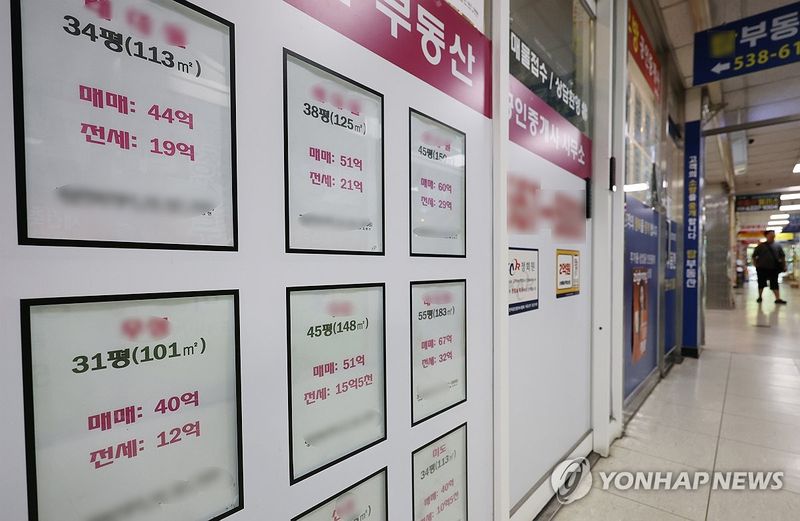
[Financial News] The number of one-year jeonse contracts for apartments in Seoul has declined for six consecutive months this year.
According to the Ministry of Land, Infrastructure and Transport (MOLIT) on the 8th, 110 one-year jeonse contracts for Seoul apartments were signed in July, marking the sixth consecutive month of decline. The monthly figures fell steadily from 230 in January to 206 in February, 200 in March, 166 in April, 143 in May, and 124 in June. The July figure was less than half the January total.
The share of one-year contracts among all jeonse leases also declined. After reaching 2.06% in February, it steadily fell to 1.83% in March, 1.77% in April, 1.57% in May, 1.46% in June, and 1.26% in July.
The decline in short-term leases is believed to reflect a contraction in Seoul's apartment jeonse market itself. A one-year jeonse contract is a short-term lease that reduces the customary two-year jeonse term to 12 months. Such contracts are mainly signed between landlords preparing to sell or move into their properties and tenants seeking a temporary jeonse home because of a move, schooling, or a job transfer.
Analysts say the number of contracts has fallen because the decline in jeonse listings has coincided with the need to match landlords' and tenants' moving schedules. In fact, according to real estate big-data platform Asil, the number of jeonse listings for Seoul apartments stood at 20,163 on the 7th of this month, down 13.3% from 23,263 at the end of last year.
Recently, some landlords have also been seeking one-year short-term tenants whose lease periods will end when the landlords are ready to move in, following the announcement of the tax reform plan. However, one-year short-term leases are difficult to finalize because it is hard to align various conditions, including the moving schedules of tenants and landlords. Except in certain areas, demand for one-year leases is also limited.
For this reason, one-year short-term leases are mainly found in areas with a high concentration of private academies. Through July this year, Nowon District recorded the highest cumulative number of one-year short-term jeonse contracts, at 104, followed by Gangnam-gu with 97 and Songpa District with 82.
An official at a licensed real estate agency told News 1, "There are not many actual contracts because the timing desired by the landlord and tenant must match exactly," explaining, "During negotiations, landlords sometimes lower the deposit further after taking into account the tenant's additional moving expenses and brokerage fees."
In general, deposits for short-term contracts are set lower than those for two-year jeonse leases. In May, for example, an 84-square-meter unit at Gaepojai Residence was leased under a new one-year jeonse contract for a deposit of 1.365 billion won, which was 285 million won lower than the 1.65 billion won deposit for a two-year jeonse contract signed in the same month.
[email protected] Hee-sun Kim Reporter