Jeju Province’s Employment Rate Hits Nationwide High of 71.9%, but Labor Shortages Persist in the Field
- Input
- 2026-09-09 11:14:51
- Updated
- 2026-09-09 11:14:51
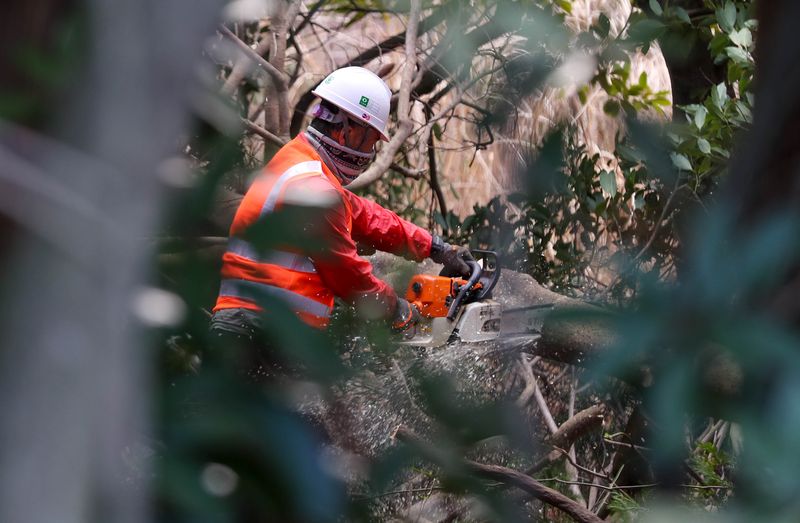
【Financial News Jeju = Jung Yong-bok】 While the nationwide employment rate remained stagnant in August, Jeju’s employment rate rose to 71.9%, the highest among the country’s provinces and metropolitan cities. However, businesses continued to face shortages of the workers they actually needed, highlighting the structure of Jeju’s labor market, where a high employment rate coexists with difficulties in hiring.
According to regional economically active population statistics from the “August 2026 Employment Trends” released by the Ministry of Data and Statistics on the 9th, the number of employed people aged 15 and older in Jeju Province stood at 415,000, with an employment rate of 71.9%.
The number of employed people increased by 12,000 from 403,000 in August last year. Over the same period, the employment rate rose by 2.1 percentage points, from 69.8%.
The gap was significant compared with the national figures. The nationwide employment rate for people aged 15 and older was 63.3% in August, unchanged from the same month last year. Jeju’s employment rate was 8.6 percentage points higher than the national average.
Among the provinces and metropolitan cities, Chungcheongnam-do had the second-highest employment rate at 67.3%, followed by Chungcheongbuk-do at 67.0%, Gangwon Province at 66.8%, and Jeollanam-do at 66.0%. Jeju’s rate was 4.6 percentage points higher than Chungcheongnam-do’s.
Jeju also recorded the largest year-on-year increase in its employment rate. The rate rose by 2.1 percentage points in Jeju, compared with 1.4 percentage points in Chungcheongnam-do and 0.9 percentage points each in Gwangju and Sejong.
Jeju’s employment rate for people aged 15 to 64, the comparison standard used by the Organisation for Economic Co-operation and Development (OECD), was 76.5%, 6.1 percentage points above the national figure of 70.4%. It increased by 2.2 percentage points from 74.3% in August last year.
Jeju’s economically active population totaled 418,000, up 10,000 from 408,000 in the same month last year. The labor force participation rate rose by 1.7 percentage points, from 70.7% to 72.4%.
By contrast, the economically inactive population fell by 10,000, from 169,000 to 159,000. This means that more people either found jobs or actively sought employment.
The number of unemployed people fell from 5,000 in August last year to 3,000 last month. The unemployment rate also declined by 0.5 percentage points, from 1.3% to 0.8%. The national unemployment rate was 2.0%.
Jeju’s headline labor-market indicators were strong, with both the employment rate and labor force participation rate rising while the unemployment rate fell. Jeju’s employment growth rate was approximately 3.0%, also high compared with the nationwide increase of 184,000 employed people, or 0.6%, over the past year.
However, a high employment rate does not necessarily mean that businesses can easily find the workers they need.
The Ministry of Data and Statistics’ economically active population survey examines labor supply at the household level. It counts as employed anyone who worked at least one hour for income during the reference week, as well as self-employed people and unpaid family workers who meet certain requirements.
By contrast, the Ministry of Employment and Labor’s establishment labor force survey by occupation examines the number of workers businesses consider necessary for normal operations and the number they currently lack. This is why a region can have both a high employment rate and a high business labor shortage rate.
According to a Ministry of Employment and Labor survey from the first half of 2025 cited in the recently released “Basic Plan for Human Resources Development in Jeju Province for 2026,” Jeju had 6,062 vacant positions and a labor shortage rate of 3.1%. The national average on the same basis was 2.5%.
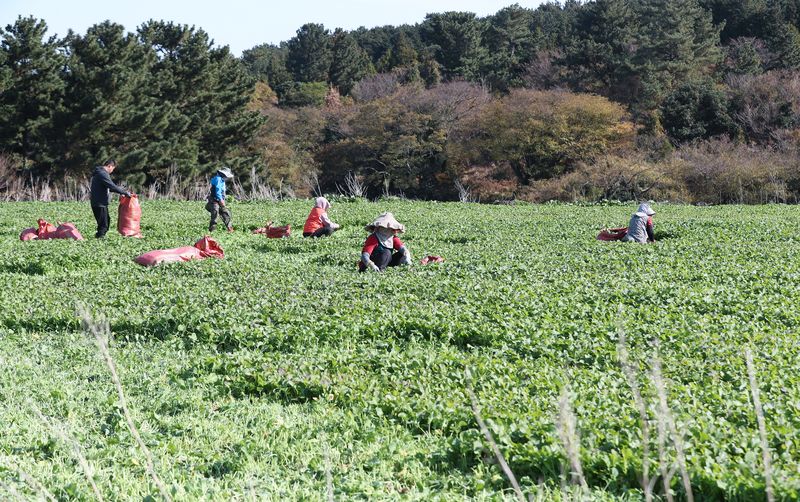
Of the 33 occupational categories, 16 had labor shortage rates in Jeju higher than the national average. The shortage rate for agriculture, forestry and fisheries occupations was 25.6%, more than five times the national rate of 4.9%. This means roughly one in four workers needed was unavailable.
The rate was also significantly higher for beauty and wedding service occupations, at 13.5% compared with the national figure of 5.1%. The shortage rate for simple manufacturing jobs was 9.0%, versus 3.3% nationwide, while construction and mining occupations recorded 6.9%, compared with 2.4% nationally.
The labor shortage was not limited to low-skilled field jobs. Information and communications research and development and engineering occupations recorded shortage rates of 6.0% in Jeju and 3.5% nationwide.
By industry, wholesale and retail trade had the largest number of vacant positions in Jeju in the first half of 2025, at 2,303. It was followed by accommodation and food services with 967, health and social work services with 885, and construction with 747.
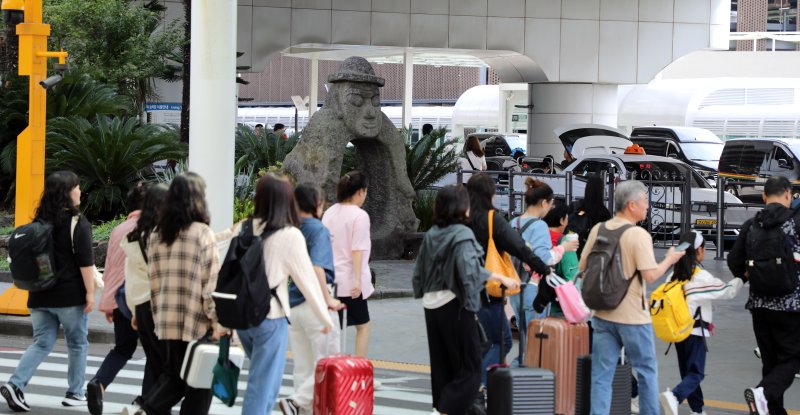
Businesses across the country also continued to face labor shortages. In the Ministry of Employment and Labor’s first-half 2026 establishment labor force survey by occupation, the number of vacant positions stood at 467,000 as of April 1, with a labor shortage rate of 2.4%.
Jeju’s geographic characteristics as an island, seasonal labor demand in tourism and agriculture, forestry and fisheries, and an industrial structure centered on small and medium-sized businesses all play a role. The mismatch between the occupations and skill levels businesses seek and the wages and working hours job seekers want also requires separate consideration.
Recent employment trends by industry in Jeju have also been uneven. In the July employment trends released by the Jeju office of the Ministry of Data and Statistics, total employment increased by 11,000 from the same month a year earlier, but employment in wholesale and retail trade, accommodation and food services fell by 7,000.
Meanwhile, employment in business, personal and public services rose by 8,000, construction by 7,000, and agriculture, forestry and fisheries by 6,000. This shows that even when total employment increases, individual industries may experience labor conditions differently.
Employment and production indicators also moved in different directions. Jeju’s employment rate rose by 1.7 percentage points year on year in the second quarter of this year, but service-sector output fell by 3.0%. Nationwide service-sector output increased by 4.5% over the same period, and every other region except Jeju recorded growth.
Jeju’s mining and manufacturing output also declined by 1.9%. This makes it difficult to conclude that the productivity and economic performance of the region’s industries improved simply because the employment rate rose.
There were also wide differences among industries in the nationwide August employment market. Employment in health care and social welfare services increased by 186,000, while employment in arts, sports and recreation-related services rose by 73,000. By contrast, employment in agriculture, forestry and fisheries fell by 109,000, accommodation and food services by 61,000, and manufacturing by 38,000.
The challenges facing Jeju’s employment policy are expanding beyond aggregate indicators such as the number of employed people and the employment rate to include industry-specific labor supply and demand. Even with the nation’s highest employment rate, the next tasks are to identify which industries cannot find workers, narrow the gap between the conditions sought by job seekers and businesses, and connect employment growth to productivity in the region’s industries.
[email protected] Jung Yong-bok Reporter