10 Years Since the Gyeongju Earthquake: MOIS and the Korean Meteorological Administration Discuss Improvements to Earthquake Disaster Prevention Policies and Technology
- Input
- 2026-09-09 15:00:00
- Updated
- 2026-09-09 15:00:00
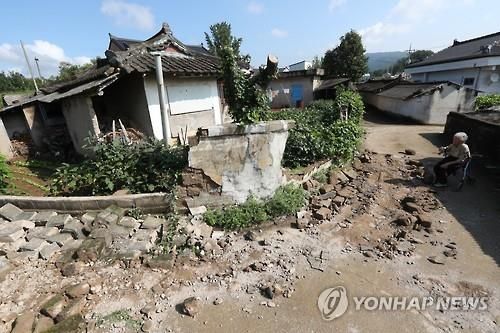
As 10 years have passed since the 2016 Gyeongju earthquake, the government and experts from South Korea and abroad will review recent domestic earthquake trends, including the ongoing earthquake sequence in the Haenam area, and discuss ways to improve earthquake disaster prevention policies and technology. They will share research findings on underground faults and geological structures on the Korean Peninsula and examine response technologies used in earthquake-prone countries such as Taiwan and Chile. They will also discuss ways to communicate public earthquake safety guidelines more effectively in preparation for a series of recent small earthquakes.
The Ministry of the Interior and Safety (MOIS) and the Korean Meteorological Administration announced that they will jointly hold the “2026 International Earthquake Workshop” at Lahan Select Gyeongju in Gyeongju, North Gyeongsang Province, from the 9th to the 10th. The international earthquake disaster prevention event, held annually since the Gyeongju earthquake, has been expanded this year into a two-day workshop to review policy and technological achievements over the past 10 years and discuss future directions.
On the first day, participants will review the achievements of domestic earthquake disaster prevention policies and the Korean Meteorological Administration’s earthquake monitoring and warning policies. Experts from Taiwan and Chile will then introduce their countries’ earthquake preparedness and response technologies. On the second day, the agencies will present the results of developing an integrated model of underground faults and velocity structures on the Korean Peninsula, as well as the results of developing technologies to survey and assess fault structure lines. A concluding discussion will address recent domestic earthquake trends and ways to improve related policies and technology.
The workshop will also address the recent series of small earthquakes in the Haenam area of South Jeolla Province. The government plans to review the importance of public earthquake safety guidelines and discuss ways to promote them so they can be used more effectively during actual disasters.
The seismic retrofitting rate for public facilities stood at 82.7% as of 2025. The government is carrying out seismic reinforcement projects with the goal of reaching 100% by 2035. Nationwide, 11,366 outdoor earthquake evacuation sites and 680 emergency tsunami evacuation sites have been designated.
Earthquake warnings have also become faster. The Korean Meteorological Administration provides earthquake information via disaster text messages within 5 to 10 seconds of an earthquake. Since May this year, it has also been fully implementing an “earthquake onsite warning” service that delivers alerts within 3 to 5 seconds to areas within a 40-kilometer radius when an earthquake with an intensity of VI or higher occurs.
Through the workshop, MOIS and the Korean Meteorological Administration plan to review the seismic retrofitting, monitoring and warning systems established over the past 10 years. They will also seek ways to improve future earthquake disaster prevention policies and technology based on fault research and recent earthquake trends.
[email protected] Bomi Lee Reporter