Jeju Targets Five Public Institutions as Competition Accelerates Ahead of Second Relocation Round
- Input
- 2026-09-09 10:47:31
- Updated
- 2026-09-09 10:47:31
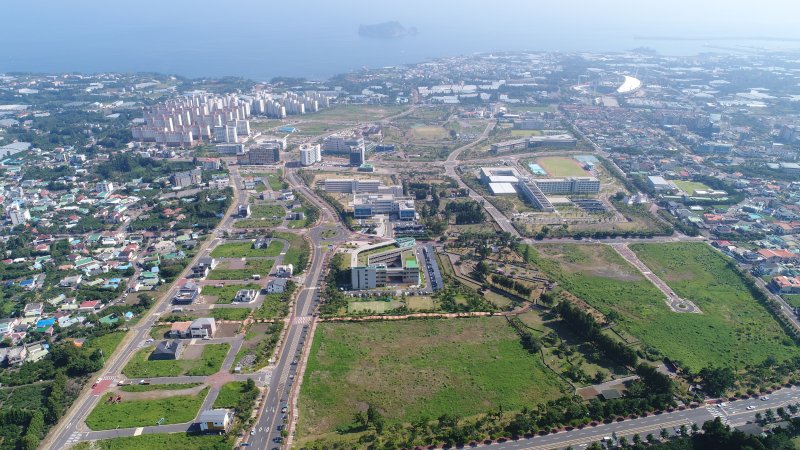
[Financial News Jeju = Reporter Jeong Yong-bok] Ahead of the government's second round of relocating public institutions to regional areas, Jeju Province has narrowed its core targets to five institutions, including the Korea Racing Authority (KRA) and Korea Airports Corporation (KAC), and launched a preemptive campaign.
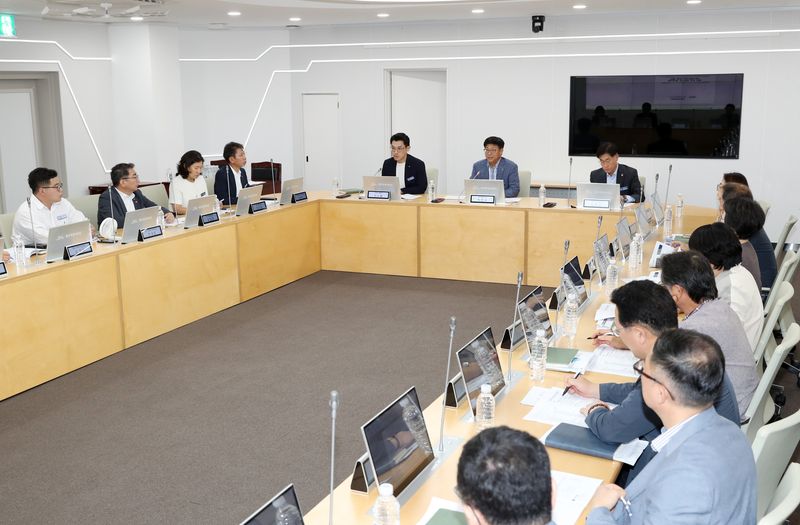
According to Jeju Special Self-Governing Province on the 9th, the province held a 'Task Force Meeting for Attracting Public Institutions to Jeju' at the Jeju Special Self-Governing Provincial Office on the 8th, chaired by Jeju Province Administrative Vice Governor Park Cheon-su, and reviewed institution-specific attraction strategies and the roles of each department.
The five key institutions Jeju hopes to attract are the Korea Racing Authority (KRA), Korea Airports Corporation (KAC), Korea Institute of Energy Technology Evaluation and Planning (KETEP), Korea Marine Environment Corporation, and Korea Trade-Investment Promotion Agency (KOTRA).
Jeju Province decided to accelerate contact and persuasion efforts with each institution, recognizing that it would be difficult to seize the initiative in the competition among regions to attract the institutions if it waited until the government's relocation plan and target institutions were finalized.
The departments responsible for each institution will deliver attraction proposals to the relevant central government ministries and directly explain the need for relocation to Jeju. They will also broaden their contacts to include institutional executives, employees, and labor unions, and pursue visits and meetings.
The attraction proposals will also be tailored to each institution. Jeju plans to present the policy significance of relocation to Jeju in terms of balanced national development, ways to strengthen each institution's functions, and potential links with Jeju's industries.
Considering that the employees and executives of relocated institutions will actually need to live in Jeju, the proposals will also include settlement conditions such as sites, housing, and education. The aim is to design relocation not merely as the physical movement of buildings and personnel, but as a structure linking the institutions with local industries, universities, and talent.
Jeju's competition to attract public institutions is expected to intensify as it coincides with the government's full-scale push for the second phase of regional relocation. Since the government's policy places importance on links between existing innovation cities and local industries and universities, as well as the settlement conditions of employees of relocated institutions, the key for Jeju Province will be how concretely it can present not only the rationale for attracting the institutions but also the industrial effects and living infrastructure after relocation.
Efforts to rally public opinion among residents will also proceed in parallel. Jeju Province plans to continue a province-wide signature campaign, press conferences, and on-site publicity, while encouraging local industries, universities, institutions, and organizations related to the key prospective institutions to participate in joint appeals.
The management system of the TF led by the Administrative Vice Governor is also being strengthened. The departments in charge will regularly share institutional developments and the results of visits and meetings with the coordinating department, compile major progress updates once a week, and report them to Wi Seong-gon, Governor of Jeju Special Self-Governing Province.
Ultimately, the decisive factor in the competition to attract the institutions is how convincingly Jeju can show, for each institution, 'why this institution should come to Jeju.' From the institutions' perspective, operational efficiency and employees' settlement conditions are important; to the government, Jeju must demonstrate balanced national development and regional growth effects. For the region, the relocation must lead to industry, jobs, and the hiring of local talent.
Administrative Vice Governor Park Cheon-su said, "Before the government's relocation plan is finalized, we must present a concrete rationale for attracting institutions that will enable Jeju and the institutions to grow together," and urged, "Please meet directly with the central government ministries and the institutions we hope to attract and actively explain Jeju's strengths and support measures."
[email protected] Jeong Yong-bok Reporter