Supreme Court of Korea: “If a Prosecutor’s Investigator Begins an Investigation, the Supervising Prosecutor Is Deemed to Have Initiated It”
- Input
- 2026-09-09 11:10:59
- Updated
- 2026-09-09 11:10:59
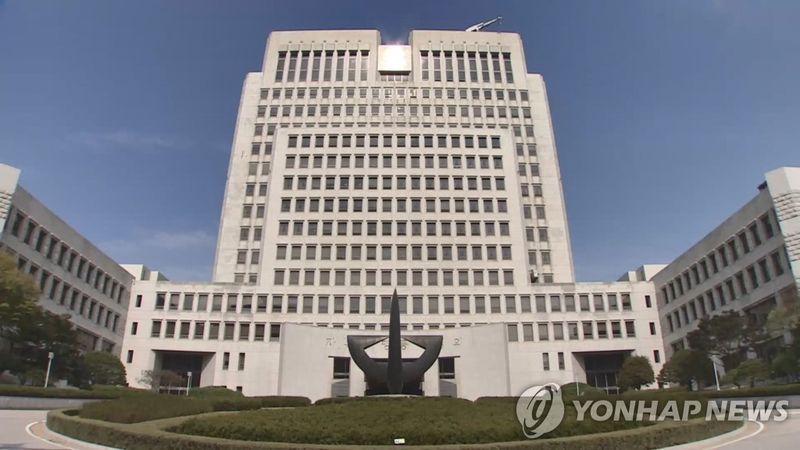
According to legal sources on the 9th, the First Petty Bench of the Supreme Court of Korea, presided over by Supreme Court Justice Ma Yong-joo, recently overturned a lower court ruling that dismissed the indictment against Defendant A, a former head professor of an art graduate school, and graduate student B. The case was remanded to the Seoul Central District Court. The two were indicted on charges of violating the Improper Solicitation and Graft Act.
A was accused of receiving 30 million won in cash from B in a laboratory in September 2019, when A was serving as dean of the graduate school and B was taking A’s class. B was charged with giving the money and with failing, without justifiable reason, to comply with a summons from the Board of Audit and Inspection (BAI).
The case was assigned to the Seoul Central District Prosecutors’ Office at the request of the BAI. Prosecutor’s investigators then interviewed witnesses and questioned suspects under the direction of the prosecutor in charge. During that process, the prosecutor in charge was replaced. The successor prosecutor conducted additional inquiries before indicting the two defendants.
The issue was whether, when the prosecutor in charge is replaced during an investigation, the prosecutor who ultimately takes over the case and brings the indictment can be regarded as the prosecutor who initiated the investigation. Article 4, Paragraph 2 of the Prosecutors’ Office Act prohibits a prosecutor from prosecuting a crime that the prosecutor personally initiated an investigation into.
The first and second trials reached different conclusions. The first trial found both defendants guilty, sentencing A to one year in prison suspended for two years and ordering the confiscation of 30 million won. B was sentenced to eight months in prison, suspended for two years. The second trial, however, held that prosecutor’s investigators were investigative assistants without independent authority to transfer the case. It therefore regarded the prosecutor who directly questioned the suspects and indicted them as the prosecutor who initiated the investigation. The court dismissed the indictment, ruling that the same prosecutor had handled both the investigation and prosecution, making the indictment procedure unlawful and invalid.
The Supreme Court of Korea reached a different conclusion. The justices held that the investigation must be deemed to have begun once the prosecutor’s investigator undertook substantive and specific investigative acts under the supervising prosecutor’s instructions, such as preparing witness statement records and suspect-interrogation records. The relevant point is not when a crime-recognition report was filed or a case number was assigned.
The court stated, “The investigation conducted by a prosecutor’s investigator merely assists the prosecutor’s investigation,” and ruled that the prosecutor who initially directed the investigation was the party responsible for conducting the primary investigation. As a result, the prosecutor who took over the case and brought the indictment had not prosecuted a crime into which that prosecutor had initiated an investigation, so the indictment was lawful.
The ruling is regarded as significant because it is the first time the Supreme Court of Korea has established criteria for applying the provisions of the Prosecutors’ Office Act that require the separation of investigation and prosecution.
[email protected] Kim Dong-gyu Reporter