Israel’s ‘E1’ Divides the West: Europe and Canada Impose Sanctions, U.S. Floats Retaliation
- Input
- 2026-09-09 10:12:45
- Updated
- 2026-09-09 10:12:45
Canada is drawing particular attention. While waging a trade war with the United States, Canada has aligned with the United Kingdom and France—not the United States—on the Israel issue, revealing the complex diplomatic landscape within the West.
The United Kingdom, France, Canada and nine other countries said on the 8th, local time, that they would implement or join new trade restrictions in response to Israel’s expansion of settlements in the West Bank.
Why the West Bank? The Key to Building a Palestinian State
The West Bank, at the center of the dispute, is a Palestinian territory west of the Jordan River that Israel has occupied since the Third Arab-Israeli War in 1967. Most of the international community considers the Israeli settlements built there illegal under international law, but Israel does not recognize that position.
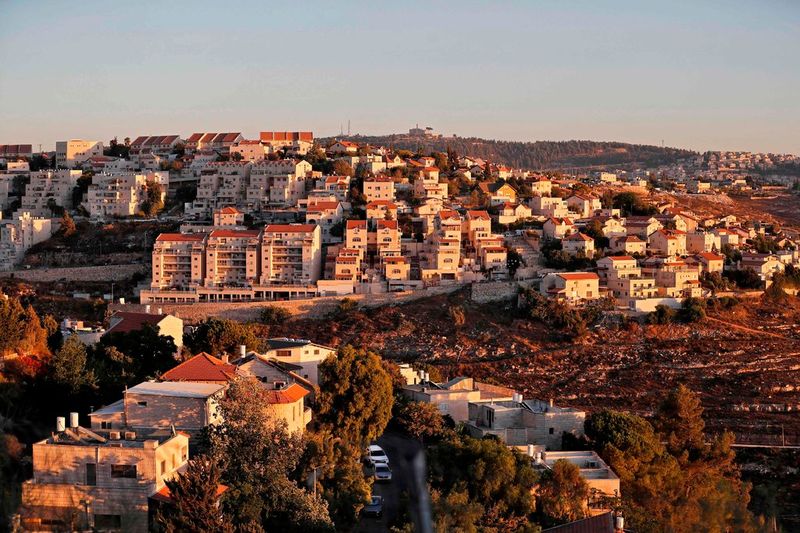
The problem is that the Israeli government continues to expand the settlements. The area drawing particular concern from Europe is E1, located between East Jerusalem and Maale Adumim, a large Israeli settlement. Israel approved the construction of thousands of new housing units there last year.
E1 is not simply a housing development area. European countries fear that if Israeli settlements are established there on a large scale, the territorial continuity between the northern and southern parts of the West Bank—key territory for a future Palestinian state—could be severely damaged. Connections between East Jerusalem and the West Bank would also become more difficult, reducing the viability of the ‘two-state solution,’ in which Israel and Palestine coexist as independent states.
Hardliners in Benjamin Netanyahu’s government view the settlement expansion as part of a process to effectively extend Israeli sovereignty over the West Bank. Israel’s finance minister, Bezalel Smotrich, has called the government’s West Bank policy a ‘revolution’ and said his goal is full Israeli sovereignty over the area. In July, he said, "What I am doing now is effectively laying the groundwork for this."
That is why the United Kingdom took action. The United Kingdom’s foreign secretary, Ed Miliband, described the settlement expansion as ‘ethnic cleansing’ and criticized it for undermining the two-state solution. The United Kingdom’s sanctions target not only direct trade with the settlements but also British companies that provide services to them.
Israel Retaliates, Bringing the United States Into the Dispute
Israel immediately retaliated. It decided to close the British consulate in East Jerusalem, which primarily handles Palestinian affairs, and exclude British representatives from the Gaza postwar coordination center led by the United States.
Until this point, the conflict had been between Europe and Israel. But the United States’ involvement changed its character.
Before the United Kingdom’s announcement, U.S. ambassador to Israel Mike Huckabee warned the British Broadcasting Corporation (BBC) that the United States would respond if the United Kingdom proceeded with the sanctions. The possibility that British companies could be barred from doing business in some U.S. states was even raised. The diplomatic dispute over West Bank settlements could now spill over into a trade dispute between the United States and the United Kingdom.
However, the U.S. government has not officially decided to retaliate against the United Kingdom. U.S. Secretary of State Marco Rubio said, "President Donald Trump has not yet stated his position on this issue," adding, "We do not want violence, conflict or tensions to escalate in the West Bank." The United Kingdom notified the Trump administration of its plans before making the announcement.
Canada, in a Trade War with the U.S., Sides with Europe
Another point of interest in this situation is Canada.
As its trade conflict with the United States intensified, Canada formed a united front with the United Kingdom and France on the Israel issue. Canada, one of the United States’ closest economic partners, was simultaneously clashing with the United States on trade while aligning with major European countries on a diplomatic issue.
The Associated Press (AP), analyzing the U.S.-Canada trade conflict that day, quoted Canadian historian Robert Bothwell as saying, "Carney and Canada have become symbols of resistance to Trump." He argued that U.S. pressure could instead signal to other countries that they should distance themselves further from the United States.
In terms of economic impact alone, the measures are limited. The United Kingdom’s Parliament estimates that trade between the United Kingdom and West Bank settlements amounts to only about £38 million (approximately $51.4 million). Their diplomatic significance, however, is substantial. The United Kingdom, France and Canada have formed a united front against Israel’s West Bank policy, while the possibility of economic measures against these allies has also begun to be discussed in the United States.
The West Bank, once a territorial issue between Israel and Palestine, is now emerging as a new fault line in the Western alliance—one capable of dividing the United States, Europe and Canada.
[email protected] Reporter Lee Byung-chul Reporter