Korea Customs Service uncovers 546.8 billion won in illegal tax evasion and abuse of tariff quotas... 58.6 billion won collected
- Input
- 2026-09-09 11:30:00
- Updated
- 2026-09-09 11:30:00
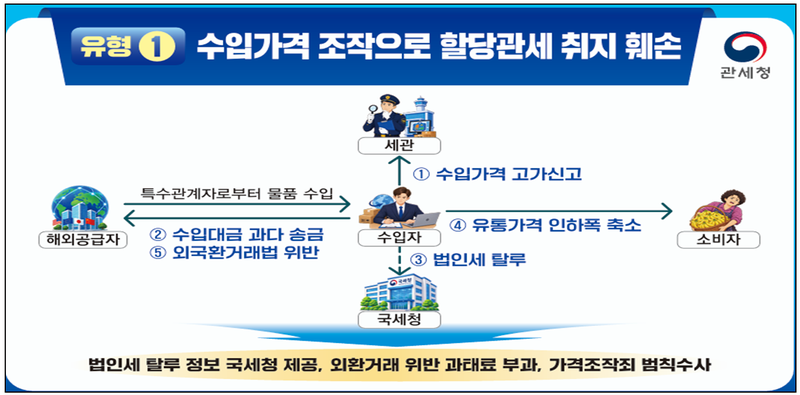
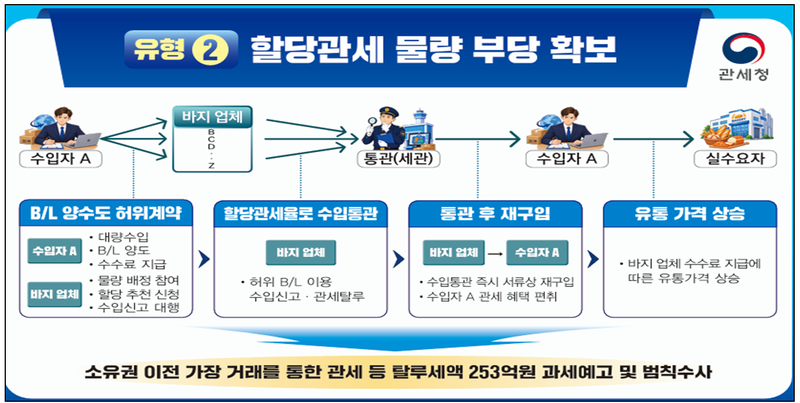
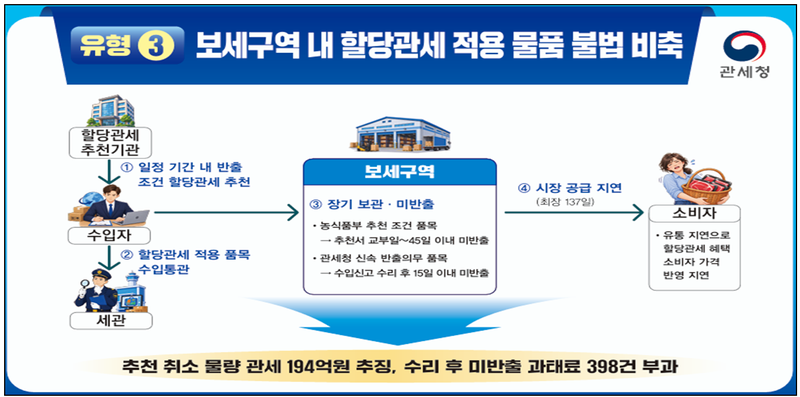
Korea Customs Service announced on the 9th that, as a result of intensive crackdowns on abuses of the tariff quota system that undermine the stability of consumer prices from February to August of this year, it uncovered violations totaling 546.8 billion won and collected 58.6 billion won in back taxes. In addition, through special on-site inspections of bonded areas, it induced the supply of 292 tons of illegally stockpiled goods to the market.
This crackdown was conducted by combining a planned customs investigation (targeting 21 companies) with a special inspection of bonded areas. Regarding the main types of violations detected, banana importer Company A intentionally inflated its import prices by exploiting the fact that it was exempt from taxes due to the application of a tariff quota (0% tariff rate). Company A evaded corporate taxes by inflating purchase costs to lower its operating profit margin, and siphoned profits from its domestic subsidiary to its overseas headquarters under the pretext of excessive import remittances. Furthermore, it failed to reflect some of the reduced tariff benefits in domestic wholesale prices.
Cases of unfairly "sweeping up" inventory were also uncovered. Importer Company C unfairly secured allocated volume by entering into fraudulent Bills of Lading (B/L) transfer agreements with numerous shell companies—so-called "dummy" firms—to obtain recommendations for tariff quotas, and then repurchasing the goods on paper immediately after import clearance. In this process, unnecessary costs, such as commissions paid to the dummy firms, were reflected in the final supply price, resulting in an increase in consumer prices. Furthermore, beef importers and others were caught violating the recommendation condition of "removing goods from bonded areas within 45 days" and illegally stockpiling them in bonded areas for up to 137 days, resulting in the imposition of tens of billions of won in back duties.
Korea Customs Service plans to expedite the amendment of the Customs Act, including shortening the import declaration deadline for tariff-quota items from 30 days to 20 days after entry into a bonded area and imposing fines for non-compliance with orders to remove items from a bonded area.
Korea Customs Service Commissioner Lee Jong-wook stated, "We will mobilize all available resources to strictly crack down on acts that abuse tariff quota benefits, which should go to the public and actual users, as a means of pursuing unfair profits."
Meanwhile, the retail industry points to the complex and multi-layered domestic import distribution channels as the structural reason why tariff reduction benefits do not directly translate into consumer price stability. Analysis suggests that even if importers receive tariff reduction benefits, the extent of the reduction in the final consumer price is limited due to overlapping distribution margins as goods pass through large wholesalers and intermediate distributors.
[email protected] Kim Won-jun Reporter