From Carbon Neutrality to Resident-Led Urban Regeneration: MOLIT Holds Korea Urban Awards Ceremony
- Input
- 2026-09-09 14:00:00
- Updated
- 2026-09-09 14:00:00
[Financial News] The Ministry of Land, Infrastructure and Transport (MOLIT) held the Korea Urban Awards ceremony to recognize outstanding policies implemented by local governments that have driven change in regional economies.
On the 9th, MOLIT held the 2026 Korea Urban Awards ceremony at the Busan Exhibition and Convention Center (BEXCO).
The Korea Urban Awards are a statutory evaluation of the sustainability and living infrastructure of 229 local governments nationwide. The assessment consists of indicator-based evaluations covering urban society, the urban economy, and the environment, as well as evaluations of outstanding policies in urban regeneration, population decline, and smart cities.
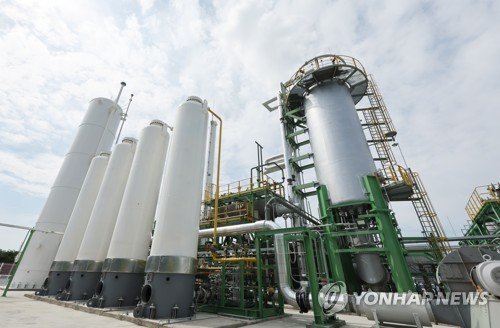
Pyeongtaek-si was selected as this year’s recipient of the Presidential Award. Pyeongtaek-si presented a new urban growth model that combines carbon neutrality with industrial growth. In addition to expanding its clean-hydrogen supply infrastructure, including a hydrogen production base and hydrogen pipeline network, the city pursued carbon-neutral policies that reflect its identity as an industrial city by expanding renewable energy and urban forests. It received particularly high marks for operating the nation’s first commercial carbon-capture facility and achieving an effect equivalent to planting more than 6 million trees through one year of operation of its hydrogen production base.
Gyeongju-si received the Prime Minister’s Award. In the declining Hwangchon Village, residents led efforts to revitalize the neighborhood commercial district. The initiative subsequently brought about tangible changes, with pedestrian traffic increasing by 319% and dwell time rising by 62%.
In addition, 11 local governments received MOLIT Minister’s Awards for initiatives including △Paju’s use of idle land to supply renewable energy to local businesses through a power purchase agreement (PPA), the creation of a comprehensive fashion support center in an unused building by Jongno District, and the conversion of medical infrastructure into startup space by applying artificial intelligence (AI) in Dong-gu, Jeonnam-Gwangju Integrated Special City.
A MOLIT official said, "Although the problems cities face may be the same, the answers can differ from one region to another." The official added, "We will actively support policies that leverage local conditions and strengths—such as Pyeongtaek’s hydrogen industry and Gyeongju’s resident-led urban regeneration—so they can change citizens’ lives and allow their achievements to spread to other cities."
[email protected] Jung Kyung-soo Reporter