Performance Facilities in Goyang, Busan and Wonju to Be Upgraded with Up to 2 Billion Won in Government Funding Each
- Input
- 2026-09-09 08:00:00
- Updated
- 2026-09-09 08:00:00
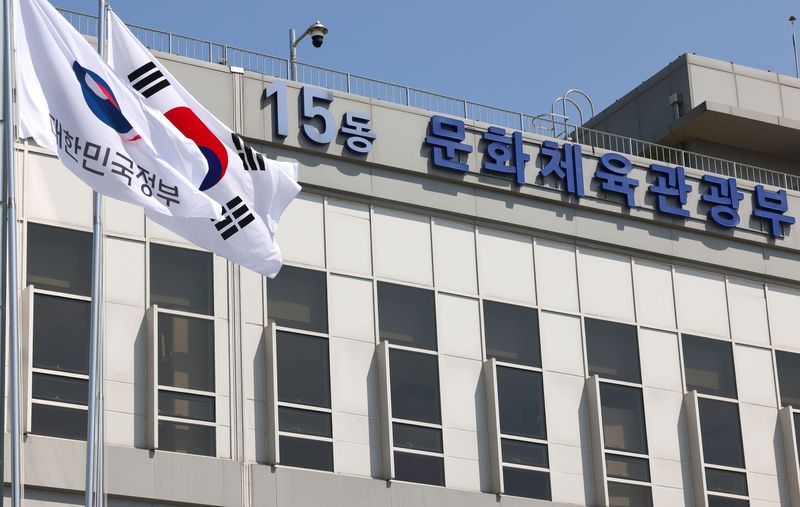
The Ministry of Culture, Sports and Tourism (MCST) said on the 9th that the three facilities had been selected for support under the “Popular Music Performance Environment Improvement Project,” which it is pursuing with the Korea Creative Content Agency (KOCCA). Six local governments from four regions applied, and the applicants underwent document and presentation reviews, on-site evaluations and final assessments.
The project, being implemented for the first time this year, supports improvements to performance equipment at multipurpose and sports facilities with at least 1,000 seats. Local governments must cover at least 50% of the costs themselves. The program uses existing facilities, taking into account the lengthy construction period required for new large-scale concert venues.
The call for applications divided the country into six regions and provided support for one large facility with at least 30,000 seats in the capital region and five small- to medium-sized facilities with fewer than 30,000 seats in non-metropolitan areas.
The facilities have capacities of 43,000 seats at Goyang Stadium, 1,624 seats at the Grand Theater of Busan Citizens' Hall and 2,330 seats at Wonju Chiak Sports Center.
MCST will open an additional call this month for non-metropolitan facilities using the remaining budget. The target of one facility in the capital region has been met, but only two facilities were selected in non-metropolitan areas, reaching 40% of the target. Extra points will be awarded to the Jeolla, Chungcheong and Jeju regions, where no facilities were selected this time.
The eligibility requirements will also be eased. Facilities may apply if they received support under the “Public Sports Facility Renovation Support Project” but are seeking to improve different equipment at the same facility. The restriction on duplicate support has effectively been narrowed from the entire facility to individual pieces of equipment, broadening the scope for participation.
The additional call will accept applications from non-metropolitan areas without regional restrictions. Details will be posted on KOCCA’s website on the 14th, and the facilities to receive support will be selected following evaluations in October.
Choi Seong-hee, director for content industry policy at MCST, said, “I hope capable local governments will actively participate in the additional call for applications,” adding, “We will continue providing support to build a sustainable music ecosystem.”
[email protected] Jang In-seo Reporter