U.S. Government Tells Ford to "End Dependence on Chinese Technology," Specifically Targeting Cooperation with CATL and Geely
- Input
- 2026-09-09 05:35:14
- Updated
- 2026-09-09 05:35:14
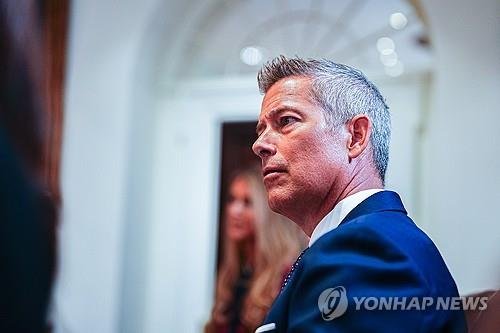
According to The Wall Street Journal on the 8th local time, U.S. Transportation Secretary Sean Duffy criticized Ford's "dependence on technology from foreign adversaries is not a sustainable strategy for the United States" in an open letter to Ford CEO Jim Farley.
Duffy noted, "While I recognize the intense competitive pressures in global markets, Ford's recent strategic decisions present a troubling picture of an iconic American company entangling its future with state-supported Chinese companies."
It is unusual for a sitting U.S. secretary to publicly pressure a specific American automaker by directly addressing its business strategy. Concerns about cooperation between Ford and Chinese companies have also been raised in the U.S. Congress by both Republicans and Democrats.
Duffy specifically targeted Ford's cooperation with Chinese battery maker Contemporary Amperex Technology (CATL). Ford is pursuing a project to produce batteries at its plant in Michigan by licensing CATL's technology. Although the batteries would be made in the United States, the core technology would come from a Chinese company.
Ford's recently announced European business with Geely Automobile also came under scrutiny. Ford plans to produce Geely vehicles for the European market at a plant in Spain, while the two companies plan to jointly develop sport utility vehicles (SUVs) for overseas sales. The vehicles will not be sold in the United States. Duffy nevertheless argued that the cooperation "helps a strategic adversary gain an important foothold in Western markets."
Duffy also took issue with Ford's production of Lincoln vehicles sold in the United States in China. Ford plans to move that production to the United States starting in 2030, but Duffy criticized the company for relying on Chinese production until then while American skilled workers lose manufacturing jobs.
Ford's dilemma reflects the broader challenges facing the U.S. auto industry. Ford strongly opposes Chinese automakers entering the U.S. market and supports legislation that would ban Chinese companies from producing and selling vehicles in the United States. At the same time, it is difficult to secure price and technological competitiveness in global markets without partnering with Chinese companies.
In addition to CATL and Geely, Ford has been discussing the future supply of batteries for hybrid vehicles with BYD, which has grown into one of the world's largest automakers. Farley is also reported to have proposed to U.S. government officials at this year's Detroit Auto Show the possibility of establishing a joint venture with a Chinese automaker to produce vehicles in the United States.
China has secured a technological edge particularly in batteries, where it is highly competitive on price. Ford likewise concluded that catching up with China through in-house development alone would take considerable time, leading it to adopt a strategy of producing batteries in the United States using CATL technology.
Duffy, however, demanded that Ford reduce its dependence on Chinese companies and establish a clear path toward technological self-reliance, saying, "If a company intentionally increases its business dependence on a strategic competitor, it cannot be the reliable partner the American people demand."
About 80% of the vehicles Ford sells in the United States are produced domestically. Ford did not immediately comment on Duffy's open letter.
[email protected] Reporter Lee Byung-chul Reporter