"Feeling like my life has regressed"... Young people devastated by unreturned security deposits [Amid allegations of jeonse fraud involving 500 households]
- Input
- 2026-09-10 07:46:56
- Updated
- 2026-09-10 07:46:56
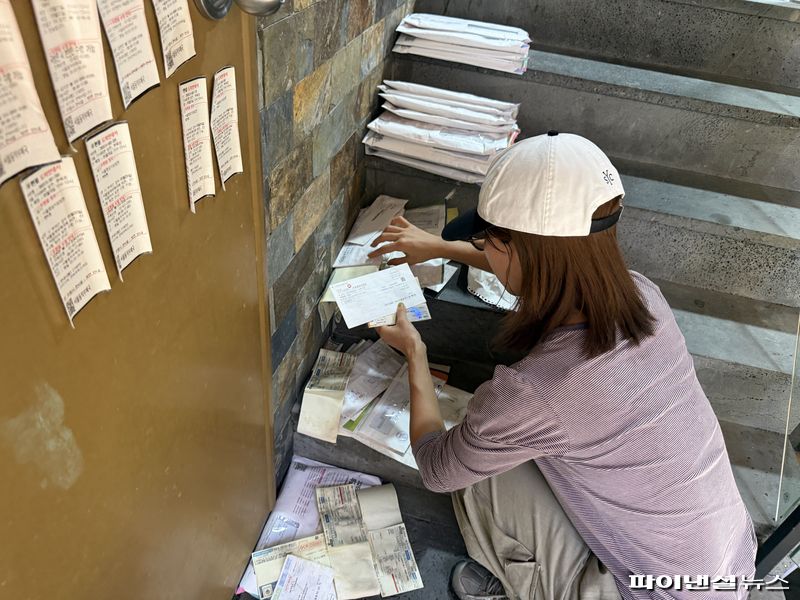
According to a comprehensive report by Financial News on the 10th, the 19 villas in Seoul’s Dongjak District and Gwanak District, where approximately 43.8 billion won in security deposits are frozen, amount to about 500 households. A significant number of these buildings were leased under the names of Mr. Lee, the representative of real estate development and construction firm A, as well as his family and business associates. Company B, which managed several of the affected buildings, entered into contracts on behalf of the landlords or designated brokerage firms for contract renewals. The victims have raised suspicions that the security deposits were embezzled by those involved in leasing, management, and brokerage, with Mr. Lee at the center, dividing roles among themselves.
■ Houses going to auction... Even if successfully bid on, only the priority repayment amount
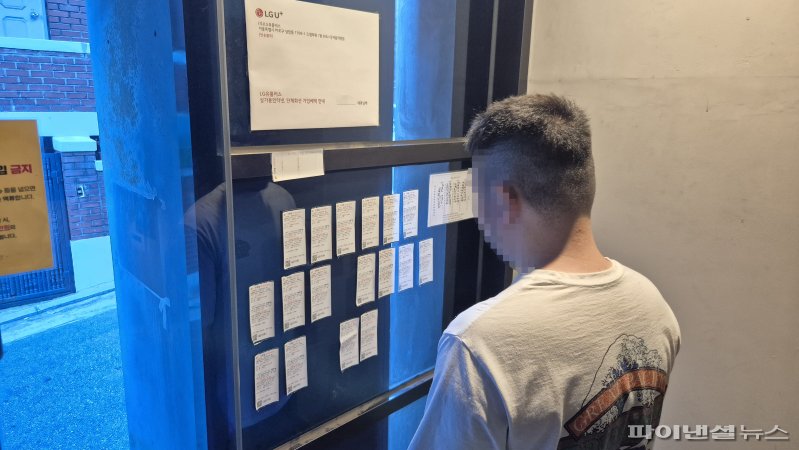
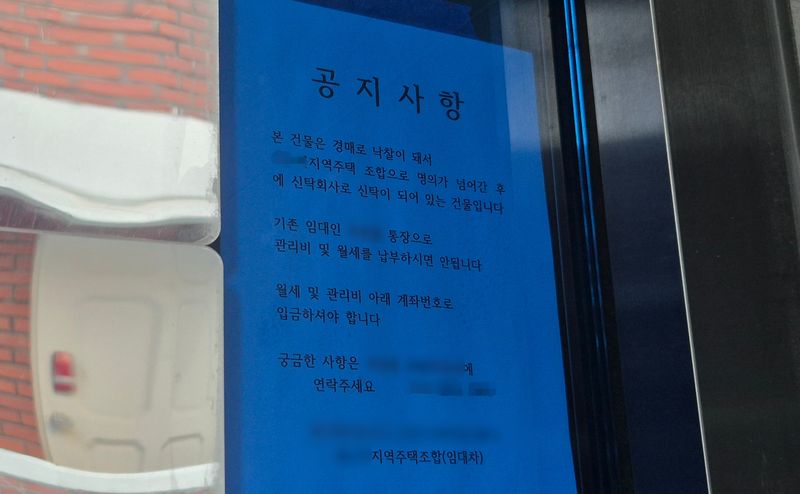
On the 7th, a notice announcing a successful auction was posted on the front door of a villa in Sadang-dong, Dongjak District, Seoul. Mr. Kim, in his 30s, who was looking at this, lamented, "I left this house in January of this year, but I still haven't received my 80 million won deposit back," adding, "Even while staying at a friend's house, I am still paying the interest on the jeonse loan for my previous home."Mr. Geum moved in in July 2024, trusting a real estate agency that claimed to "only introduce safe homes." However, a forced auction began about seven months later, and only then did he learn that the landlord was Mr. Lee's mother. He stated, "While reviewing the land registry with a lawyer, I was told that there were indications that the landlord's assets had been provided as collateral for her son's business."
The payment order was finalized and the landlord's accounts were provisionally seized, but the balance amounted to only about 2 million won. Mr. Kim stated, "A local housing cooperative won the bid for the building, but since their priority in the distribution is low, they are only expecting a preferential repayment of about 34 million won."
"I have spent about 4.4 million won on lawyer fees alone so far, and I am waiting for the results of my reapplication to the Ministry of Land, Infrastructure and Transport (MOLIT) to recognize me as a victim of jeonse fraud," he added. "I am also receiving psychiatric treatment for symptoms of depression and anxiety. As future plans such as preparing for certifications and marriage have been disrupted, I feel like my life has regressed."
■ Directly tracking the network of 'title-only' homeowners... Only loan interest on 'empty' homes
Ms. Lee, in her 30s, who lived in another villa in Sadang-dong, took legal action after failing to receive her 60 million won security deposit back when the lease expired last February. She examined corporate registrations and the list of buildings managed by Company B, and contacted tenants in other buildings to collect cases of damage.It was revealed that the landlord of the house where Ms. Lee lived was the mother-in-law of Mr. Lee, the CEO of Company A. Furthermore, it was found that the victims received responses from the landlord stating that they "did not know the situation" because family members, such as the husband, younger brother, or son-in-law, managed the building. Ms. Lee stated, "The name of Mr. Lee, the CEO of Company A, came up repeatedly while I was compiling cases of damage," adding, "I suspected that it was a connected structure rather than individual landlords failing to return security deposits."
After the payment order was finalized last April, Mr. Lee seized the landlord's bank deposits and home appliances and applied for a forced auction of the villa. He criticized the situation, stating, "Legal response costs alone amounted to about 25 million won, including filing a criminal complaint. I quit my job due to stress and am currently staying with my younger sister. This is an act that crushes the hope of a young person living independently."
Mr. Jeong, who has been residing in a villa in Sillim-dong, Gwanak District, Seoul since December 2019, renewed his lease twice through a real estate agency connected by Company B. When he expressed his intention to vacate the premises in September of last year ahead of his wedding in February of this year, the landlord asked for an extension, stating that "it is difficult to find a new tenant." Through an employee of Company B, Mr. Jeong included a condition to support one month's interest in the contract and extended the lease until the end of January this year.
However, even as the maturity date approached, there was no definitive confirmation regarding the return of the deposit. On January 27, four days before the maturity date, Mr. Jeong sent a certified letter and prepared to file for a payment order. When the 100 million won deposit and the promised interest were never paid, Mr. Jeong extended the maturity of his jeonse loan. He lamented, "Over 200,000 won in interest keeps being deducted every month," adding, "The Korea Legal Aid Corporation, where I went for help, actually advised me to apply for individual rehabilitation."
Mr. Kim, a man in his 30s who moved to Seoul alone, asked a real estate agency to find a jeonse home in Sadang-dong, saying, "Please find me a place where my deposit is safe, even if the house is small and inconvenient." The agency reassured him, stating that "there are no issues with the deposit," noting that the land and building value of the villa was 2.6 billion won, the senior lease deposit was 900 million won, and the mortgage was 600 million won. However, the house he moved into by adding a personal loan to his jeonse loan went to auction last February.
Mr. Kim explained, "After checking the confirmed date records following the auction, I added up the security deposits of other lease agreements that were valid on my contract date, and the total came to approximately 1.4 billion won," adding, "This was about 500 million won more than the amount I was quoted." It was also confirmed that all four houses viewed before the contract had gone to auction, and that additional mortgages held by the same corporation had been established on three of them.
It is not easy for tenants to be recognized as victims of jeonse fraud. To be recognized as a victim under the Jeonse Fraud Victims Act, there must be substantial grounds to suspect that the landlord intended not to return the security deposit. This is known as the "Clause 4 requirement." One tenant who failed to meet this criterion lamented, "I am in a dilemma because I cannot even receive government benefits," adding, "If the landlord is penniless, there is no way to get my money back."
[email protected] Park Sung-hyun, Choi Eun-sol Reporter