₩117.8 billion poured in over two days...Retail investors flock to ‘double inverse’ ETFs as KOSPI rebounds
- Input
- 2026-09-09 05:20:00
- Updated
- 2026-09-09 05:20:00
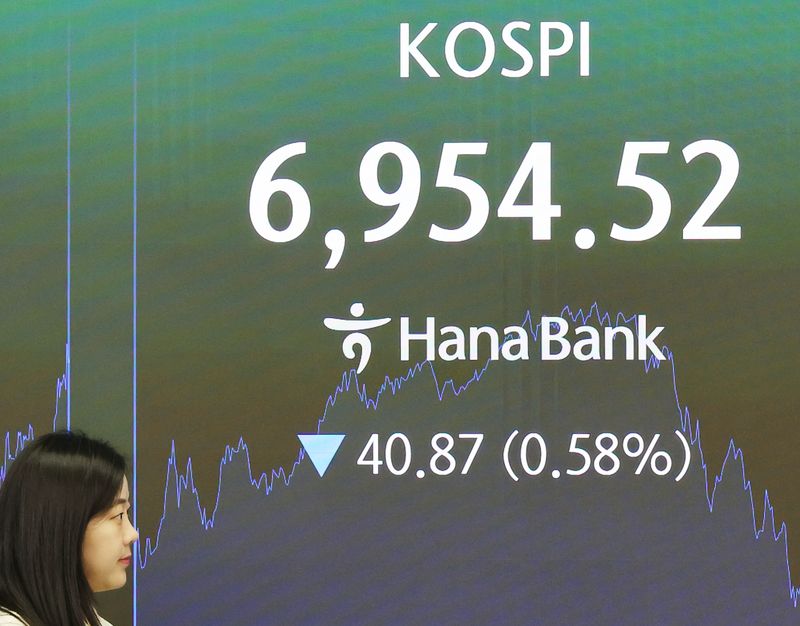
[Financial News] As the KOSPI attempts to reenter the 7,000-point range, individual investors were found to have bought large amounts of inverse exchange-traded funds (ETFs), which generate returns when the index falls.
According to the Korea Exchange (KRX) and Koscom Corporation CHECK on the 8th, the ETF that individual investors bought the most on a net basis in the KOSPI market over the two days from the previous day was ‘KODEX 200 Futures Inverse 2X.’ Net purchases amounted to ₩117.8 billion.
The product is a so-called ‘double inverse’ ETF designed to track twice the inverse of the daily return of the KOSPI 200 Index.
The second-most purchased ETF by individuals was also linked to a decline in the index. Net purchases of ‘KODEX Inverse ETF,’ which is designed to generate returns equivalent to the daily decline of the KOSPI 200, totaled ₩114.6 billion.
Both products are structured to generate returns as the KOSPI falls. In effect, individual investors allocated funds in anticipation of a possible decline in the index.
Individual buying was also concentrated in double-inverse products among single-stock ETFs.
‘Shinhan SOL F-SK Hynix Single Stock Inverse 2X,’ which tracks twice the inverse of SK hynix’s daily return, ranked fourth in net ETF purchases by individuals.
The KOSPI surged 4.61% the previous day on strength in semiconductor stocks. It rose as high as 7,171.52 during the session, reentering the 7,000-point range. However, it turned lower late in the session and finished at 6,954.52, down 0.58%.
In the KOSPI market, individuals engaged in large-scale selling to realize profits. Their net sales for the day totaled ₩3.0603 trillion.
Foreign investors and institutions absorbed the shares put up for sale, recording net purchases of ₩452.8 billion and ₩848.8 billion, respectively.
Meanwhile, analysts in the securities industry have suggested that strength in large-cap semiconductor stocks could continue for the time being.
In a report released the previous day, KB Securities raised the possibility of a memory supply shortage. KB Securities assessed, “The memory market next year is expected to face the tightest supply environment in history,” adding, “As of the third quarter, Samsung Electronics and SK hynix have seen their memory inventories fall to less than 10 days. Beyond a simple recovery in demand, there is a high likelihood that the supplyable volume itself will become absolutely insufficient.”
[email protected] Han Seung-gon Reporter