Robots Build the Frame and Even Attach the Emblem... 180 PBV Variants Roll Off One Line [Report]
- Input
- 2026-09-09 08:30:00
- Updated
- 2026-09-09 08:30:00
■AGVs Race Through the Sparks... Even a Railcar Welding Gun Was Brought In
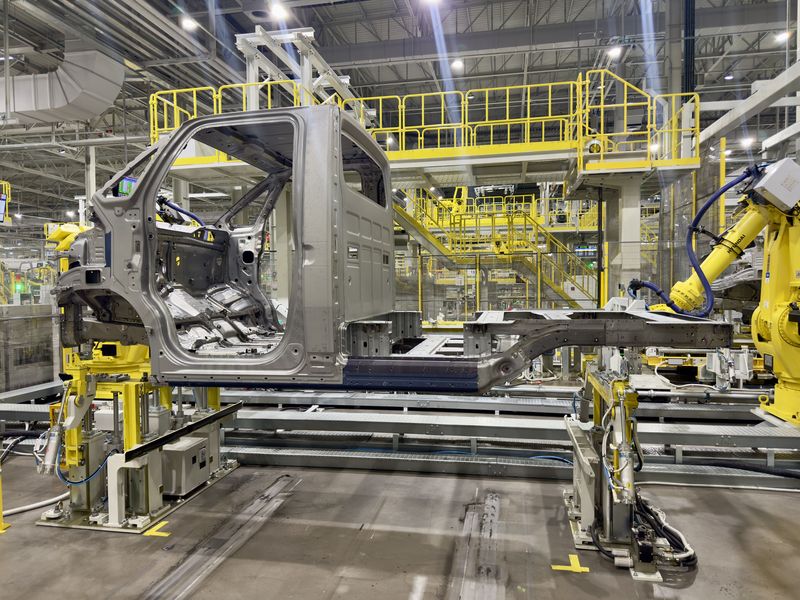
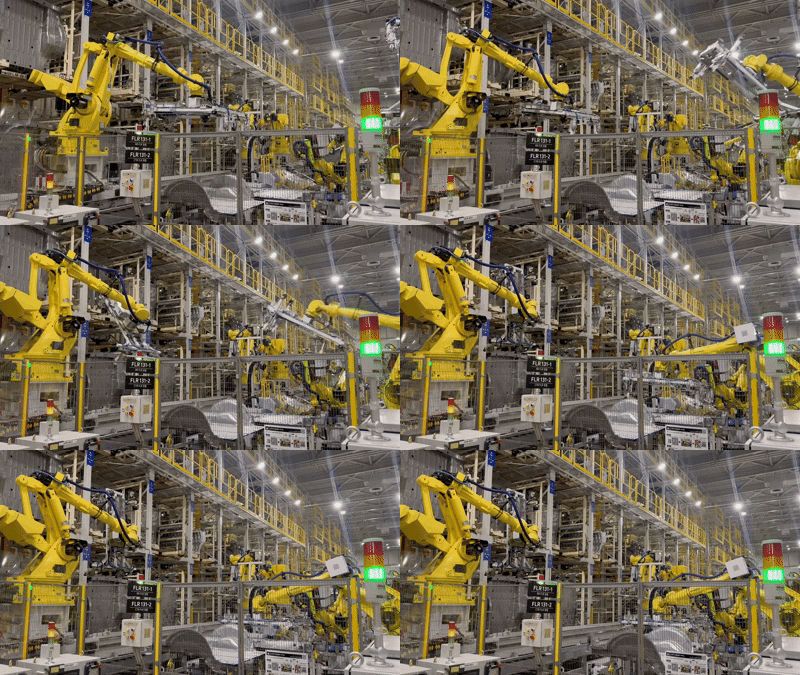
The key is the “4-Buck sequential assembly method.” The body structure, which was previously assembled as a single unit in one process, has been divided into four stages: inner buck, rail buck, outer buck, and roof buck. The first two processes build the frame, while the latter two cover it with exterior panels and the roof.
Moon Seon-ju, senior manager of the Body Manufacturing Engineering Team 4, said, “More than 180 specifications are distinguished for the Kia PV5 based solely on the body. Data matrices are engraved on the parts so that the equipment can automatically recognize each specification without requiring workers to identify them visually.”
As the specifications varied, so did the equipment. A 2-meter-long welding gun placed inside a yellow booth was a prime example. The Kia PV5 comes in versions with and without second-row doors. Without the doors, a standard welding gun cannot reach inside the vehicle. Kia ultimately brought in a large gun used to assemble railcars and subway cars. It is the largest welding gun in the body plant.
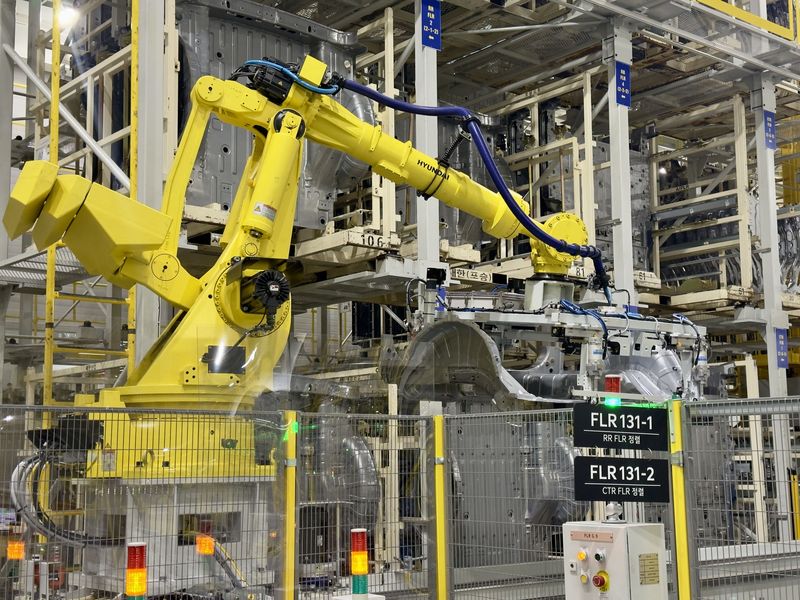
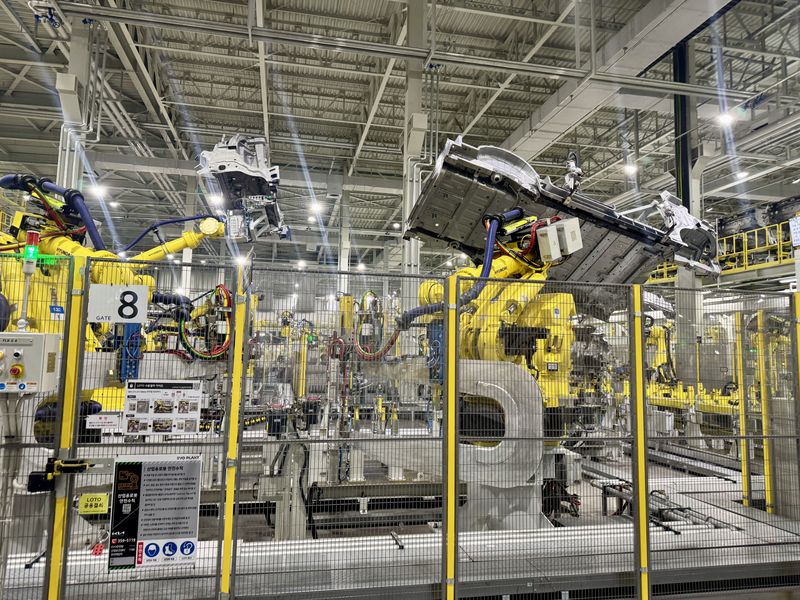
In enclosed sections that the welding gun cannot reach, Kia applied the L.S.S. (Laser Seam Stepper) method, which uses a laser fired from only one side to join the panels. Four robots hold the laser beam heads and perform the work. At the end of the body-build line, two robots moved as one, lifting the vehicle body and loading it onto an AGV. Because the Kia PV5 varies in length and center of gravity, making it difficult to move the vehicles with shared equipment, the front and rear robots were synchronized to automatically align their regulated positions. Each robot can lift 600 kilograms.
On the installation line, a robot independently selected and picked up door hinges tangled inside a box. This is a “bin-picking” method in which robots take over the task of individually orienting and setting the parts, previously performed by workers.
Forklift movement inside the plant was also minimized. AGVs and automated warehouses took over that role instead. The lines were designed in a grid pattern from the planning stage, with aisles six meters wide to allow AGVs to pass each other. The automated warehouses installed across five lines store 250 pallets at heights of up to 11.5 meters and can lift a maximum of two tons. Yellow safety fences throughout the plant were particularly noticeable. A site official noted, “We initially planned to use gray throughout the facility for a unified look, but a large number of yellow fixtures were added because of strengthened safety regulations applied to the new plant.”
■“Workers Can Focus on More Important Tasks”... Robots Handle Even 65-Kilogram Parts
Three robots removed the black hood, made of composite fiber, from a pallet and aligned it before tightening four bolts in sequence at the top and bottom. Automatically installing a hood at an assembly plant rather than a body plant is a first for Hyundai Motor and Kia. Automatic emblem attachment, automated insertion and fastening of the crash pad, and automatic headliner installation are also firsts. In an adjacent process, a robot lifted the roof pad by suction, removed the release liner from its back, entered the vehicle, and attached it to the ceiling. It took less than three seconds to attach one sheet.
For the 65-kilogram crash pad, 3D vision cameras captured the product and vehicle body separately, after which a robot corrected the position and pushed it into place. The headliner is divided into three pieces—front, center, and rear. Workers handled only the center section, which requires wiring and air-conditioning duct work, while robots entered the cabin and attached the remaining pieces. Robots also fastened the high-voltage battery.
Ko Da-eun, a manager on the Vehicle Manufacturing Engineering Team 4, explained, “The fastening torque is high, making this a process that causes considerable noise and physical fatigue. With automation, workers can focus on more important tasks, and we can retain fastening values as real-time quality data.”
On the final inspection line, robots scanned 21 points on each side of the vehicle for gaps and flushness with an accuracy of ±0.2 millimeters. In the following booth, 18 cameras detected incorrect specifications among 24 parts, including the outside mirrors and door garnish, as well as missing roof bolts. At the end, three workers were bending over and visually inspecting the vehicle once again. An electronic sign on one side of the line showed an operating rate of 98.9% for the day.
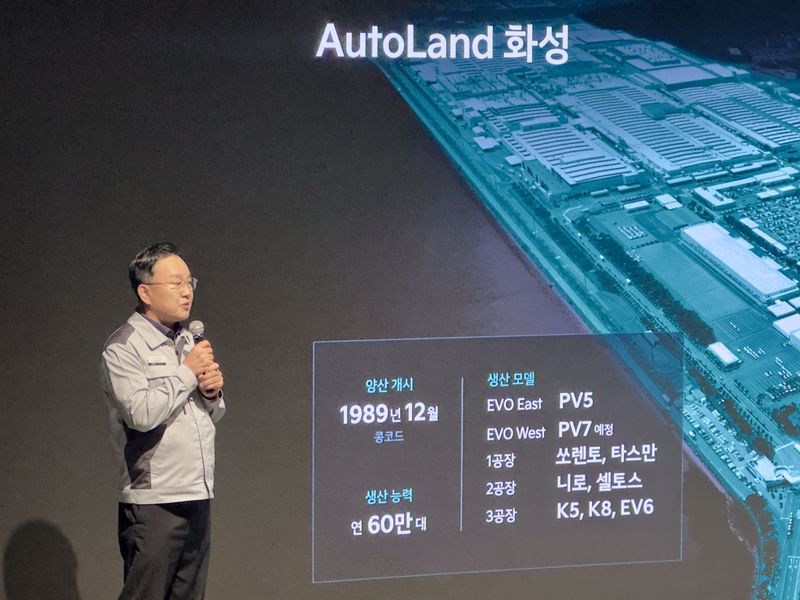
Seong Si-young, senior manager of the Manufacturing Engineering Planning Team, said, “Compared with the existing Hwaseong plant, the automation rate is about 9% higher, and efficiency has improved by roughly 10% in terms of quality and operations.” The assembly plant’s automation rate is 27%. EVO Plant West, scheduled for completion in June 2027, will be slightly higher at 28%, while introducing new technologies such as autonomous mobile robots (AMRs) for parts transport and tunnel-type exterior vision inspection. Once the West plant begins operations, Kia’s EVO Plant Hwaseong will have an annual PBV production capacity of 200,000 vehicles.
Once the base vehicle is completed, the Kia PBV Conversion Center, connected by a road to the north, takes over. Equipped with 98 work cells and 14 inspection cells on a 63,728-square-meter site, it handles conversion models based on the Kia PV5, Kia PV7, and Kia PV9 at an annual capacity of 40,000 vehicles. Following the open-bed, crew van, and Prime versions, interior models, refrigerated box trucks, and light campers are preparing for launch. The Kia PV5 had sold more than 39,000 units in global markets by August this year and was named the 2026 International Van of the Year. The large PBV, Kia PV7, will make its world premiere at IAA TRANSPORTATION in Hanover, Germany, on the 14th.
So Deung-yeong, executive plant manager of Kia AutoLand Hwaseong, said, “Kia AutoLand Hwaseong is more than a plant that makes vehicles; it is a PBV production hub that turns the diverse ideas and needs of customers and partners into mobility solutions. By continuously advancing smart manufacturing technologies and the conversion ecosystem, we will provide customers with a broader range of choices and create new possibilities for mobility together with our partners.”
[email protected] Kim Dong-chan Reporter