Will ‘Assassin(s)’ Become the ‘12.12: The Day’ of the Press? Historical-Drama Powerhouse Lives Up to Its Name [Film Review]
- Input
- 2026-09-09 03:39:24
- Updated
- 2026-09-09 03:39:24
[Financial News] #1. On August 15, 1974, at the National Theater of Korea in Jangchung-dong, Seoul, a Korean-Japanese youth named Mun Se-gwang fired a handgun at President Park Chung Hee as he delivered a speech commemorating the 29th anniversary of Korea’s liberation. The president survived, but the First Lady was shot in the head and died that afternoon. Coincidentally, the opening ceremony for Seoul Subway Line 1, the country’s first subway line, was held that day. Prime Minister Kim Jong-pil attended in the president’s place, and the ceremony was scaled back amid a somber atmosphere.
#2. Seventy days after the shooting of the First Lady, on October 24, the Declaration of Press Freedom Practice was issued in opposition to the Korean Central Intelligence Agency’s media control. Press freedom was under serious threat at the time: the Yushin System had been declared in October 1972, and Emergency Measure No. 1, which banned activities opposing the Yushin Constitution, was imposed in January 1974.
#3. Mun Se-gwang was sentenced to death at his first trial on October 19, 1974, just 65 days after the incident. South Korean investigators concluded that Mun Se-gwang had been recruited by the General Association of Korean Residents in Japan and attempted to assassinate President Park Chung Hee on orders from North Korea. Japanese investigators, however, determined that he had acted alone, motivated by hostility toward the Park Chung Hee regime, saying there was no evidence proving direct orders from North Korea or the General Association of Korean Residents in Japan.
#4. In 2005, more than 3,000 pages of diplomatic documents concerning the incident were made public, but the questions were not fully resolved. One question was whose bullet struck the First Lady. Seven shots were confirmed at the scene, but investigators concluded that Mun Se-gwang had actually fired four rounds. If one of the “three shots” fired in response by a security officer struck Jang Bong-hwa, a young choir member who died, where did the other two go?
Hive Media Corp., which has successfully brought modern Korean history to screens and OTT platforms through films such as ‘The Man Standing Next’ and ‘12.12: The Day,’ as well as the Disney+ series ‘Made in Korea,’ further cemented its reputation as a powerhouse in historical dramas this Chuseok with director Hur Jin-ho’s new film ‘Assassin(s).’
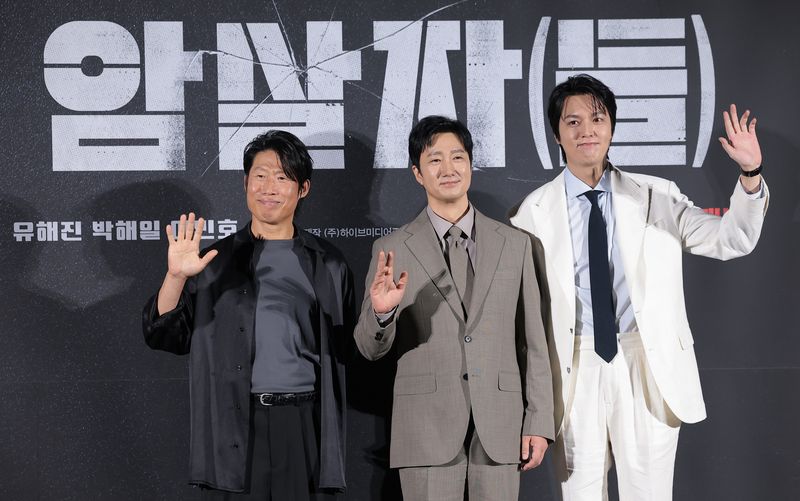
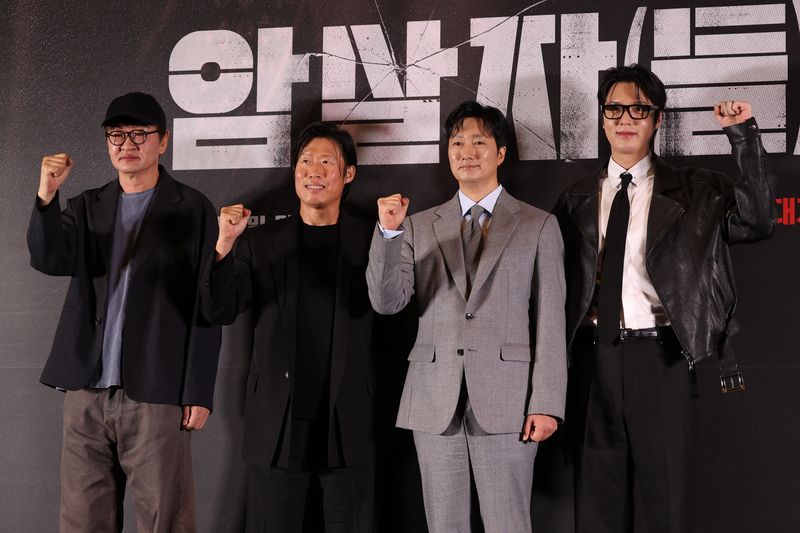
‘Assassin(s)’ is a faction mystery thriller that begins with the 1974 shooting of First Lady Yuk Young-soo. During a live broadcast of the Liberation Day ceremony watched by the entire nation, the First Lady is shot in an unprecedented incident, and the suspect is arrested at the scene. The case is quickly closed, but Cheol-gu (Yoo Hae-jin), the detective responsible for security at the event; Jae-hwan (Park Hae-il), a newspaper social affairs editor who looks into the incident’s hidden side; and Young-il (Lee Min-ho), a rookie reporter who witnessed the chaos that day, begin to question the announced investigation results and pursue the truth.
A vivid, multidimensional portrait of the people and landscape of 1974
Centered on the shooting of the First Lady, the film invites today’s viewers—many of whom may not know the full story—to return to the scene of that day. It creates a vivid tension, as if placing audiences in the middle of history, while connecting reporters’ struggle to uncover the truth despite KCIA media control with the Declaration of Press Freedom Practice issued that same year. In doing so, it reconstructs the atmosphere of 1974 in rich detail.
The film does not stop at recreating an incident whose perpetrator is already known. Following a detective and two reporters as they piece together scattered fragments of the case, it probes the gap between the “facts” announced by the state and the “truth” witnessed at the scene. As a result, it prompts viewers to revisit an incident that remains shrouded in mystery.
The early part of the film conveys the tension and appeal of a mystery investigation through detective Cheol-gu’s perspective. Yoo Hae-jin, who has appeared in five films that drew more than 10 million viewers, including ‘A Man Who Lives with the King,’ convincingly portrays the transformation of a straightforward police officer into a pursuer of dangerous truths through his trademark wry, down-to-earth performance and weighty focus.
From the middle onward, the reporters’ story, centered on Jae-hwan (Park Hae-il) and Young-il (Lee Min-ho), unfolds with intensity. Despite pressure from the KCIA and discouragement from within their own organization, they refuse to abandon their journalistic principles. With a low, restrained voice and a steady gaze, Park Hae-il convincingly conveys the gravity of a social affairs editor standing up to those in power.
Lee Min-ho, who plays Young-il, a rookie reporter from the youngest son’s branch of a chaebol family, adds vitality to the film with youthful, uninhibited energy.
At a time when the profession of journalism is casually disparaged with the term “trash journalist,” their example recalls the value of a professional calling that is gradually fading and poses a weighty question about the role of the press. Still, it remains to be seen how different generations will respond to the film’s revival of the unresolved mystery surrounding the First Lady’s shooting.
Atmospheric alleys and a newspaper newsroom... Filmed entirely on location
‘Assassin(s)’ chose an “all-location” approach, filming every scene in real spaces. This adds the vivid texture and spatial depth that would be difficult to create with sets alone, enhancing the viewing experience.
The scenes of Cheol-gu’s children, whose father is a police officer, sitting on the wooden floor and reciting the Pledge of Allegiance to the Flag, then running through narrow alleys as they play, as well as Cheol-gu’s wife warmly caring for a newlywed couple renting part of their home, evoke nostalgia for a time when neighborly affection was still part of everyday life.
The world of reporting also looks markedly different from today. Reporters line up at a public telephone, gripping the receiver as they describe events at the scene while senior and junior colleagues take notes. In another scene, a drunken cartoonist listens to the reporters’ conversations nearby before completing a four-panel cartoon. Together, these moments vividly recreate the pre-digital newspaper office.
The film also captures the dark face of an era when violence by those in power penetrated everyday life. Reporters exchanging information while evading surveillance by KCIA agents stationed in the newsroom resemble participants in an intelligence operation. Later, after confirming that the controversial article has been published, intelligence officials who resort without hesitation to verbal and physical violence starkly expose the oppression and fear faced by the press at the time.
The production team initially planned to build major locations, including the newspaper office and Cheol-gu’s home, as indoor sets. While scouting, however, it changed course and decided to use real spaces. The team then traveled across the country, locating buildings and alleys constructed in the 1960s and 1970s, and reconfigured worn or abandoned spaces to fit the characters’ lives. As a result, 1974 in the film functions as more than a backdrop; it becomes another central character supporting the emotions of the people and the tension of the case.
The film is also notable for the successive appearances of leading and supporting actors—including Bae Seong-woo, Uhm Ji-won, Park Ji-hwan, Park Hoon, Ryu Hye-young, Jang Ryul, Choi Yu-ri, Ryu Kyung-soo, Kim Dae-myung, Shim Eun-kyung, Park Hae-joon, Park Sung-hoon, Oh Jung-se, Shin Hyun-been and Jung Woo-sung—in roles both large and small. Even in brief moments, they leave their mark and densely fill out the landscape of 1974.
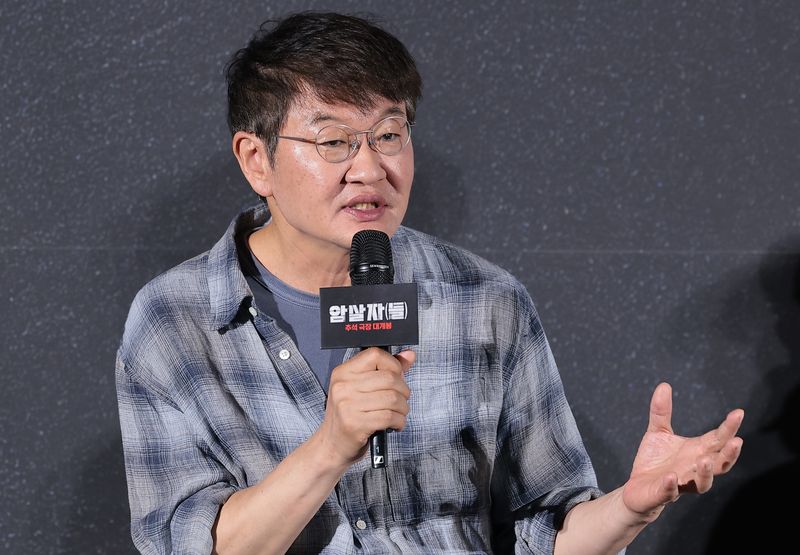
Meanwhile, at a press conference following the press screening held at Megabox COEX on the 8th, director Hur Jin-ho drew a comparison with ‘12.12: The Day’ and said, “Thank you for comparing the two films,” while emphasizing that their aims are different.
He explained, “‘Assassin(s)’ is not a film focused on reaching a particular conclusion or revealing hidden truths and those behind them. I wanted to express the emotions of the people who lived through 1974 as they pursued the case.” He added that the film focused on capturing the era’s circumstances and atmosphere by incorporating real events from the same period, including the Declaration of Press Freedom Practice. Rated 12 and over. Opens on the 23rd.
[email protected] Shin Jin-a Reporter