[Editorial] Maximize the National Interest as the Outline of U.S. Investments, Including Nuclear Power Projects, Takes Shape
- Input
- 2026-09-08 18:55:17
- Updated
- 2026-09-08 18:55:17
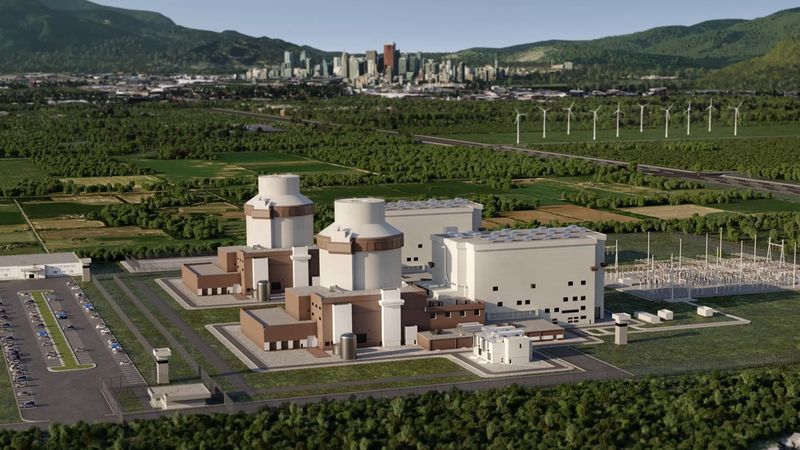
In July last year, Korea and the United States agreed to reduce reciprocal tariffs from 25% to 15% and implement $350 billion in investment in the United States. The $350 billion consists of $150 billion in shipbuilding cooperation and $200 billion in investment in the United States. The latest area of convergence involves investing $22 billion in the construction of the Encinal gas-fired combined-cycle power plant and $120 billion in eight nuclear reactors.
From Korea’s perspective, the most important consideration for the national interest is to select commercially viable investment targets, recover the investment, and ultimately generate profits. In that regard, the Encinal gas-fired combined-cycle power plant appears to have sufficient commercial viability. Electricity demand in Texas is surging as advanced semiconductor plants and artificial intelligence (AI) data centers are being built there in large numbers.
For the larger nuclear power project, Korea must use its negotiating leverage to secure the participation of Korean technology and companies to the greatest extent possible. The United States is reportedly insisting that all eight reactors be built using Westinghouse Electric Company’s AP1000 model, while Korea is pushing for the introduction of at least two Korean APR1400 reactors. Securing even two reactors would be a meaningful achievement.
APR1400 is an advanced nuclear reactor model developed with Korean technology. If all eight reactors are built using the U.S. model, Korea could end up merely providing the money while playing a supporting role. For now, Korea is reportedly likely to prevail in its position. It is also welcome news that negotiations are under way to acquire a stake in Westinghouse Electric Company, which owns the underlying nuclear technology. The two countries have clashed whenever Westinghouse Electric Company has raised intellectual property concerns during nuclear reactor exports; such disputes could become less frequent.
Investment must be a win-win proposition for both the investing and receiving sides. If it results in losses, there is no reason to carry it out, even if it is a commitment between countries. The United States, which needs to attract foreign investment because of its high national debt, is openly pressuring even its allies by linking the issue to national security. Even so, Korea must not yield unconditionally to such pressure. It should carefully assess the value of each investment and negotiate with the national interest always in mind.
In addition to the $350 billion investment agreement, the United States is demanding further investment in the country by Korean semiconductor companies. Korea is already pursuing the Yongin semiconductor industrial complex and the 800 trillion won Honam semiconductor project. If it meets all of the U.S. demands, it could fall into the trap of overinvestment.
This matter, too, should be decided only after thoroughly weighing the gains and losses from the perspective of the national interest as a whole. There can be no arrangement between countries in which only one side benefits. A give-and-take strategy—giving what must be given and securing what can be gained—remains useful at any time.