South Korea-France Agree to Coordinate on Freedom of Navigation Through the Strait of Hormuz
- Input
- 2026-09-09 00:13:06
- Updated
- 2026-09-09 00:13:06
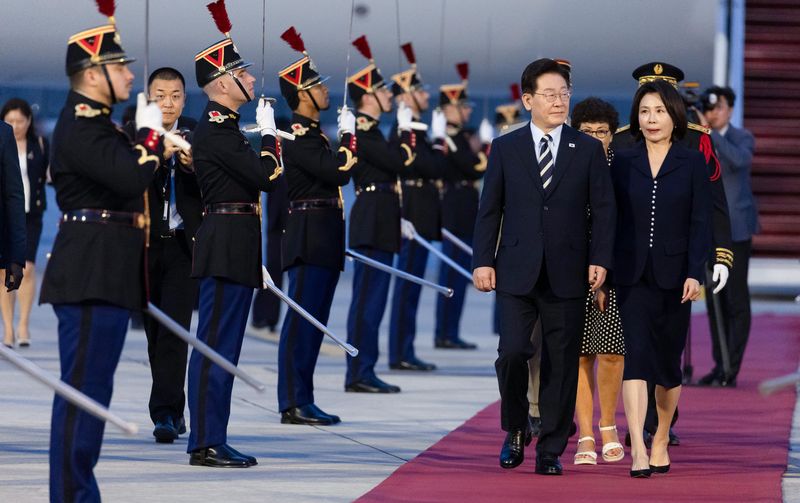
President Lee laid a wreath at the Tomb of the Unknown Soldier at the Arc de Triomphe in Paris and attended an official welcoming ceremony before heading to the Élysée Palace. He then had a private luncheon with President Emmanuel Macron, followed by an expanded summit meeting attended by delegations from both countries. Lee noted that the Republic of Korea had participated in a conference on the Strait of Hormuz led by France and the United Kingdom last April, where it expressed its willingness to contribute to the strait’s stability and freedom of navigation. He emphasized that the ROK and France would continue close coordination so that freedom of navigation through the Strait of Hormuz and global supply chain stability could be restored as soon as possible.
As United States President Donald Trump has repeatedly voiced dissatisfaction over the Strait of Hormuz issue and increased pressure on South Korea, the presidential office is reviewing practical ways to contribute while keeping open the possibility of deploying troops. Since the solidarity initiative on the Strait of Hormuz led by France and the United Kingdom is also linked to the United States, attention is focused on whether the two leaders discussed issues such as a troop deployment during the summit.
Hong Ik-pyo, senior political affairs secretary at the presidential office, appeared on Kim Eo-jun’s News Factory on YouTube that day and addressed discussions about a troop deployment. He explained, "The position of our government has not yet been finalized," adding that, since President Lee was carrying out his state visit to France, "there will need to be further discussions after he returns from the trip."
At the summit, President Lee and President Emmanuel Macron agreed to elevate cooperation in defense and security to a new level. Lee said they would accelerate consultations so that a Mutual Logistics Support Agreement could be concluded promptly to improve the stability and efficiency of cooperation between the two countries’ militaries. He added that they had agreed to achieve a substantive breakthrough in defense and security cooperation.
The two countries will also raise the level of cooperation in nuclear energy. Building on the agreement reached last April on cooperation across the nuclear fuel cycle, the leaders will conclude additional documents on nuclear research and development and fuel supply. They will cooperate on developing next-generation reactors and diversifying nuclear power plant supply chains over the medium and long term. They will also establish a new high-level dialogue channel to discuss civilian nuclear cooperation.
[email protected] Seong Seok-woo and Choi Jong-geun Reporter