Korean Air Faces First Strike Threat in 10 Years Amid Merger-Related Seniority Dispute
- Input
- 2026-09-08 16:24:07
- Updated
- 2026-09-08 16:24:07
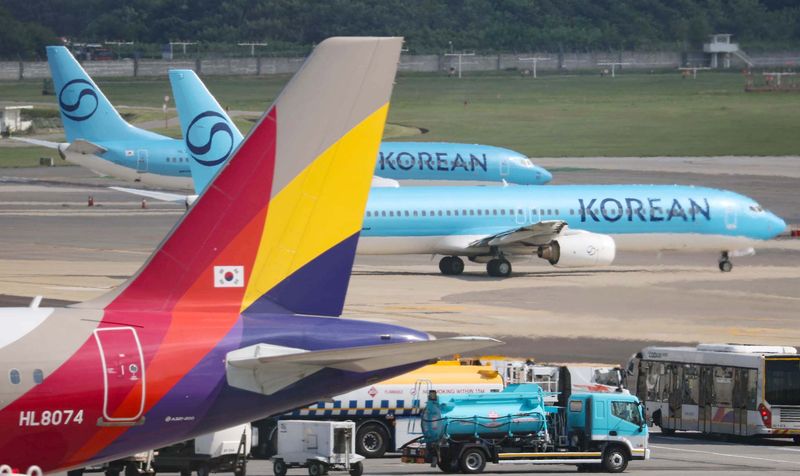
[Financial News] Korean Air is facing the possibility of a pilots’ strike for the first time in 10 years. The seniority system determining pilots’ promotion order has emerged as the key issue in the integration of Korean Air and Asiana Airlines.
The Korean Air Pilots Union (KAPU) said on the 8th that it had applied to the Seoul Regional Labor Relations Commission on the 7th for mediation of a labor dispute after negotiations on the 2024 collective agreement and the 2025 wage agreement failed to reach a settlement. This is the first time the pilots’ union has applied for labor-dispute mediation since December 2015. At that time, after failing to narrow differences with management during wage negotiations for 2015, the union went on strike for seven days in December 2016.
The central issue in the latest negotiations is how to determine pilot seniority after the merger of Korean Air and Asiana Airlines. Pilot seniority directly affects the timing of promotion to captain, as well as allowances for senior and chief captains, making the interests of pilots from the two airlines sharply opposed. The union claims that management drew up an integrated seniority plan without reaching an agreement with the union, despite Article 24 of the collective agreement stipulating, "The company shall comply with the seniority-ranking system for flight crew members established through labor-management agreement."
The company, however, maintains that seniority decisions fall under its exclusive personnel authority and therefore cannot be subject to labor-dispute mediation. It also says it developed an objective and reasonable promotion-ranking plan through external consulting and other measures, without disadvantaging Korean Air pilots. Korean Air stated, "The pilots’ union is insisting that its members must be promoted ahead of Asiana Airlines pilots under all circumstances, and is demanding that the company refuse to recognize any of the existing experience and qualifications of Asiana Airlines pilots."
The company also rejected the union’s claim that Korean Air pilots could be promoted later after the integration. Korean Air said, "The requirements for existing Korean Air pilots to be promoted to captain and their internal relative seniority will remain unchanged during the integration process." It added, "An analysis reflecting the future fleet size and demand for captains showed that no Korean Air pilots would be promoted later than expected before the integration, while more than 90% would actually see their promotion dates brought forward."
The union is also taking issue with the fact that Asiana Airlines pilots will not be subject to FOAM, a Korean Air requirement for promotion to captain. The company, however, explained that Korean Air’s current standards are scheduled to apply to captain-promotion requirements, training and evaluation criteria after the integration, making the union’s claim unfounded.
As the two sides remain divided, the union plans to hold rallies from the 14th through the 20th in front of Korean Air’s headquarters in Gangseo-gu, Seoul, at Terminal 2 of Incheon International Airport and near the home of Korean Air’s chairman.
The labor commission’s mediation period is 15 days from the date of application and may be extended by another 15 days if labor and management agree. Since the union already held a vote in April on whether to take industrial action, it is expected to secure the legal right to strike if mediation fails during this period.
However, air transport is designated as an essential public service. Even if the union and management proceed with industrial action, flights at the level of essential-maintenance operations agreed upon by both sides must continue.
[email protected] Jung Won-il Reporter