Weak Performance Amid a Slump in the Home-Appliance Market... Appliance Retailers Seek a Breakthrough
- Input
- 2026-09-08 15:40:15
- Updated
- 2026-09-08 15:40:15

[Financial News] Appliance retailers are stepping up efforts to improve performance by strengthening their mobile and IT product offerings and optimizing their stores. The home-appliance market remains sluggish as replacement demand has slowed since the COVID-19 pandemic, while high prices and high interest rates have compounded the downturn.
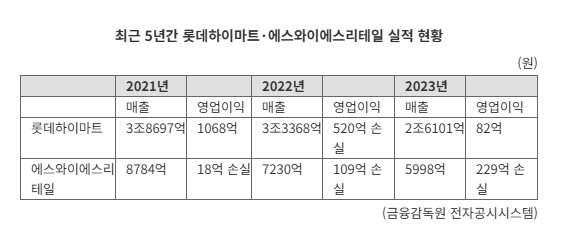
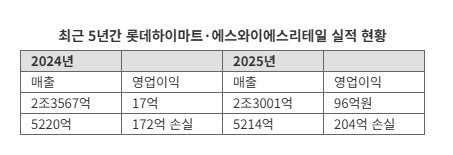
According to the appliance retail industry on the 8th, Lotte Hi-Mart, the industry leader, posted sales of KRW 2.3001 trillion last year, down 40.6% from KRW 3.8697 trillion in 2021. Over the same period, operating profit plunged from KRW 106.8 billion to KRW 9.6 billion. In the first half of this year, sales also fell 3.1% year on year to KRW 1.088 trillion, while its operating loss widened sharply to KRW 13.9 billion from KRW 570 million a year earlier.
SYS Retail, which operates ETLand, the first home-appliance retailer in South Korea, has also continued to struggle. The company’s sales declined every year from KRW 878.4 billion in 2021 to KRW 521.4 billion last year. Profitability also deteriorated, with the company recording operating losses for five consecutive years from 2021 through last year. Its operating loss reached KRW 20.4 billion last year.
The prolonged weakness in appliance retailers’ performance is rooted in the downturn in South Korea’s home-appliance market. Appliance retail is a typical domestic-focused business with no overseas sales, meaning changes in appliance demand are directly reflected in performance. Analysts say the industry has remained weak as replacement demand slowed after COVID-19, while high prices and high interest rates persisted.
An industry official explained, “During COVID-19, demand for replacing appliances and furniture rose sharply as people spent more time at home. Since then, spending has been spread across travel and dining out, while the replacement cycle for households that bought appliances at the time has not yet returned, reducing demand. Consumers’ ability to purchase appliances has also weakened as high interest rates and high prices have continued for an extended period.”
The contraction in real-estate transactions has further hurt the industry. Appliances are often replaced or purchased when people move or move into new homes, but the decline in housing transactions has also weakened demand for appliances.
As weak performance continues year after year, appliance retailers are seeking a breakthrough by moving beyond their traditional focus on large-appliance sales. They are working to increase customer visits and secure new sources of revenue.
Lotte Hi-Mart is first focusing on expanding customer touchpoints by strengthening its IT and mobile product offerings. It has introduced the “Hi-Mart mobile plan,” emphasizing price competitiveness, and is also expanding its used-mobile business. The company is also stepping up efforts to increase service revenue by expanding its “Peace of Mind Care Service,” which provides repairs, cleaning, relocation installation, and warranty insurance.
A Lotte Hi-Mart official said, “Looking at total sales, which combine the amounts customers pay at Hi-Mart, we are seeing an improving trend in sales. We will focus on sales growth by strengthening categories with short purchase cycles and high purchase frequency, as well as care services, to increase customer touchpoints and connect them to purchases of other home appliances.”
ETLand is also restructuring its business by making mobile products a new pillar of revenue. Since last year, it has been opening separate “ETLand Mobile Shop” locations in areas with high foot traffic to complement its existing appliance-focused store structure. At the same time, the company is targeting younger customers, including those in their 20s and 30s, by strengthening Digital Concentration Stores (DCS), where customers can compare and experience a range of IT products in one place.
An ETLand official said, “Rather than expanding the number of stores, we are reorganizing our offline business to improve the profitability and productivity of each location. Our goal is to raise productivity per store and overall profitability by concentrating product rearrangement and experiential content at highly competitive hubs, while focusing resources on commercial areas and stores capable of delivering results.”
[email protected] Jang Yu-ha Reporter