Tensions between the ruling and opposition parties intensify over real estate taxation and the Future Response Fund... National Assembly Planning and Finance Committee subcommittee formation finalized
- Input
- 2026-09-08 15:24:53
- Updated
- 2026-09-08 15:24:53
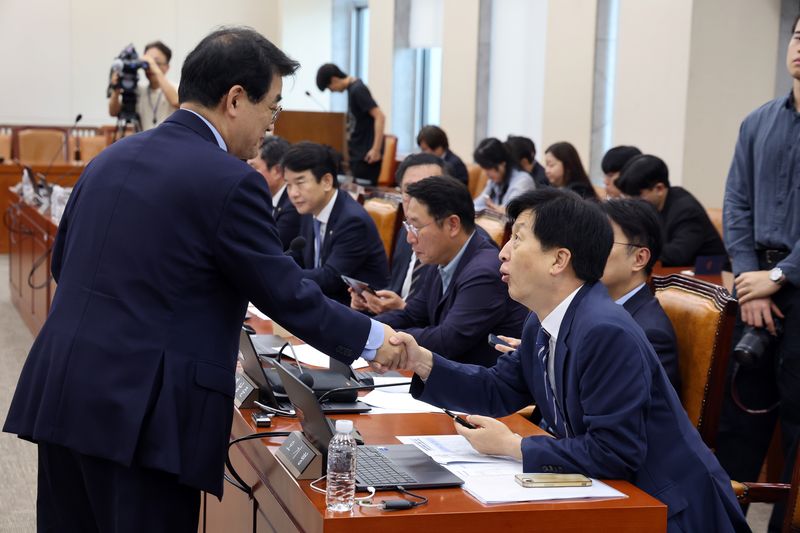
The National Assembly Planning and Finance Committee held a plenary meeting at the National Assembly that day and approved the subcommittee composition. First, Bae Jun-young, the People Power Party's floor liaison on the committee, will chair the Economic and Fiscal Subcommittee, which reviews economic-related bills. Oh Gi-hyoung, the Democratic Party of Korea (DPK)'s floor liaison on the committee, was appointed chair of the Tax Subcommittee, which handles tax-related legislation, including tax laws.
Following an agreement, the chairmanship of the Budget, Accounts and Funds Review Subcommittee—which had caused the delay in forming the National Assembly Planning and Finance Committee's subcommittees—will be held alternately by the ruling and opposition parties. The ruling party had sought the chairmanship, which traditionally went to the opposition, thereby blocking the formation of the remaining subcommittees. However, judging that the formation of the other subcommittees dealing with key issues, including the government's tax reform plan, could no longer be delayed, the two parties appear to have reached a compromise. Accordingly, Moon Jin-seok of the DPK was appointed chair of the Budget, Accounts and Funds Review Subcommittee. The chairmanship of the Petitions Review Subcommittee will also alternate between the ruling and opposition parties. Kang Min-kook of the People Power Party will lead the Petitions Review Subcommittee.
With the formation of the National Assembly Planning and Finance Committee's subcommittees completed that day, attention is turning to the upcoming 'tax war' between the ruling and opposition parties. In particular, the two sides have sharply different views on the government's real estate tax reform plan. The DPK basically agrees with the government's stated aim of focusing taxation on high-priced and non-residential homes. However, it has left room for fine-tuning after gathering public opinion. By contrast, the People Power Party is expected to put forward alternatives that directly oppose the government's plan, including retaining the long-term holding special deduction, which the government is seeking to abolish. It intends to use this issue as a basis for its opposition campaign against the government. In fact, People Power Party lawmaker Seo Myung-ok has already introduced a bill to retain and expand the benefits of the long-term holding special deduction.
An amendment to the National Finance Act to establish the Future Response Fund is also a key agenda item for the National Assembly Planning and Finance Committee. The amendment prepared by the government has passed the legislative notice period and is awaiting review by the committee. The DPK emphasizes the need for the Future Response Fund, citing the need for a swift national response to keep pace with rapidly changing circumstances and investment in future industries. However, the People Power Party maintains its fundamental opposition, arguing that the Future Response Fund is nothing more than the government's 'private slush fund.'
In particular, the government's amendment contains a provision allowing the Future Response Fund to adjust spending on major items autonomously within a range of 30% or less. The ruling and opposition parties are expected to clash fiercely over this provision. The DPK is likely to argue that, reflecting the nature of a financial fund, the Future Response Fund's autonomy is not substantially different from that guaranteed to other existing funds. The People Power Party is expected to argue that it is merely a 'trick' to circumvent the National Assembly's inherent authority to control the budget. It is therefore highly likely to demand much stronger parliamentary control than provided for in the government's bill.
[email protected] Kim Hyung-gu Reporter