"The Iran War, Heat Waves and a Weak Won"—Food Companies Face Triple Blow as Cost Burden Hits Highest Level Since 2022
- Input
- 2026-09-10 17:07:35
- Updated
- 2026-09-10 17:07:35
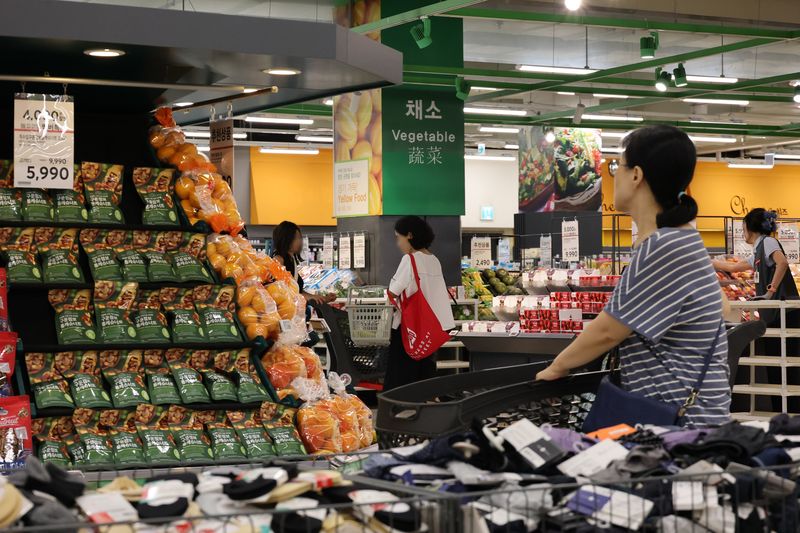
[Financial News] The cost burden on major South Korean food companies soared to its highest level in four years during the first half of this year, as they faced a triple blow from surging raw-material and subsidiary-material prices, a global heat wave and a weak won. Import prices jumped amid a sharp rise in naphtha prices, a key raw material for packaging, and the weak exchange rate. As a result, the cost-of-sales ratio as a share of revenue rose for the first time since 2022.
According to the Financial Supervisory Service’s Data Analysis, Retrieval and Transfer System (DART) on the 10th, the average cost-of-sales ratio for the first half of this year was 72.7% at 12 major South Korean food and beverage companies, including Nongshim, Daesang Corporation, Dongwon, Lotte Wellfood, Lotte Chilsung Beverage, Samlip, Samyang Foods, Binggrae, Orion Corporation, Ottogi, Pulmuone and CJ CheilJedang. This was the highest level since the first half of 2022, when the ratio stood at 73.4% amid a surge in prices following the war in Ukraine. In other words, 725 won out of every 1,000 won in sales went toward manufacturing costs. The higher the cost-of-sales ratio, the greater the cost burden and the weaker the profitability. The companies’ average first-half ratio had declined from 72.1% in 2023 to 71.9% in 2024 and 71.8% in 2025, before reversing course and rising above 72% this year. Costs increased directly as the Iran war drove up naphtha and oil prices, while the resulting broad-based inflation delivered another blow. The situation worsened further as abnormal weather pushed up agricultural prices. The total cost of sales also surged. Combined cost of sales at the 12 food and beverage companies rose from 16.893 trillion won in the first half of last year to 18.0982 trillion won during the same period this year, an increase of 1.2052 trillion won, or 7.1%, in one year. By company, Samyang Foods rose by 229.5 billion won, or 39.5%, from 581.7 billion won to 811.2 billion won; Orion Corporation increased by 155.2 billion won, or 15.5%, from 1.0004 trillion won to 1.1556 trillion won; Dongwon Industries climbed by 347.7 billion won, or 9.0%, from 3.8533 trillion won to 4.2010 trillion won; and Pulmuone grew by 77.5 billion won, or 6.3%, from 1.2358 trillion won to 1.3133 trillion won.
Industry observers believe food companies struggled during the first half of the year under unprecedented cost pressures caused by the fallout from the Iran war, “climateflation”—a combination of climate change and inflation—and the won-dollar exchange rate, which exceeded 1,500 won.
Kang In-soo, a professor of economics at Sookmyung Women’s University, expressed concern, saying, "K-food companies that import raw materials, process them and then export the products overseas could suffer greater damage due to the weak won and rising raw and subsidiary-material costs."
[email protected] Kyungho Park Reporter