Baek Jin-kyung, Chair of the Korean Federation of Design Associations: "November 2 Is Design Day"
- Input
- 2026-09-09 08:55:25
- Updated
- 2026-09-09 08:55:25
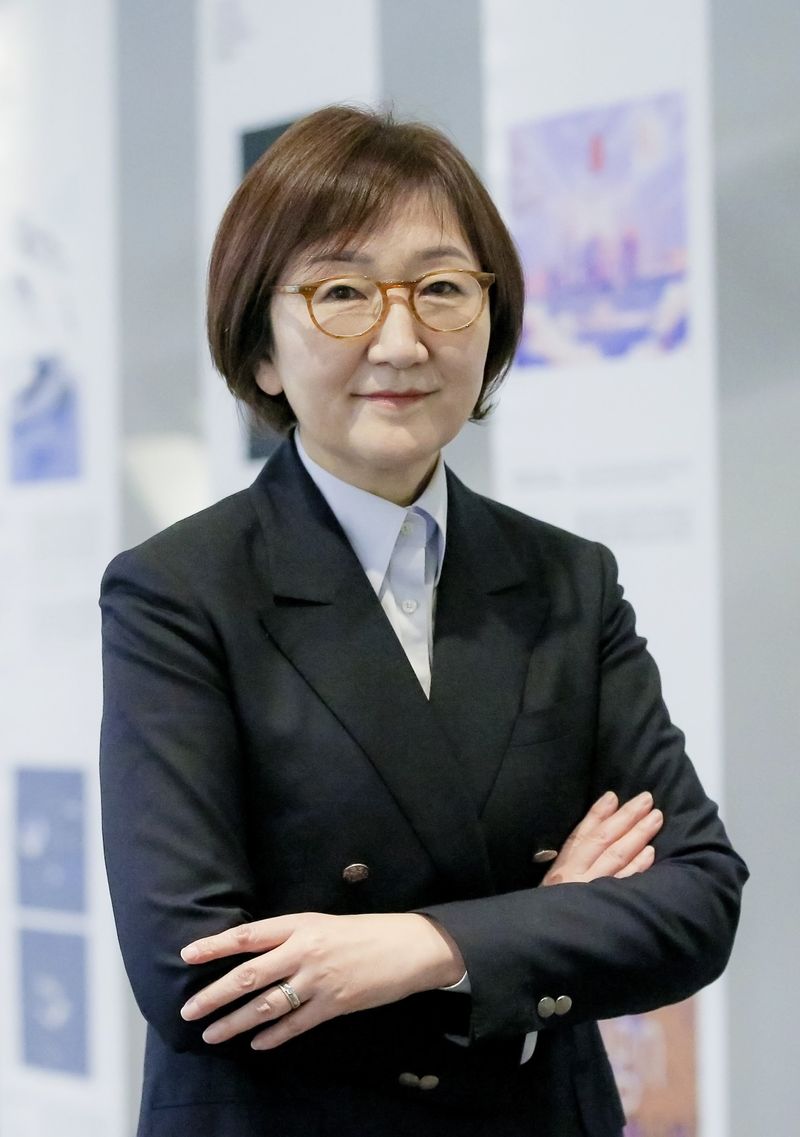
[Financial News] "November 2 is the first Design Day. The Korean Federation of Design Associations and the Ministry of Trade and Industry officially declared November 2 Design Day at Design Korea 2025 last year. Design Day should not simply mark the creation of another commemorative day. Rather, it should serve as a starting point for reaffirming the values that have driven the growth of Korea's industry and culture over the past several decades, while discussing together the role design should play in the future."
Baek Jin-kyung, chair of the Korean Federation of Design Associations and an honorary professor at Inje University, explained the significance of the first Design Day event, to be held on November 2, in these terms on the 9th.
Baek said, "Starting with Design Day, I hope the long-discussed establishment of a National Design Commission will also become a reality." She added, "I will continue to fulfill my role alongside the design community so that Korea's K-design capabilities, which connect industry and culture as well as technology and society, can expand further, become a new source of national competitiveness, and strengthen Korea's standing in the world."
Baek, who leads the Korean Federation of Design Associations, has served as president of the Korean Society of Design Science and the Korea Society of Color Studies. In 2000, she founded the Inje University Design Research Institute. For more than 20 years, she has led interdisciplinary research centered on design—including healthcare design and community design—with researchers in public health, social sciences, humanities, and physical education. She is also a researcher, educator, and designer who has broadened the scope of design.
The Korean Federation of Design Associations will hold the first Design Day event at the National Assembly on November 2. It is preparing the event in cooperation with various government ministries and local governments involved in design, including the Ministry of Trade and Industry, the Ministry of Culture, Sports and Tourism, the Ministry of the Interior and Safety, the Ministry of Land, Infrastructure and Transport, and Seoul.
October and November are also periods when design-related events are held intensively. The federation is planning the event in close cooperation with design-related organizations that oversee such events, including the Korea Institute of Design Promotion, the Korea Craft & Design Foundation, the Seoul Design Foundation, and Design House.
Baek said, "As the importance of culture continues to grow worldwide, Korea is being recognized as an advanced country in culture and design. In that regard, it is fortunate that we have established Design Day at the national level, even now."
Regarding the significance of establishing Design Day, she emphasized, "Design has played a very important role in strengthening the competitiveness of manufacturing and export industries throughout Korea's industrialization. Now, as industry and society rapidly change around artificial intelligence (AI), design is once again being called upon to connect technology with human needs and values."
Reflecting this significance, the Korean Federation of Design Associations and the Ministry of Trade and Industry officially declared November 2 Design Day every year at last year's Design Korea 2025 event. November 2 marks the day in 1434, the 16th year of King Sejong's reign, when the Angbuilgu sundial, created with the participation of Jang Yeong-sil and others, was first installed at Hyejeonggyo and in front of Jongmyo.
The Angbuilgu was more than a simple scientific instrument. It was designed so that even people who could not read at the time could easily tell the time, and is regarded as a tool that combined scientific principles, ease of use, and aesthetic completeness.
Baek emphasized that the most important point was that it was not an object made for a small group of privileged people, but one that enabled everyone to understand and use information necessary for daily life.
Because one of design's key purposes is to identify problems users face and offer more convenient and aesthetically pleasing solutions, the Angbuilgu can be viewed as an example of public design in Korean history—one completed through the combination of scientific technology, aesthetics, and user-centered thinking.
The Korean Federation of Design Associations, the representative organization encompassing Korea's design industry, associations, and academic societies, was launched in 1995 with six member organizations. In its 31st year, the federation now has 28 incorporated design-related organizations as members.
Baek explained, "Today, design's role extends beyond creating products and visual outcomes. It not only enhances industrial competitiveness but also addresses issues involving public policy, cities and regions, and communities. Amid these changes, it is a key responsibility of the Korean Federation of Design Associations to bring together the diverse voices of the design community, reflect them in society and institutions, and ensure that the resulting achievements are returned to society."
Baek pointed out, "Korea's design policies are divided among various ministries and local governments, covering industry, culture, public administration, cities, and architecture. It is urgent to establish a system that coordinates and integrates the nation's overall design direction from a long-term perspective."
As technology becomes more advanced in the age of artificial intelligence, the ability to determine what should be made, why it should be made, and for whom has become just as important as knowing what can be made.
Baek stressed, "Design connects technology with people, industry with culture, and policy with everyday life. In the future, a country's design capabilities will become an important indicator not only of its industrial competitiveness but also of its cultural standing and quality of life."
Accordingly, there are calls for serious consideration of establishing a National Design Commission, which would enable long-term and consistent discussion of national design policy.
Baek stated, "This is the time to establish a cooperative framework that can connect design policies dispersed among various ministries and local governments and formulate a national design strategy encompassing industrial, cultural, public, and urban design."
[email protected] Byun Ok-hwan Reporter