China’s August Exports Surge 25% as Trade Pressure Mounts Amid Weak Domestic Demand
- Input
- 2026-09-08 14:02:07
- Updated
- 2026-09-08 14:02:07
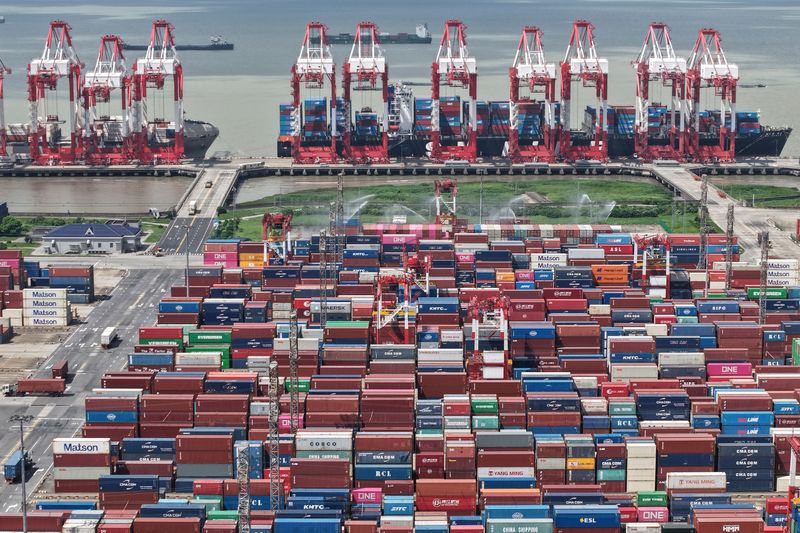
[Financial News] China’s exports continued to post solid growth in August, driven by worldwide demand for artificial intelligence (AI) infrastructure. Imports, however, fell short of market expectations as the domestic recovery remained sluggish, further widening the trade surplus.
According to China’s General Administration of Customs on the 8th, China’s exports in U.S. dollar terms rose 25% year on year in August, in line with market expectations. Imports increased 28.2% during the same period, up from 27.5% in the previous month but below the 30% forecast by experts. As a result, the August trade surplus reached $119.09 billion (approximately 160 trillion won), a sharp increase from the $112.5 billion recorded in July.
By destination, exports to the United States rose 34.4%, while exports to the European Union (EU) increased 6.6%. Imports from the Republic of Korea more than doubled, and exports to the country also surged by approximately 50%.
Demand for high-performance technology components amid the global AI boom served as a buffer against weak domestic demand caused by geopolitical risks and a downturn in investment.
As the trade surplus expanded on strong exports, criticism has intensified, particularly among Western countries, that the yuan is excessively undervalued. Brad Setser, a senior fellow at the Council on Foreign Relations (CFR), analyzed that the yuan is undervalued by approximately 20%.
At a recent meeting of Group of Twenty (G20) finance ministers, members issued a joint statement targeting countries that rely excessively on exports. China objected and became the only country to refuse to sign it. Pan Gongsheng, governor of the People’s Bank of China (PBC), countered, "China has never deliberately pursued a trade surplus or lowered its exchange rate to gain competitiveness."
Experts believe that high-level diplomatic schedules between the two countries, including President Xi Jinping’s planned visit to the United States this month, will proceed without disruption despite tensions over exchange rates.
The Chinese government is sharply increasing fiscal spending to achieve its growth target of 4.5%–5.0% this year. After economic growth slowed to 4.3% in the second quarter and momentum weakened, the government has been making every effort to stimulate the economy, including injecting $54 billion (approximately 72 trillion won) into state-owned banks and insurers.
Markets expect the People’s Bank of China to make one or two additional interest-rate cuts before the end of the year. Analysts say that the longer the yuan’s appreciation continues, the more policy room China’s central bank will have to cut interest rates.
[email protected] Yoon Jae-jun Reporter