Public Prosecution Office and Serious Crimes Investigation Agency Take Shape, but What About the CIO? A Major Test of Its Relevance Begins
- Input
- 2026-09-08 13:43:46
- Updated
- 2026-09-08 13:43:46
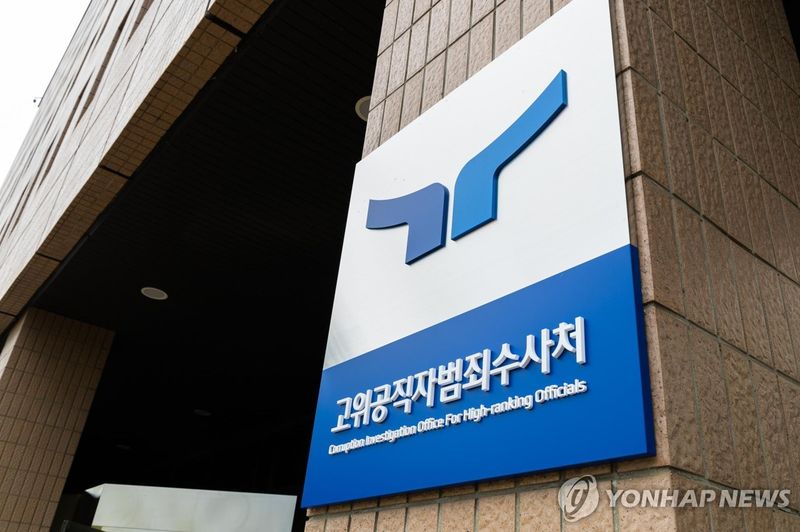
[Financial News] With less than a month remaining before the Public Prosecution Office and Serious Crimes Investigation Agency are launched, the Corruption Investigation Office for High-ranking Officials (CIO) is facing a major test as it seeks to define its role in the new criminal justice system. The Serious Crimes Investigation Agency will handle direct investigations, while the Public Prosecution Office will be responsible for indictments and maintaining prosecutions. Procedures for handling cases between the two agencies have also taken concrete shape. By contrast, the CIO is still working to establish its institutional framework, including its relationship with the two agencies.
According to legal sources on the 8th, the CIO has proposed introducing a system under which the Public Prosecution Office would request additional investigations from the CIO, rather than issue supplementary-investigation demands, so that the CIO can continue to function as an independent investigative agency after the Public Prosecution Office is launched. The proposal would establish a procedure under which the Public Prosecution Office refers cases to the CIO when additional investigation is needed, instead of making supplementary-investigation requests within a hierarchical relationship.
However, legislative discussions on the matter have yet to gain momentum. At a regular briefing that day, a CIO official said of National Assembly discussions on the proposal for additional investigation requests, "We have not received any separate information" and added, "We expect the issue will be discussed going forward."
The CIO is also calling for an expansion of its investigative jurisdiction. It maintains that police superintendents and higher-ranking officers, as well as Serious Crimes Investigation Agency investigators at Grade 4 or above, should be included among those subject to CIO investigations so that misconduct within investigative agencies can be checked. An amendment to the Corruption Investigation Office for High-ranking Officials Act (CIO Act), currently pending before the plenary session of the National Assembly of the Republic of Korea, would also expand the scope of investigations involving certain senior officials—including the chief justice and justices of the Supreme Court, the prosecutor general, judges and prosecutors—so that they could be investigated for "all crimes" rather than only specified offenses. The bill has yet to clear the National Assembly of the Republic of Korea.
Meanwhile, the relationship between the Serious Crimes Investigation Agency and the Public Prosecution Office is becoming more clearly defined. The Serious Crimes Investigation Agency’s recently announced draft case-handling rules include procedures for responding to the Public Prosecution Office’s requests for supplementary or reinvestigation and corrective measures. Separate procedures have also been established for notification and transfer when a CIO case overlaps with an investigation by the Serious Crimes Investigation Agency. For the CIO, this means that detailed arrangements remain to be made regarding how it will exchange cases and cooperate with the Serious Crimes Investigation Agency and Public Prosecution Office under the new criminal justice system.
Against this backdrop, the CIO is also reorganizing its staff. It has posted an opening to fill three investigator vacancies in the second half of the year—two Grade 6 positions and one Grade 7 position. The CIO is also publicly recruiting three rank-and-file prosecutors, including positions expected to become vacant, out of a total authorized complement of 25 prosecutors. Interviews for 12 applicants who passed the document screening stage will be held on the 9th.
Meanwhile, attention has focused on the CIO after it took action for the first time in some time, including indicting Ji Gui-yeon, a chief judge at the Seoul Northern District Court, without detention on charges of violating the Improper Solicitation and Graft Act on the 4th. As this marks the first time a judge has been indicted after allegations were classified as a "related crime," attention is expected to center on how the courts will rule on the case.
[email protected] Choi Eun-sol Reporter