Supreme Court: “When Faced With Two Conflicting Diagnoses, Choosing One Does Not Constitute Negligence”
- Input
- 2026-09-08 13:35:26
- Updated
- 2026-09-08 13:35:26
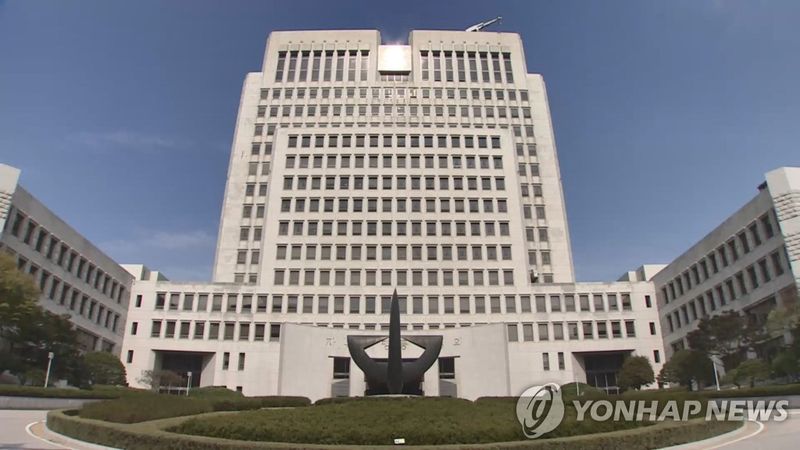
According to legal sources on the 8th, the Second Division of the Supreme Court of Korea, presided over by Justice Kwon Young-jun, recently overturned the lower court’s ruling sentencing dermatologist A, 70, and pediatrician B, 56, each to eight months in prison without labor, suspended for two years, and remanded the case to the Uijeongbu District Court. The ruling reaffirmed that in criminal medical-malpractice cases, prosecutors must prove negligence and causation beyond a reasonable doubt. It also reaffirmed the established principle that doctors are afforded considerable discretion when choosing between conflicting diagnostic possibilities.
The case began in July 2013, when A prescribed Dapsone to Patient C, then 12, who visited a university hospital in Goyang City with a rash on her back and other areas. Because Dapsone can cause side effects such as toxic hepatitis, patients must undergo regular blood and liver-function tests before and after taking it, and doctors are required to inform patients or their guardians of the possibility of adverse effects. A conducted neither the tests nor the required explanation.
Around July 31 of that year, C was admitted to the emergency room at the same hospital with a high fever and other symptoms. B, the attending physician, repeatedly started and stopped steroid treatment despite receiving two consultation replies recommending steroids. At the end of August, C fell into a coma due to fulminant hepatic failure. After receiving a liver transplant, she was classified as having Grade 5 liver impairment.
The issues were whether B had recognized C’s symptoms as drug hypersensitivity syndrome but failed to provide continuous steroid treatment, and whether a causal relationship existed between A’s failure to conduct tests and provide an explanation and C’s injuries.
The lower courts reached different conclusions. The first trial found only A guilty and sentenced him to eight months in prison without labor, suspended for two years. It acquitted B, ruling that because C’s symptoms did not improve even after steroids were administered and there were concerns about weakened immunity and side effects, withholding steroids and providing other treatment could not be considered negligence warranting criminal punishment. The appellate court, however, overturned that decision and found B guilty as well, ruling that after the first consultation reply, the circumstances strongly indicated that drug hypersensitivity syndrome should have been suspected.
The Supreme Court of Korea found that both doctors should be acquitted. The court stated, “An elevated eosinophil count is a key diagnostic indicator of drug hypersensitivity syndrome, but the victim’s count never exceeded the upper limit of the normal range before she was admitted to the emergency room,” calling this a significant circumstance that made a definitive diagnosis difficult. Rather, after steroids were administered, her white blood cell count and C-Reactive Protein (CRP) and other inflammatory markers rose sharply, raising the possibility that a severe bacterial infection was progressing.
The court found that B was in a situation requiring him to clinically compare the risks and benefits of each treatment method and timely choose the best option between two conflicting possibilities: drug hypersensitivity syndrome and a bacterial or viral infection. It ruled, “It does not appear that it was proven to a degree that a judge could be convinced beyond a reasonable doubt that only one reasonable method existed and that the treatment method chosen by B departed from it.”
Regarding A, the court said that even if negligence were recognized because he failed to conduct tests and provide an explanation, it was difficult to conclude that it had been proven that the injury would not have occurred had such negligence not taken place. The court cited the difficulty of definitively establishing that drug hypersensitivity syndrome could have been diagnosed early through multiple tests.
[email protected] Kim Dong-gyu Reporter