"Expansionary Fiscal Policy for 1–2 Years, Then a Gradual Slowdown"—Government and Ruling Party Reject Concerns Over Future Response Fund Depletion
- Input
- 2026-09-08 15:23:11
- Updated
- 2026-09-08 15:23:11
Expansionary fiscal policy for 1–2 years, followed by slower expenditure growth
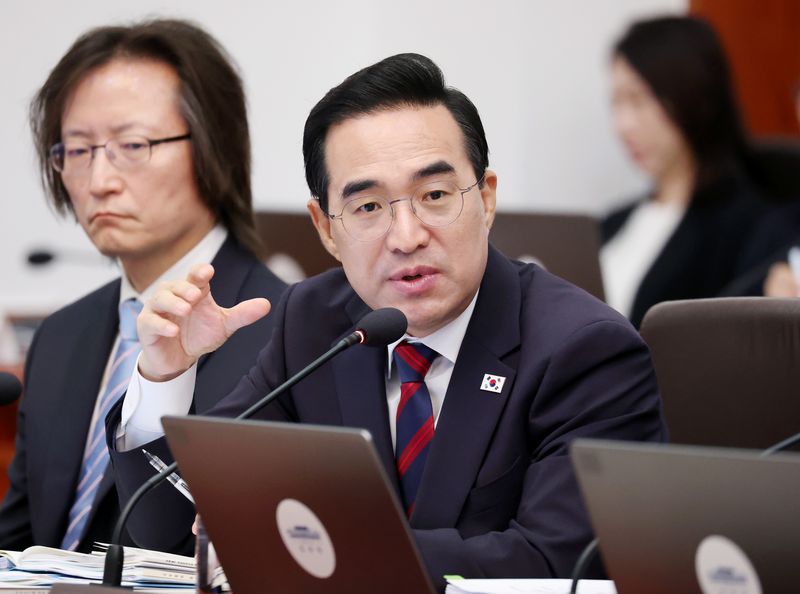
Minister of Planning and Budget Park Hong-keun said on YTN (Yonhap Television News) Radio on the 8th, regarding next year’s budget spending, "I believe we will be fine through the year after next. For now, we have forecast revenue only for next year and the year after next and have already drawn up plans accordingly." This does not assume that the semiconductor boom will continue. Rather, it means the government intends to maintain an expansionary fiscal stance based on favorable tax revenue conditions over the next one to two years. He also stressed that the current pace of fiscal expansion would not continue indefinitely. Park said, "We planned to make proactive investments at the outset this year and next year," adding that afterward, "we will keep bringing it down—9%, 7%, and 5%." He explained that the government would manage the growth rate of total expenditure in a stable manner while monitoring revenue conditions, the results of fiscal investment and actual economic growth.Only 45 trillion won of the Future Response Fund to be invested initially; surplus funds to be managed in preparation for a slowdown in tax revenue
The government also maintains that the Future Response Fund is not structured to rapidly exhaust resources secured during a boom. Of the approximately 162 trillion won, about 45 trillion won will be invested first in youth, regional development and growth engines, while the remainder will stay in the fund and be managed.The Future Response Fund bill submitted by the government to the National Assembly on the 3rd allows surplus funds to be managed through deposits with or trusts at financial institutions, as well as the purchase and sale of securities. Investment returns will be added back to the fund, and all settlement profits will be deposited into it. Park explained, "We will manage the funds in ways that can generate higher returns from stocks, bonds and similar assets than the interest paid on government bonds," adding that they would be used as a buffer if tax revenue deteriorates in the future.
The government also argued that managing excess tax revenue through the fund would be preferable to immediately using it to repay national debt. Park said, "If we use all of this to repay debt, wouldn’t we have to pay higher interest the next time we issue government bonds anyway?"
Ruling party: "Use increased tax revenue for future investment instead of automatic allocation"
The Democratic Party of Korea also believes that if tax revenue rises sharply, the existing system under which funds are automatically allocated to local governments and education offices should be revised so that some of the money can be used for future investment.The government is pursuing changes to the system linking local education finance grants to domestic tax revenue. It is also considering excluding additional tax revenue deposited into the Future Response Fund when calculating local government grants. Instead, the Future Response Fund will have separate local government and education and talent accounts for related projects.
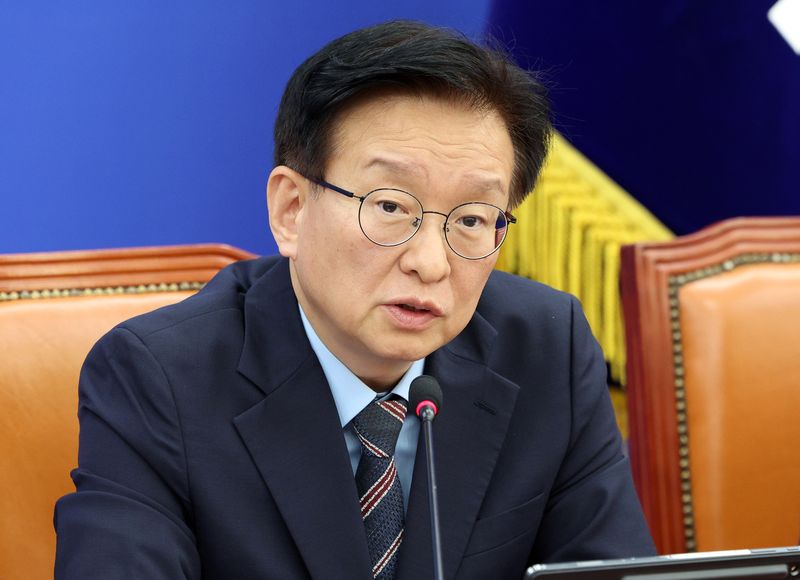
Kwon Chil-seung, policy committee chair of the Democratic Party of Korea, said on Munhwa Broadcasting Corporation (MBC) Radio that "when tax revenue suddenly improves and money comes in, we need to discuss whether preparing and executing the budget in the same way as in the past and spending it is truly consistent with investing in strategic industries for the nation’s long-term future." He added, "We need a platform through which the country can invest in strategic industries through the fund."
[email protected] Song Ji-won Reporter