Nam Mi-seon, the 'Goddess of the Haegeum' Who Moves Hearts with a Traditional Instrument
- Input
- 2026-09-08 10:35:45
- Updated
- 2026-09-08 10:35:45
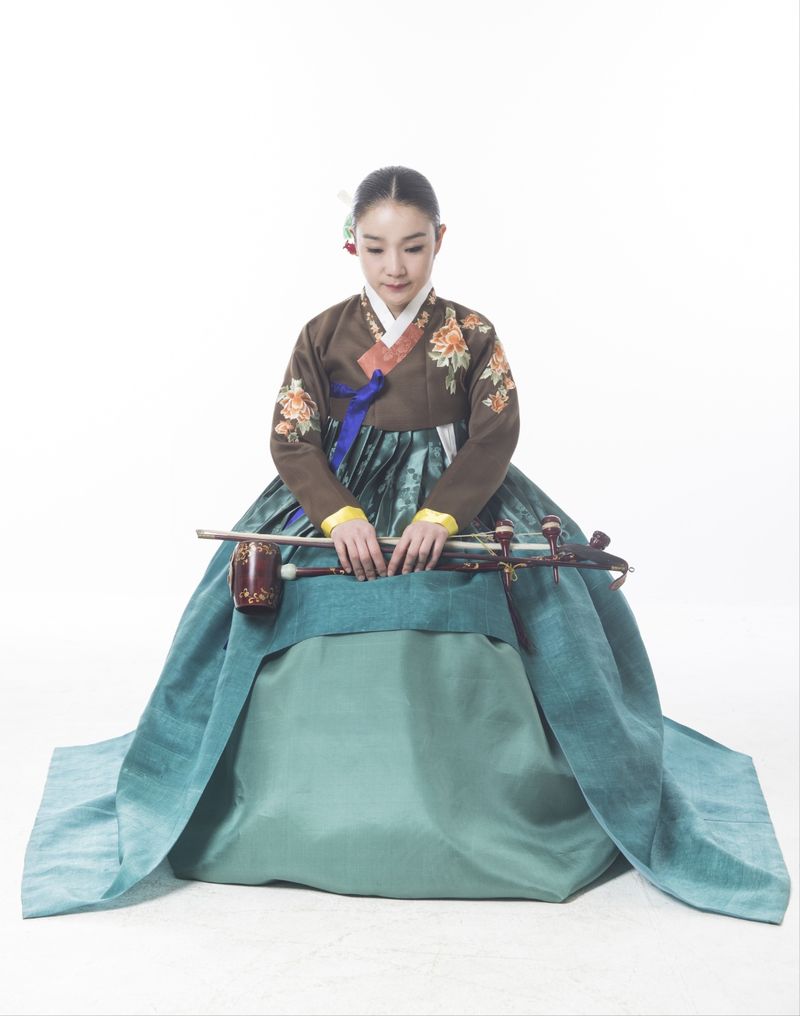
[Financial News] "I think the Haegeum is the traditional instrument whose plaintive resonance, like bamboo leaves trembling in the wind, touches a deep wellspring within the heart and makes us shed tears of both sorrow and joy."
Nam Mi-seon, known as the 'Goddess of the Haegeum,' described the Haegeum she plays in these terms during an interview with Financial News on the 8th.
Born into a family of musicians, Nam Mi-seon first encountered the Haegeum in the sixth grade of elementary school. She is regarded as one of the leading gugak musicians in her field, having pursued her own path for more than 30 years.
Nam Mi-seon was the only student from Gwangju Arts High School to be admitted at the time to the Korea National University of Arts. After earning both bachelor's and professional degrees from its School of Korean Traditional Arts, she began to emerge as a next-generation Haegeum performer carrying on Korea's gugak tradition. She won the silver prize in the general division of the 2001 Dong-A Gugak Competition at age 21 and later received the gold prize at the first Korea University Gugak Festival in 2008.
Nam Mi-seon is known as a gugak musician with a devoted fan base. Through her graceful movements as she draws the Haegeum bow back and forth and her refined interpretations, she conveys the essence of traditional music.
Since 2007, Haegeum performer Nam Mi-seon has carried on the artistic legacy of her teacher, Kim Young-jae, a holder of Important Intangible Cultural Heritage No. 16, Shin Kwae-dong-style geomungo sanjo. She has performed Haegeum sanjo in the Kim Young-jae style while also pursuing live album sales and academic research.
Haegeum sanjo in the Kim Young-jae style consists of six movements: Jinyangjo, Jungmori, Jungjungmori, Eotmori, Jajinmori and Danmori. Compared with other forms of sanjo, it features more varied rhythmic divisions and modes, including ujo, pyeongjo, pyeong-ujo, gyemyeonjo, u-gyemyeonjo, jin-gyemyeonjo, deureongjo, gyeongdeureumjo, byeon-ujo and byeon-gyemyeonjo. It also highlights performance techniques unique to the Haegeum. Eotmori and Danmori add the lively character and varied charm of sanjo.
"Many people say they feel sad and shed tears when they hear me perform," Nam Mi-seon said. "But you probably do not know that, each time I perform to express emotions through an instrument rather than words, I secretly cry a thousand or ten thousand times with the Haegeum, immersed in a focused sadness."
The Haegeum is a traditional instrument made by setting a vertical neck on a small resonating chamber, connecting two strings between them, and producing sound by rubbing the strings with a bow made of horsehair.
"I am often commissioned to perform the Haegeum by many businesspeople across the country who serve as honorary consuls for foreign countries, because diplomats from those countries want to hear performances that allow them to experience the beauty of Korea," Nam Mi-seon said. "They seem to find it even more fascinating and enjoyable that the two strings of the traditional Haegeum can produce such a wide range of sounds that touch the heart."
"I have mainly worked in the Seoul metropolitan area until now, but the emotions I experience while communicating with fans I meet during my brief time living in Busan because of my bank-employed husband's transfer are also special," Nam Mi-seon said. She added, "Going forward, I want to hold more meaningful concerts in Busan and elsewhere, showcasing the true essence of Korea's traditional Haegeum music."
[email protected] Byun Ok-hwan Reporter