Iran’s Oil Dollars Run Dry as U.S. Maritime Blockade Deepens Economic Crisis
- Input
- 2026-09-08 09:55:27
- Updated
- 2026-09-08 09:55:27
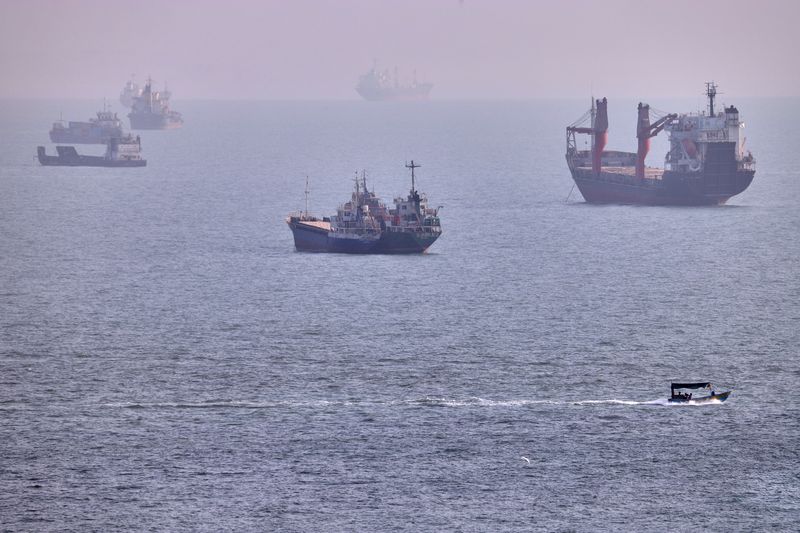
[Financial News] Iran’s economy is being pushed to the point of suffocation as a United States maritime blockade cuts off crude oil exports, its main source of revenue.
The Wall Street Journal reported on the 7th, local time, citing shipping data provider Kpler, that not a single drop of Iranian crude oil had crossed the blockade line since the United States resumed its maritime blockade in July.
Iran loaded 255,000 barrels of crude oil per day onto vessels in the Persian Gulf last month, but the shipments remain trapped without crossing the blockade line.
Crude oil that had been moved outside the blockade line when the Strait of Hormuz was temporarily reopened following a memorandum of understanding with the United States in June was effectively Iran’s only source of funds. Now, even that supply is running dry.
Only about 29 million barrels of Iranian crude oil remain aboard vessels outside the blockade line.
Kpler estimated that the remaining supply would be depleted around the middle of next month, as roughly 1 million barrels a day are heading to China and other destinations.
Roughly one-third of Iran’s budget comes from crude oil sales
Moreover, as the United States targets banks that conduct transactions with Iran through an “economic isolation campaign,” recovering proceeds from crude oil already sold has also become increasingly difficult.
Crude oil exports are one of Iran’s main sources of revenue.
Roughly one-third of Iran’s state budget is funded by crude oil sales, while military finances—including those of the Islamic Revolutionary Guard Corps, which effectively controls Iran at present—also depend on oil revenue.
As crude oil exports have been blocked, Iran’s economy, which was already on the verge of collapse before the war began, is being pushed to the brink of economic death.
Inflation is worsening as the rial plunges in value and the prices of imported goods rise.
The official inflation rate has exceeded 80%, and the International Monetary Fund (IMF) forecasts that Iran’s economy will contract by 5.4% this year. That would be the worst figure since the 1980s.
Official inflation above 80%; IMF forecasts Iran’s economy will contract by 5.4% this year
However, Gulf officials and experts assess that Iran is highly unlikely to capitulate despite the economic pressure.
They instead warn that intense pressure could provoke retaliation from Iran.
Ellie Geranmayeh, an Iran expert at the European Council on Foreign Relations (ECFR), said, “U.S. sanctions will have a significant impact on ordinary Iranian households, but I am skeptical that Iran will capitulate at the negotiating table as a result.” She added, “The Iranian regime is more likely to resist.”
Hammad Hussein, an economist at Capital Economics, said, “Much depends on the level of economic pain the Iranian regime is willing to endure in order to achieve its military and geopolitical objectives.”
[email protected] Lee Seok-woo, International Affairs Specialist Reporter