Skilled Workers Busy on 108-Meter Production Line: What Sealy Chose Instead of Automation
- Input
- 2026-09-08 11:42:57
- Updated
- 2026-09-08 11:42:57
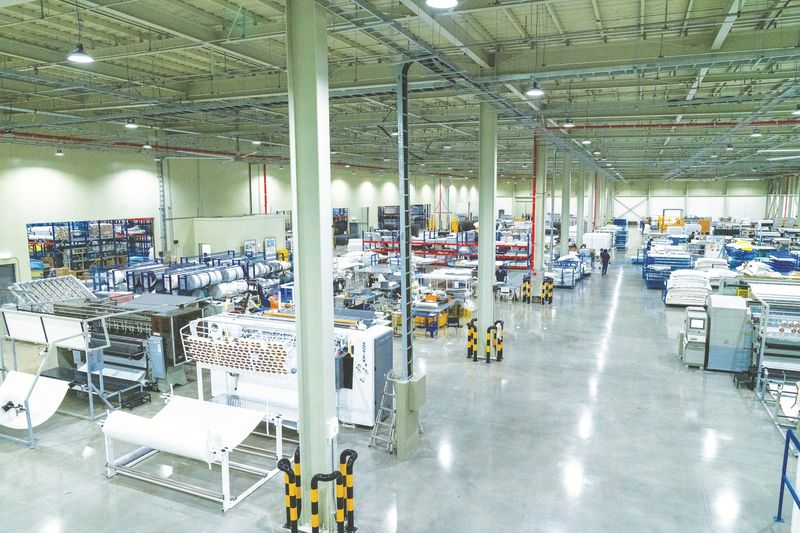
On the 7th, a large production line stretching 108 meters was operating busily below the second-floor windows overlooking the production process at Sealy’s Yeoju plant in Gyeonggi Province. Down on the first-floor production floor, the sounds of stitching and quilting filled the air, but the facility remained orderly.
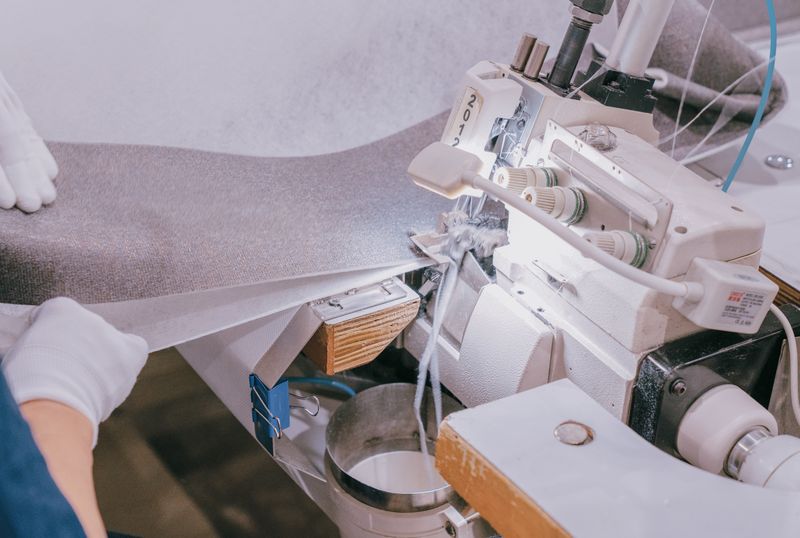
Sealy chose to produce high-quality beds rather than cut costs through the automated equipment that has become increasingly common. Skilled workers moved nonstop through the production process, filling the mattresses and sewing the fabric together through three core stages: quilting, sewing and building.
Yoo, the plant manager, noted, "Skilled workers directly participate in every production process except finished-product packaging, helping reduce the defect rate." People inspect defects that machines cannot detect and manage quality themselves. The defect rate is only about 0.12% per month.
To achieve better quality, Sealy opted for high-mix, low-volume production instead of automation. The Yeoju plant produces about 110 types of mattresses in five sizes. Mattresses are made as soon as orders are placed and take five days to be delivered.
Sealy has completed and begun full-scale operations at its largest production plant in Asia. The company aims to establish the Yeoju plant as a production hub for the Asia-Pacific market.
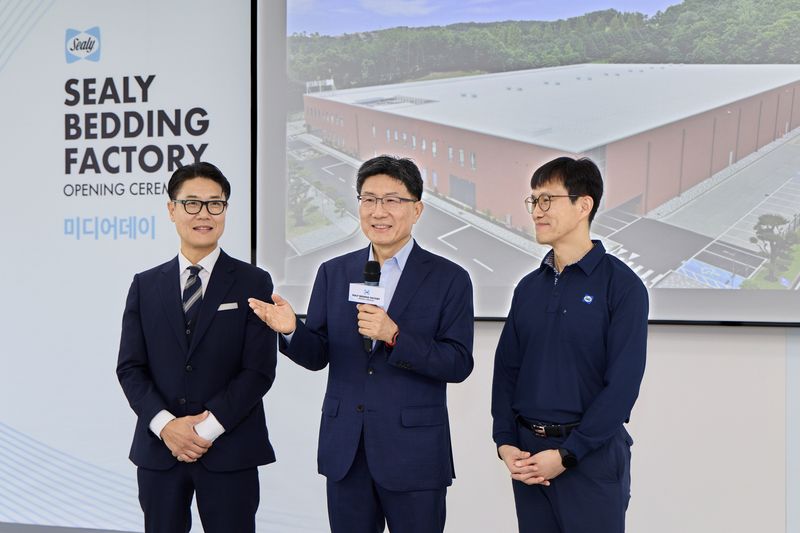
At a press briefing that day, Yoon Jong-hyo, CEO of Sealy Korea Company, explained, "After establishing the Yeoju plant in 2016 and supplying mattresses to four- and five-star hotels, we have recorded the highest growth rate among Sealy’s global entities. Building on our achievements over the past 10 years, we have completed the Yeoju plant, which is twice as large as before."
The new Yeoju plant has a production area of 15,183 square meters, roughly the size of two soccer fields. The number of production workers has increased from 71 to 92. Maximum mattress production has risen from 300 to 500 units per eight-hour shift.
The Yeoju plant consists of a procurement building, where raw and auxiliary materials are received and inspected; a production building, where mattresses are completed through the three-stage quilting, sewing and building process; a logistics building, where shipments are prepared; and a showroom.
Through the expansion, Sealy Korea plans to develop the facility into a production hub supporting major markets in the Asia-Pacific region, including China, Taiwan, Hong Kong and Singapore. Its goal is to export 15–20% of the Yeoju plant’s total production.
The company also plans to build a plant by 2028 to manufacture springs that it has so far imported from China and Australia. This would allow it to produce every stage of the process in-house. Establishing a spring plant could help overcome logistics delays caused by geopolitical issues such as war, as well as weather-related disruptions such as typhoons.
Yoon explained, "In the past, ‘Made in Korea’ was undervalued, but Korean products are now recognized worldwide for their quality. Preferences for Korean products have grown stronger in China, Mongolia and Uzbekistan, and we are also exporting to Kazakhstan and Mongolia."
[email protected] Kim Hyun-chul Reporter